


ABU DHABI: What was meant to be the crown jewel of the Gulf’s technological future, a $700 billion artificial intelligence hub now stands as a cautionary symbol after three drone strikes exposed how easily modern warfare can dismantle even the most ambitious digital infrastructure projects.
During a four-day diplomatic tour of the Gulf region in May 2025, US President Donald Trump visited Saudi Arabia, Qatar, and the UAE, securing over $2.8 trillion in investment commitments. The crown jewel of these deals was a staggering $700 billion artificial intelligence data centre in Abu Dhabi, developed in collaboration with technology giants OpenAI, NVIDIA, Oracle and Cisco. OpenAI projected the facility might eventually serve half the world’s population.
By October 2025, Australia’s AirTrunk had joined the technological gold rush, announcing a $4.2 billion agreement to construct a data centre in neighbouring Saudi Arabia. The prospects for Gulf-based AI appeared remarkably promising—until military escalation transformed the landscape forever.
Digital infrastructure enters the crosshairs
Data centres have now emerged as strategic military objectives in the expanding Iran conflict. According to Dr Jessie Moritz, senior lecturer in political economy at the Australian National University, these attacks represent Iran’s implementation of “asymmetrical warfare” tactics designed to make the conflict prohibitively expensive for its adversaries.
“This region can no longer guarantee security for such infrastructure investments,” Dr Moritz observed. “No nation wants to locate its data centres within unstable environments.”
Tehran has increasingly targeted civilian infrastructure throughout Gulf states—including hotels, oil refineries, and water desalination plants. The economic consequences are already manifesting: oil prices continue climbing, vital shipping routes face paralysis, and air travel remains severely disrupted.
Technology giants enter Iran’s crosshairs
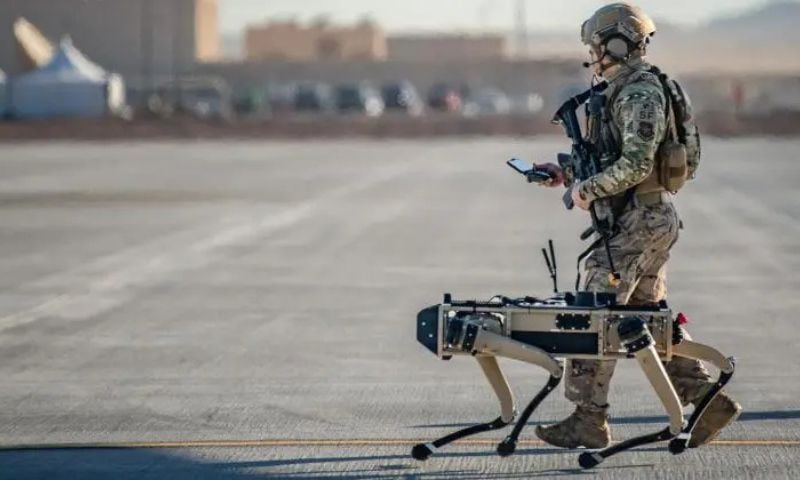
US Secretary of War Pete Hegseth has increasingly adopted the language of Silicon Valley, declaring the American military will become “AI-first,” will “unleash experimentation,” and will “eliminate bureaucratic barriers.” Both American and Israeli forces now employ artificial intelligence systems for target identification.
This collaboration between technology firms and the military has transformed corporate assets into legitimate wartime objectives. Iran’s Revolutionary Guard specifically cited military applications when justifying recent strikes against Amazon data centre facilities.
The situation intensified further when Iran’s Revolutionary Guard published an expanded target list encompassing data centres and offices belonging to multiple American technology companies, according to Al Jazeera reporting. A representative from a state-affiliated media organization argued that since American forces had targeted a Tehran bank branch, these technological assets now represented legitimate retaliation objectives.
Conflict Zone economics reshape industry calculations
Operating reliable data centres demands substantial investment even under peaceful conditions. These facilities consume enormous quantities of electricity and water, require round-the-clock staffing by highly trained personnel, and demand sophisticated cybersecurity protections. Conflict zone operation multiplies these expenses dramatically.
“Defending against missiles, drones, blast effects, shrapnel, fire, water damage, and cascading utility failures introduces an entirely different complexity level,” explained Dr Kristian Alexander, lead researcher at Abu Dhabi’s Rabdan Security & Defence Institute.
These attacks may “elevate insurance premiums and complicate efforts to attract engineering talent,” noted Sam Winter-Levy, a Carnegie Endowment for International Peace fellow, during a Bloomberg TV interview.
Data centres present inherently difficult concealment challenges. These massive structures emit distinctive heat signatures and appear unmistakably in satellite imagery. Fortifying large facilities against emerging threats could require “low hundreds of millions of dollars” per installation, Dr Alexander estimated.
Backup systems prove inadequate
Industry standard practice incorporates redundancy as protection against individual facility failures. Amazon operates three data centres in both the UAE and Bahrain, theoretically capable of absorbing single facility losses without service interruption. Yet this proved insufficient.
Simultaneous strikes against two UAE facilities triggered widespread service disruptions throughout Dubai and Abu Dhabi, affecting banking applications, transportation services, and food delivery platforms. This coordinated assault exposed systemic vulnerabilities that existing redundancy measures couldn’t address, further elevating both risk assessments and operational costs.
“If wartime targeting of data centres becomes routine, technology companies will inevitably factor that risk into future site selection decisions,” predicted Zachary Kallenborn, a King’s College London doctoral researcher.
Undersea Cables: The internet’s exposed circulatory system
Data centres represent only one element of vulnerable regional digital infrastructure. Extensive undersea cable networks line the Middle East’s two principal waterways, presenting additional potential targets with severe consequences if damaged.
More than 90 percent of all data traffic between Europe and Asia flows through cables beneath the Red Sea. Satellite alternatives cannot currently handle more than a fraction of this volume.
These cables converge densely at chokepoints like Yemen’s Bab al-Mandab Strait—the same waters where Iranian and Houthi forces have repeatedly attacked oil tankers. Specialists warn that cable repair operations would prove extraordinarily dangerous throughout active conflict zones.
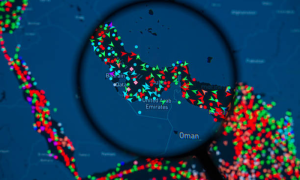
Iranian drones have recently struck tankers in the vital Strait of Hormuz as well. The seabed beneath these waters contains cables linking multiple Gulf nations to global networks. Landing points where cables reach shore, such as the UAE’s Fujairah city, present equally vulnerable targets.
“Above-ground infrastructure raises serious concerns because landing stations remain susceptible to even rudimentary sabotage attempts,” Dr Alexander cautioned.
Regional conflict produces global consequences
When three Red Sea cables sustained damage in 2024, the incident appeared collateral, apparently resulting from a missile striking a cargo vessel rather than deliberate sabotage. Nonetheless, it highlighted longstanding warnings about cable vulnerability.
The effects propagated remarkably far, reaching the United Kingdom, South Africa, and China. A Hong Kong telecommunications firm reported 25 percent internet traffic disruption following the incident.
Whether targeting data centres, undersea cables, or other digital infrastructure components, Middle Eastern disruptions generate worldwide repercussions. During discussions with American officials last year, Mr Kallenborn concluded that “infrastructure protection policy remains heavily nationally focused,” rarely extending to foreign facilities even when they serve critical national interests.
For the Gulf’s ambitious AI dreams, three drone strikes have rewritten the future, transforming a promised land of technological innovation into just another conflict zone where even the digital clouds remain vulnerable to the fog of war.
As technology companies reassess their Middle East investments and insurance premiums soar, the region faces an uncomfortable question: in an era of asymmetrical warfare, can any digital infrastructure truly be secure?