



ISLAMABAD: The year 2025 unfolded as a period of continued global turbulence, testing political institutions, security frameworks, economic resilience and climate preparedness. From wars in Gaza, Ukraine and Sudan to geopolitical realignments, the international system faced mounting strain.
During the year, parliamentary elections reshaped leadership in major democracies, trade disputes disrupted global markets, and climate-driven disasters intensified across continents. International cooperation weakened as rivalries deepened and the contours of a more fragmented, multipolar world became clearer.
The return of Donald Trump to the White House reshaped global diplomacy and extreme weather events inflicted heavy human and economic costs. As the year closed, the challenges confronting the global order appeared not temporary, but structural, with many developments set to shape international affairs well into 2026.
World Politics in 2025

In the year 2025, the international political order underwent notable changes marked by realignments, competition and a trend towards multipolarity. Analysts described 2025 as a point when global changes became structural rather than transitional.
BRICS alliance

The BRICS alliance held its 17th Summit in Rio de Janeiro in July, under the theme “Strengthening Global South Cooperation for a More Inclusive and Sustainable Governance”.
The summit solidified the group’s push for a multipolar world, emphasising cooperation among Global South nations, new economic mechanisms and reforms in global governance. Leaders reaffirmed commitments on trade, health, AI governance and security.
G7 summit

The G7 summit in Canada in June brought together wealthy democracies to discuss Ukraine’s security, Middle East stability, and Indo-Pacific resilience.
The leaders adopted several joint statements, including on the Israel-Iran situation, but did not issue a single joint communiqué due to internal disagreements on issues like US tariffs.
Munich Security Conference

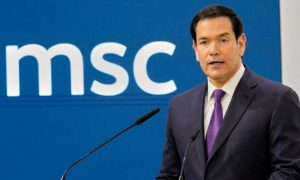
The Munich Security Conference in February 2025 highlighted global multipolarity and differences. The conference discussed the future of the transatlantic partnership, especially the change in the US administration.
During the event, US Vice President JD Vance criticised European allies. Ukrainian President Volodymyr Zelensky urged Europe to become self-reliant in defence and to create a “European army,” as US support could no longer be guaranteed.
The Munich Security Report 2025 argued for the need for “depolarisation” and substantial reforms of the international order.
Trump reshapes US foreign policy

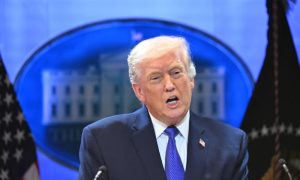
The return of Donald Trump to the White House brought significant shifts in US foreign policy, characterised by a focus on “America First” diplomacy. Analysts noted that this policy altered traditional alliances, reduced US leadership in multilateral settings, and contributed to geopolitical uncertainty.
The US cut back international aid and redirected global engagement. In December, the US pledged $2 billion in humanitarian aid to the United Nations, a significant contribution but far below historical levels.
After taking the office, Trump expressed his desire to acquire Greenland, make Canada the fifty-first state, and reassert control over the Panama Canal. On Inauguration Day, he withdrew the US from the Paris Agreement and the World Health Organization and restricted refugee readmissions.
In his first month in office, he began shuttering the US Agency for International Development, ending independent oversight of major federal agencies, and slashing government payrolls.
On April 2, Trump launched “Liberation Day,” imposing 10 percent tariffs on most imports along with additional country specific tariffs of up to 50 percent. He threatened Venezuela with regime change.
Youth uprising in Nepal and Bangladesh

Across Africa and Asia, young populations led protests against political systems. In Nepal, Gen Z protests earlier in the year over censorship and corruption led to political change and marked the rise of younger voices in governance reform.
In 2025, relations between Bangladesh and India reached a period of intense diplomatic strain following the August 2024 ousting of prime minister Sheikh Hasina. These tensions are driven by a surge in anti-India sentiments among youth.
The interim government, led by Nobel Laureate Muhammad Yunus, has officially requested Hasina’s extradition from India to face trial for crimes against humanity. Her continued presence and political statements from India are viewed as “unfriendly gestures” by Dhaka.
Protesters view New Delhi’s long-term support for Hasina’s 15-year rule as complicity in her administration’s authoritarianism. This has fueled a “Buycott India” movement and recurring street protests.
In mid-December 2025, the killing of Sharif Osman Hadi, a prominent anti-India youth leader from the 2024 uprising, triggered nationwide protests and anger against India. Protesters accused India of involvement or of harbouring the killers, leading to attacks on Indian diplomatic missions in Chittagong and Dhaka.
On December 28, 2025, the Dhaka Metropolitan Police (DMP) confirmed that the two primary suspects in the assassination of Osman Hadi fled to India.
After Hasina’s ouster, Dhaka has also moved to strengthen ties with Pakistan and China.
Major parliamentary elections
In 2025, several countries conducted parliamentary elections and installed new national leaders. Several African countries experienced coups, and Gen Z-led protests resulted in the ouster of Nepali Prime Minister K.P. Sharma Oli.
Germany (February 23, 2025): Following the collapse of Chancellor Olaf Scholz’s “traffic light” coalition in late 2024, Germany held a snap federal election.

The centre-right CDU/CSU union, led by Friedrich Merz, emerged as the strongest force, reflecting voter discontent with the economy and migration.
Canada (April 28, 2025): Prime Minister Justin Trudeau resigned earlier in the year, amidst low approval ratings and economic challenges. A snap federal election resulted in a significant shift toward the Conservative Party, led by Pierre Poilievre.

Australia (May 3, 2025): In a tightly contested federal election, the opposition Liberal-National Coalition, led by Peter Dutton, unseated Anthony Albanese’s Labour government.

Norway (September 8, 2025): National elections were held to determine the composition of the Storting (Parliament).

Czech Republic (October 3–4, 2025): The populist ANO party, led by former Prime Minister Andrej Babiš, won a major victory, signalling a shift toward more Eurosceptic policies in Central Europe.

Japan (October 4, 2025): After a snap election, Sanae Takaichi became Japan’s first female Prime Minister, leading a conservative LDP government.

United States: On January 20, 2025, Donald Trump was inaugurated for his second term. His “America First” policies, including new tariffs and mass deportations, immediately impacted global trade and security alliances.

South Korea (June 3, 2025): Following an unsuccessful attempt to impose martial law in late 2024, President Yoon Suk Yeol was impeached. The subsequent snap presidential election took place in early June.

Vatican City (May 7–8, 2025): A papal conclave was held to elect a successor following the vacancy of the papacy and Cardinal Robert Prevost became Pope Leo XIV.

On April 21, the ailing Pope Francis died after suffering a stroke. The 133 cardinals eligible to participate assembled in Rome for selecting the next pope. The conclave had selected Cardinal Robert Prevost as Pope Leo XIV.
Global Security and Major Conflicts

Security remained fragile worldwide in 2025. The Global Peace Index reported a deterioration in global peacefulness, driven largely by the Russia-Ukraine and Israel-Palestine conflicts and other regional conflicts.
India and Pakistan clash
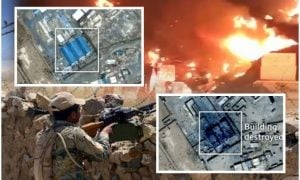
In May 2025, India started unprovoked aggression against Pakistan and attacked several cities of the neighbouring country. Pakistan swiftly responded to the aggression with drone and missile strikes against Indian military bases and shot down seven Indian fighter jets, including two of India’s most advanced Rafale.

On May 10, the nuclear-armed South Asian neighbours agreed to a US-mediated ceasefire. President Donald Trump said he mediated the ceasefire, a claim that Pakistan supported and Indian Prime Minister Narendra Modi rejected. Trump, on various occasions, repeatedly claimed that eight fighter jets were shot down during the conflict.
The immediate consequence of the conflict was a rift in US-Indian relations, as Trump slapped steep tariffs on Indian exports.
Israel-Palestine conflict and Trump’s peace plan
After two years of relentless Israeli bombardment, Israel and the Palestinian group Hamas agreed in October to a ceasefire. It was the second of the year. The Biden administration negotiated a ceasefire in January that increased humanitarian aid to Gaza, led Hamas to release thirty-three hostages, and prompted Israel to free nearly 2,000 Palestinian prisoners.
In mid-March, Israel resumed its military bombardment campaign. Since October 2023, the Israeli military offensive has killed at least 71,600 Palestinians, mostly women and children, according to the Palestinian health ministry in Gaza.

US President Donald Trump played a central role in pushing for the October ceasefire, with Qatar, Turkiye, and Egypt also helping mediate.
The agreement laid out a three-phase peace plan for Gaza: 1) an immediate ceasefire with Israeli security forces withdrawing to preset lines and an exchange of hostages and prisoners; 2) the demilitarisation of Hamas and the dispatch of an international stabilisation force to Gaza; and 3) the reconstitution of Palestinian governance and the reconstruction of Gaza.
The UN Security Council endorsed the Gaza peace plan in November, authorising the deployment of the International Stabilisation Force, and calling for the establishment of a Palestinian Committee to manage Gaza’s day-to-day governance.
A lasting peace, however, remains elusive as Israel has continued strikes in Gaza.
US and Israel attack Iran’s nuclear facilities
In June 2025 Israel launched airstrikes against Iran, citing Tehran’s nuclear programme as a threat. Israel conducted airstrikes on Iranian nuclear and ballistic-missile facilities, as well as on military bases and command nodes, and the assassination of politicians, military leaders, and nuclear scientists.
Iran retaliated by firing missiles and drones at Israel. Assisted by the US military, Israel shot down most of the barrages. The war continued for 12 days. On June 22, US B2 bombers and Tomahawk missiles hit Iran’s nuclear facilities.

President Trump claimed the attack “totally obliterated” Iran’s nuclear programme. However, Iran likely dispersed its stockpile of enriched uranium before the bombs fell.
Israel and Iran agreed to a ceasefire on June 24 and halted the fighting.
Ukraine-Russia war grinds on
The Ukraine-Russia war, now in its fourth year, continued, with increased diplomatic efforts and support for Ukraine’s defence from European partners, while ceasefire talks gained traction late in the year.
President Donald Trump insists that Kyiv does not “have the cards” needed to win, and he remains opposed to increasing US support.

Europe is providing Kyiv with substantial financial and military support, and the European Union ended 2025 by agreeing to provide Kyiv with a $105 billion loan.
Trump is pushing Russian President Vladimir Putin and Ukrainian President Volodymyr Zelensky to accept a ceasefire.
In December, Russia claimed that Ukraine attacked Putin’s official residence with drones. However, Ukraine firmly denied the alleged attack, citing a lack of evidence. Trump also condemned the reported attack on Putin’s home.
Thailand-Cambodia conflict
In July 2025, Thailand and Cambodia engaged in their most severe armed conflict in nearly 15 years, resulting in over 100 deaths and the displacement of more than 800,000 civilians.
The conflict centred on long-standing territorial disputes over undemarcated land near ancient temples, primarily Preah Vihear and Prasat Ta Muen Thom.

In December, border tensions in Southeast Asia eased somewhat as Thailand and Cambodia signed a new ceasefire agreement.
Sudan’s civil war continues
The fighting between the Sudanese Army and the Rapid Support Forces continued. Neither side has won a decisive breakthrough, and fighting continues across multiple fronts.
The Sudanese Army governs from Port Sudan on the Red Sea, controls the major cities in the east and north, and is recognised as Sudan’s legitimate government. Meanwhile, the RSF controls most of Darfur and other areas in central and western Sudan.

As many as 400,000 people have died and more than twelve million have been displaced. Much of the country faces famine, and the demand for humanitarian aid far outpaces available resources.
Global security dynamics
Military spending rose in 2025, reaching its highest share of GDP since 2010, reflecting states’ prioritisation of defence over other areas.
Security experts also observed systemic shifts in global security dynamics, with democracies facing challenges adapting to evolving threats and a fragmented geopolitical landscape.

Cybersecurity, strategic competition and hybrid threats remained key concerns, especially amid US–China strategic rivalry, tensions over trade, and technology governance disputes.
Global Economy: Slow Growth and Trade Wars
Economic slowdown and trade tensions
The global economy faced a slowdown in 2025. After a turbulent year for trade, including tariff escalations by the US and retaliatory actions by partners, the International Monetary Fund projected world growth to slow to approximately 2.8 percent — below historical averages and earlier forecasts.
Trade tensions had knock-on effects on labour markets and jobs globally. Studies found that renewed tariffs contributed to employment and export losses, particularly in developing economies and among informal workers.

A large-scale global trade war was triggered by a series of sweeping US tariff measures under President Trump’s “America First” agenda.
US tariff actions in 2025
On April 2, 2025, the Trump administration unveiled broad tariffs on almost every country, starting with a base rate of 10 percent. By the end of the year, the average effective US tariff rate reached nearly 18 percent, the highest level since the 1930s.
Initial 10 percent tariffs on Chinese goods in February were raised to 20 percent in March. Tensions escalated further in April with a “reciprocal” rate of 125 percent, resulting in a total combined tariff rate of 145 percent on Chinese imports. A truce was reached after a summit in South Korea on October 30.

In March, 25 percent tariffs were imposed on both countries to address border security and fentanyl trafficking. By August, the rate for Canada was hiked to 35 percent, and Mexico faced 30 percent flat tariffs on all non-auto goods.
Global retaliation and countermeasures
China retaliated with duties on US energy and agriculture, and famously restricted rare-earth magnet exports to the US, which intensified supply chain pressures.
The European Union reinstated tariffs on €4.5 billion of US goods. In August, a deal was reached where the EU accepted zero tariffs on most US industrial goods in exchange for $750 billion in energy purchases and $600 billion in US investments.

Canada imposed counter-tariffs on US steel, aluminium, and autos in March, though it initiated a temporary six-month suspension for certain critical goods in April.
Economic impact
Tariffs are estimated to have increased the average US household tax burden by roughly $1,100–$1,300 in 2025. Healthcare costs for medical supplies rose by an estimated 15 percent–20 percent.
While US imports from China fell by nearly 25 percent, overall global trade paradoxically hit a record $35 trillion by year-end, driven by a surge in AI-related electronics and trade growth in East Asia and Africa.

Core inflation pressures moderated in advanced economies, but high debt levels and fiscal constraints limited stimulus options. Commodity markets were volatile due to geopolitical conflicts, impacting energy and food prices in developing regions.
Climate Change: Record Heat and Policy Setbacks
Temperatures and extreme weather
Scientists confirmed that 2025 was among the three hottest years on record, and the average global temperature for the three-year period surpassed the 1.5 °C limit set by the Paris Agreement for the first time.

Severe heatwaves, wildfires, floods and cyclones struck regions including the Mediterranean, South Asia, Southeast Asia, the United States and the Caribbean.

Christian Aid reported that climate-related disasters caused over $120 billion in insured losses, with Southeast Asian cyclones, California wildfires and China flooding among the costliest events, displacing millions and inflicting heavy human tolls.
COP30 and international climate policy
At the UN Climate Conference (COP30) in Brazil, negotiations failed to secure a binding global fossil fuel phase-out agreement, reflecting deep divisions among major emitters, particularly after the US announcement of its withdrawal from the Paris Agreement.
The US executive order on 20 January 2025 formally initiated withdrawal from Paris and related climate commitments, a move critics warned could jeopardise collective efforts to limit warming.
Climate policy setbacks were amplified by rollbacks of domestic environmental regulations in major economies, weakening emissions standards and shifting focus back to fossil fuel production.

The UN Environment Programme’s Global Cooling Watch 2025 report highlighted the challenge of rising cooling demand driven by extreme heat, with implications for greenhouse gas emissions and energy systems worldwide.
Developing countries, despite contributing least historically to emissions, continued to bear the greatest climate impacts, underscoring the need for expanded adaptation finance and humanitarian support.
The Arctic Report Card 2025 showed dramatic warming, ice loss and ecosystem shifts in the northern polar region, reinforcing scientific warnings on cascading climate effects.