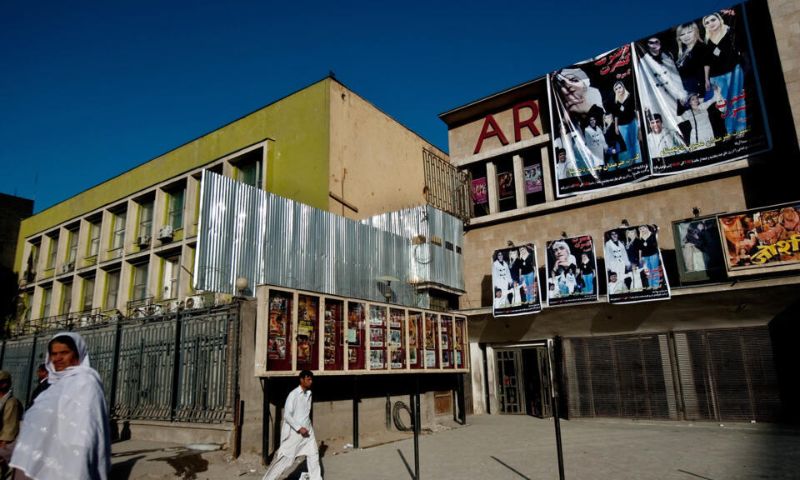



KABUL: One of Kabul’s most iconic cultural landmarks, the Ariana cinema, is being demolished to make way for a shopping mall, marking the end of a decades-long chapter in Afghanistan’s film history.
Built in the 1960s, the Ariana cinema was for years a gathering place for Kabul’s moviegoers, screening films from India, Iran, Europe, Russia and beyond. The venue suffered heavy damage during Afghanistan’s civil war between 1992 and 1996, before being restored with French support and reopening in 2004 as a symbol of cultural revival after years of conflict.
Following the Taliban’s return to power in 2021, however, the cinema fell silent. Under the group’s strict interpretation of Islamic law, films, music and most forms of entertainment were banned. The Ariana was briefly used to screen occasional propaganda films before being shut down permanently.
According to AFP, on Thursday, a bulldozer tore through the building’s walls as rubble piled up on the site. A banner announced that a “standard modern market” would be constructed in its place.
The demolition has stirred sadness among Kabul residents who associate the cinema with a more open cultural era. “It shattered my heart, the news of the demolition of the Ariana Cinema,” said a 65-year-old resident, who asked not to be named for security reasons. “We had a lot of good memories there.”
She recalled that in the 1970s the cinema showed a wide range of films, from Indian and Iranian productions to Russian, English and European movies. “They also screened revolutionary films that showed the struggles of people, and audiences watched them with great passion,” she said.
Shrinking space for culture and expression
For cultural observers, the loss of the Ariana highlights a broader trend in Afghanistan, where historic sites linked to arts and public life are increasingly repurposed or erased. While authorities frame the redevelopment as part of urban modernisation, critics argue it reflects the shrinking space for culture, expression and collective memory in the country.