


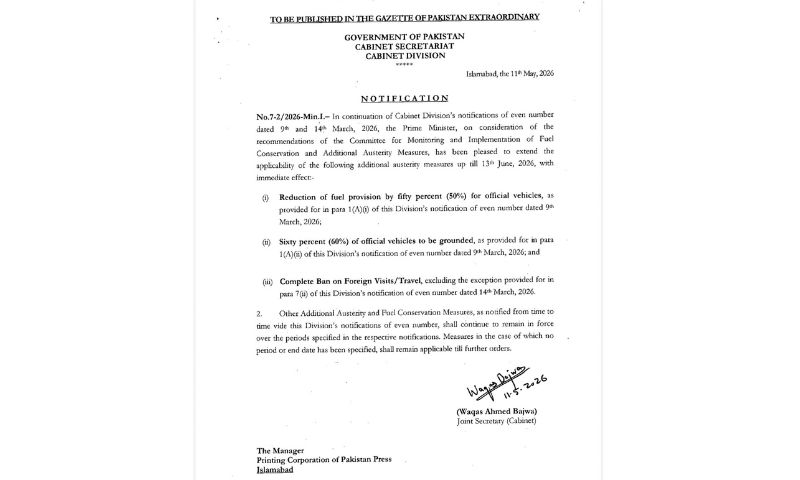
ISLAMABAD: With diplomatic efforts to resolve the Middle East crisis still at an impasse, Pakistan on Monday extended its countrywide austerity and fuel conservation drive until June 13, keeping in place strict cuts on official vehicle usage and fuel supplies.
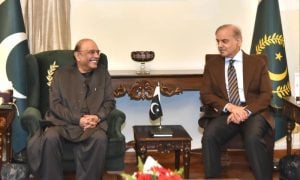
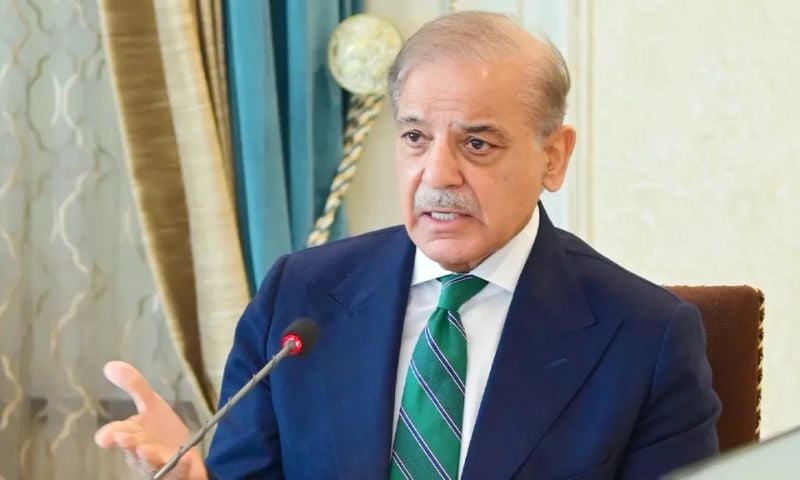
The decision came after Prime Minister Shehbaz Sharif approved the extension on the recommendations of an implementation committee, following which the Cabinet Division issued a formal notification.
Fuel supply cut by half for government vehicles
Under the extended plan, a 50 per cent reduction in fuel allocation for official vehicles will remain in force. Additionally, 60 per cent of all government vehicles will continue to be kept off the roads as part of the broader push to curb national expenditure.
Origins of the crisis
The prime minister first rolled out the austerity package on March 9 in a televised speech, just days after petrol and diesel prices had surged by 20 per cent. The price hike was triggered by supply disruptions caused by the closure of the Strait of Hormuz – a critical artery for global oil shipments.
Iran shut the strait in retaliation for coordinated attacks by the United States and Israel. Those strikes began on February 28 and continued until April 8, when a Pakistan-brokered ceasefire took effect. However, despite the ceasefire holding for now, Washington and Tehran remain locked in disagreement over a permanent peace deal, particularly regarding their rival blockades of the strategic waterway.
Full scope of the austerity plan
During his March 9 address, PM Shehbaz had warned that the entire region was being affected by the Middle East conflict and emphasised that Pakistan was actively pursuing diplomatic channels to ease tensions. He then unveiled a sweeping austerity plan applicable to all federal institutions, including ministries, departments, autonomous bodies, state-owned enterprises, parliament, defence organizations, and the judiciary.
Key measures under the plan include:
- A four-day workweek for most government offices, with the banking sector and essential services exempted
- A mandatory 20 per cent cut in non-essential spending by federal and provincial departments for the final quarter of the fiscal year
- A complete ban on foreign visits by ministers, parliamentarians, and officials except for obligatory travel
- Up to 50 per cent of government employees working from home on alternate days, excluding those in essential services
- Economy-class travel compulsory for all officials
- Replacement of physical meetings with virtual conferences to reduce operational costs