


LONDON: Several major Gulf economies are reassessing billions of dollars in financial commitments to the United States as the ongoing conflict involving Iran places increasing pressure on their economies, energy infrastructure and security systems.
According to Financial Times, officials from Saudi Arabia, the United Arab Emirates, Qatar, and Kuwait have begun internal discussions on reviewing current and future investment agreements with United States.
The review reportedly includes examining whether contractual force majeure clauses could be invoked if the conflict continues to strain their national budgets.
These countries collectively control some of the world’s largest sovereign wealth funds and had previously pledged hundreds of billions of dollars in investments in the US during a Gulf tour by Donald Trump in May 2025.
However, the ongoing regional instability has prompted policymakers to reconsider the scale and timing of these commitments.
A Gulf official familiar with the discussions said the review is precautionary rather than a confirmed withdrawal. Still, the fact that governments are assessing legal options to suspend or modify contracts signals growing concern over the economic impact of the war.
The economic strain is being driven by multiple factors, including reduced energy exports, disruptions to shipping routes, damage to energy infrastructure and a surge in defence spending. Tourism and aviation sectors across the Gulf have also suffered due to rising security risks.
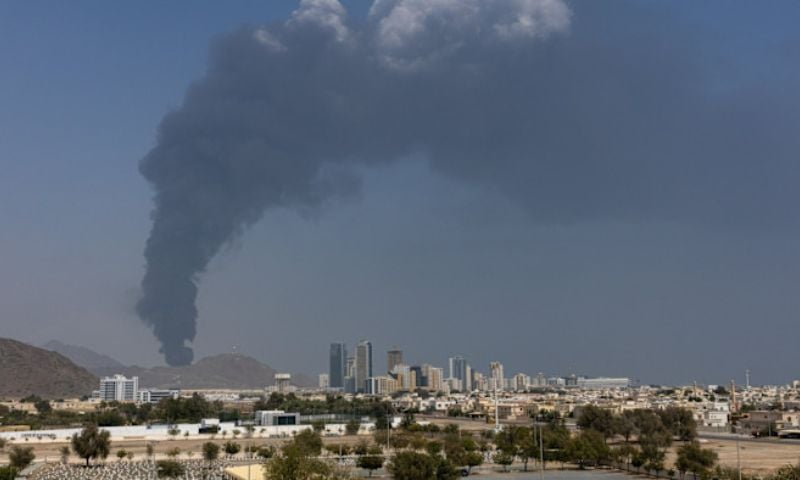
Energy markets have already felt the shock. Iran recently launched drone strikes targeting facilities operated by Qatar Energy in Ras Laffan Industrial City and Mesaieed Industrial City, forcing the world’s largest liquefied natural gas exporter to halt production temporarily.
The company subsequently declared force majeure on several LNG shipments after output was disrupted.
The consequences were immediate in global markets. Wholesale gas prices in Europe surged nearly 50 percent, while Asian LNG prices rose sharply following the announcement. The disruption was worsened by the effective closure of the Strait of Hormuz, a crucial maritime route that handles roughly one-fifth of global LNG trade.
Shipping data indicates that more than a dozen LNG vessels carrying over one million metric tons of gas were stranded in the Arabian Gulf as exports from Qatar were halted. Unlike some regional producers, Qatar has no alternative export route bypassing the strait.
Saudi Arabia’s energy infrastructure has also come under threat. Iranian drones reportedly targeted the Ras Tanura Refinery, the kingdom’s largest domestic oil processing facility operated by Saudi Aramco.
Although the attack caused only limited damage after drones were intercepted, the incident prompted a temporary halt in production as a precaution.
The broader geopolitical situation has left Gulf states in a difficult position. Members of the Gulf Cooperation Council host significant US military assets, making them key allies of Washington but also potential targets for retaliatory actions by Iran.
Frustration within the region has also begun to surface publicly. Emirati billionaire Khalaf Ahmad Al Habtoor openly criticized the US leadership in a message directed at Trump, questioning why Gulf nations were being drawn into a conflict that threatens regional stability and economic security.
Despite the growing debate, Gulf governments have not yet announced any formal decision to cancel or withdraw from US investment agreements.
However, analysts say that the mere consideration of invoking force majeure clauses in such strategic partnerships indicates the seriousness of the financial and political pressures currently facing the region.