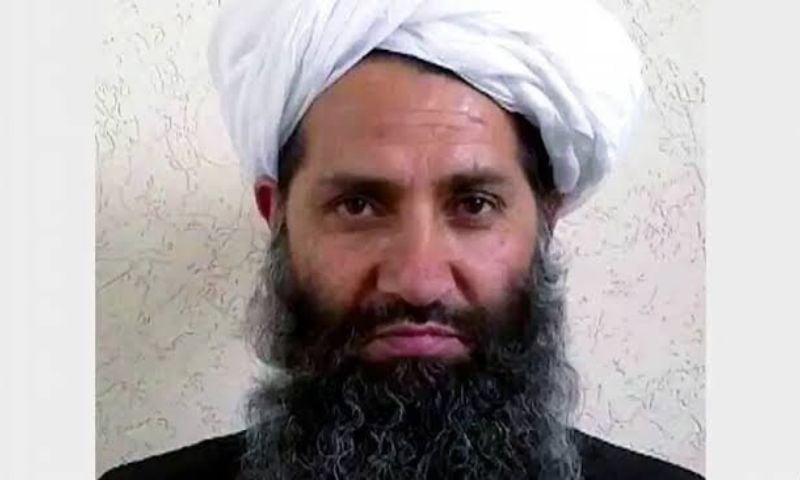
KABUL, Afghanistan: Taliban supreme leader Hibatullah Akhundzada has tightened his control over the group’s administration amid rifts within the Taliban and growing dissent in Afghanistan, restricting Prime Minister Mohammad Hassan Akhund’s authority to convene cabinet meetings without his approval.
The restrictions require the prime minister to seek Hibatullah’s permission before convening ministers in Kabul, Afghanistan International reported, citing sources in Kabul. Deputy prime ministers must also submit their decisions to the supreme leader’s office for approval, the broadcaster reported.
A Taliban source familiar with the matter, cited by Afghanistan International, said that Hibatullah had verbally instructed Mohammad Hassan Akhund not to convene cabinet meetings in Kabul without his permission.
The restrictions reflect the growing insecurity and concentration of authority in Hibatullah’s hands and further limit the powers of senior Taliban officials in Kabul and the provinces, according to the report.
Cabinet Meetings Subject to Approval
Sources, cited by Afghanistan International, said that the prime minister could no longer hold cabinet meetings at the Taliban-controlled presidential palace without prior approval from Hibatullah.
A review by the broadcaster found that the last cabinet meeting chaired by Mohammad Hassan Akhund at the presidential palace took place on 18 May, about five months ago.
The last meeting of the Council of Ministers chaired by Hibatullah himself was held on 13 June, according to information published on the Taliban-controlled presidential palace website and cited by Afghanistan International.
The Taliban has not issued any official statement announcing another meeting of the Council of Ministers since then, the broadcaster reported.
Hibatullah’s office has also instructed ministers and departments based in Kabul to submit reports on their meetings to his office and obtain his approval before making major decisions, according to sources cited by Afghanistan International.
Governors and Security Officials Face Restrictions
The restrictions extend beyond cabinet ministers to provincial governors and senior security officials.
Several officials close to Taliban regime governors told Afghanistan International that governors must obtain Hibatullah’s approval for major provincial decisions and cannot act independently on significant matters.
Sources in the Taliban regime’s interior ministry also told the broadcaster that reports from meetings held by interim interior minister Sirajuddin Haqqani and his deputies are sent to Hibatullah’s office.
Decisions taken at those meetings can be implemented only after approval from the supreme leader’s office, the sources said.
In a further indication of the centralisation of authority, a Taliban security official, cited by Afghanistan International, said that all departments under the General Directorate of Intelligence had been instructed to send official correspondence directly to Hibatullah’s office in Kandahar.
The correspondence is to be sent to the supreme leader’s office rather than to intelligence chief Abdul Haq Wasiq or his deputy, Tajmir Jawad, the official said.
Concentration of Power
The changes have increased Hibatullah’s interference in government decision-making in Kabul and the provinces while further restricting the authority of ministers, governors and senior security officials.
Sources, cited by Afghanistan International, said that the concentration of power had caused frustration among some senior Taliban officials, including Sirajuddin Haqqani.
The latest restrictions follow earlier reports that Hibatullah had steadily curtailed the authority of officials based in Kabul.
In an investigative report published on 9 September 2025, Afghanistan International reported that the powers of Taliban ministers in Kabul had been restricted.
Sources, cited by Afghanistan International, said that many cabinet members lacked independent decision-making authority and played little effective role even in financial matters, staff recruitment and policymaking.
In a separate report on 15 May this year, Afghanistan International said Hibatullah had taken control of appointments to senior civilian and military positions, leaving the prime minister and other Taliban officials in Kabul with little influence over key appointments.
The concentration of authority in Kandahar has also been highlighted by the United Nations.
In its 2024 report, the UN Security Council said major political, economic and security decisions within the Taliban were made by the circle around Hibatullah in Kandahar, while the Kabul-based cabinet largely dealt with administrative and executive matters.