


Monitoring Desk
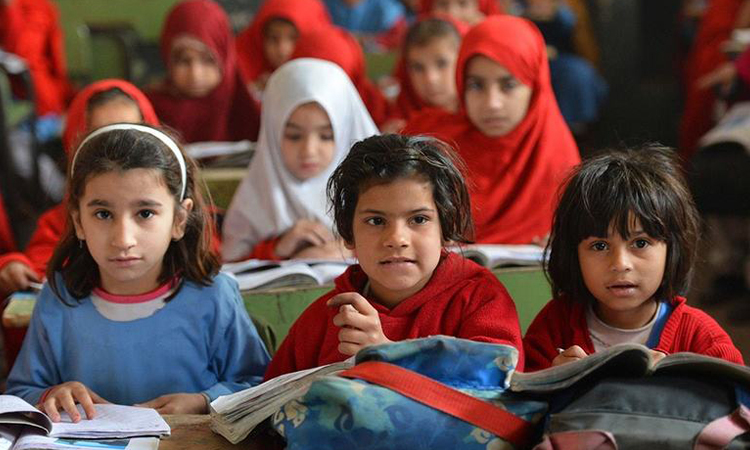
NEW YORK: Governments are not providing enough funding to those children who need education the most, the UN Children’s Fund (UNICEF) argued in a report released Tuesday.
It also called for fair funding to address “learning poverty”. According to the study, which examined data from 102 countries, children from the poorest families benefit the least from national public school funding. Currently, just 16 percent of public education money goes to the lowest 20 percent of students, while 28 percent goes to the wealthiest. The distribution is 11 percent and 42 percent in low-income countries.
In a statement, UNICEF Executive Director Catherine Russell said that the organization was failing the children. The majority of educational systems throughout the world underfund the children who need it most. She added that the most economical method to safeguard the future of children, communities, and nations is to invest in the education of the poorest children. Actual progress can only be made if we invest in every child.
The report, Transforming Education with Equitable Financing, examines government spending on education at all levels, from pre-primary to tertiary education. A one percent improvement in providing public education resources to the poorest quintile of learners could raise 35 million primary school-aged children out of “learning poverty,” as defined by UNICEF. In both low- and middle-income nations, students from wealthy households are more likely to benefit from public education spending.
Education ratio in low-income nations
According to UNICEF, the difference is more noticeable in low-income nations. According to data, privileged children receive more than six times as much support for public education as students from the poorest families.
The wealthiest students in middle-income countries like Ivory Coast and Senegal got around four times as much public education funding as the poorest students. The difference in expenditure between the two groups is up to 1.6 less in high-income countries, with France and Uruguay being among the higher-income nations. According to the report, children who live in poverty are less likely to have access to education and leave school earlier. Additionally, despite receiving far higher public education investment per student, they are underrepresented in higher education.
Additionally, there is a higher likelihood of these children residing in isolated, rural locations with poor services. According to UNICEF, education institutions worldwide were mainly failing children even before the COVID-19 pandemic, with hundreds of millions of students enrolling in classes but failing to master fundamental reading and math abilities. According to current figures cited by the UN agency, two-thirds of all 10-year-olds worldwide cannot read and comprehend a basic story.
The report urged quick action to guarantee that all students had access to educational materials. It outlined four main recommendations: releasing pro-equity public funding for education; prioritizing public foundational learning financing; monitoring and ensuring equitable distribution of education aid in humanitarian and development contexts; and investing in innovative ways to educate people.