


Key Points
- Inflation is expected to remain moderate and within central bank’s target range
- External pressures appear contained, with current account deficit forecast near 1% of GDP
- Economic growth is projected to strengthen in medium term as reforms take hold
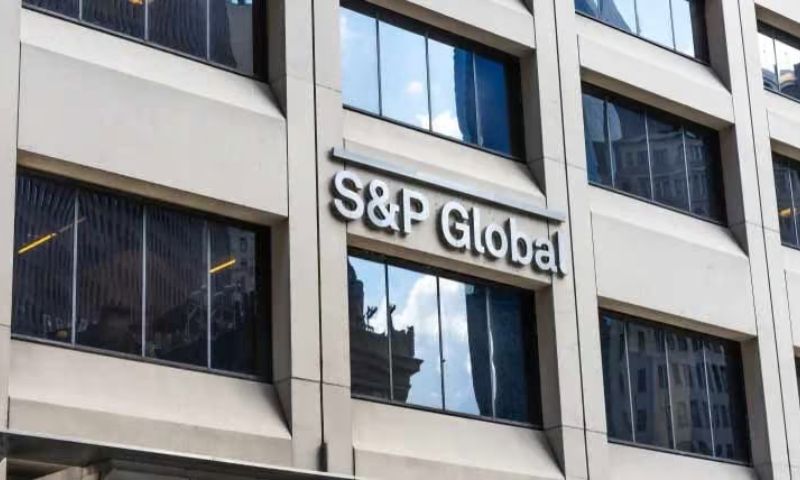
ISLAMABAD: A leading global market intelligence and ratings firm, S&P Global Market Intelligence, has signalled a more stable outlook for Pakistan’s economy, forecasting easing inflation, contained external pressures and a gradual strengthening of growth in line with the State Bank of Pakistan’s latest projections.
In its updated macroeconomic assessment, the firm stated that consumer price inflation is expected to average about 5.1 per cent in 2026 and rise modestly to 5.6 per cent in 2027.
These projections fall within the central bank’s official target range of 5 to 7 per cent, suggesting that price pressures are easing after a period of elevated inflation and tighter monetary policy.
The State Bank of Pakistan, the country’s central bank, has repeatedly stressed that maintaining price stability remains its primary objective, especially in an economy that has faced recurring balance-of-payments stress.
Analysts say the convergence between the bank’s targets and the firm’s forecasts could help anchor expectations among investors and businesses.
On the external front, the firm expects Pakistan’s current account deficit, a key measure of ”how much the country spends abroad relative to what it earns”, to remain relatively contained.
It is forecast to be 0.5 per cent of gross domestic product in 2026, broadly in line with the central bank’s guidance that the deficit in the current fiscal year will stay between zero and one per cent of GDP.
For 2027, according to the S&P Global, the deficit is likely to be edging up to 1.3 per cent of GDP, still within levels economists consider manageable for an emerging market economy.
Economic growth is projected at 3.5 per cent in fiscal year 2026, slightly below the central bank’s forecast range of 3.75 to 4.75 per cent.
However, the firm expects momentum to improve in the following year, with growth accelerating to about 4.4 per cent as macroeconomic stabilisation, fiscal discipline and structural reforms begin to feed through into higher investment and consumption.
Commenting on the projections, Adviser to the Finance Minister Khurram Schehzad said the assessment reinforced confidence in the direction of economic policy.
In a post on X, he said: “The latest macroeconomic forecasts align with the central bank’s outlook on inflation, the current account and growth, reinforcing stable economic expectations and investor confidence.”
Economists caution that the outlook remains sensitive to external shocks, including global interest rate movements, energy prices and geopolitical developments.
They add that sustaining the recovery will depend on consistent policy implementation, progress on reforms agreed with international lenders and the ability to mobilise external financing.
Even so, the alignment between domestic and international forecasts is being seen as a positive signal for markets, suggesting that Pakistan’s economy may be moving onto a more predictable and sustainable path after years of repeated instability.