


DOHA, Qatar: Global oil and gas prices surged on Thursday after a sharp escalation in attacks on energy infrastructure across the Gulf, raising fears of prolonged disruption to global supplies and a deepening energy crisis.
Brent crude futures climbed above $115 per barrel in early trading, marking their highest level in over a week, while some reports put prices closer to $116 after an 8 percent jump.
Natural gas prices also spiked, with global benchmarks rising by as much as 30 percent amid intensifying conflict between Iran and the US and Israel.
Market analysts warned that prices could climb significantly further if disruptions persist, particularly with the Strait of Hormuz — a critical artery for global energy shipments — effectively closed to most vessels.
Strait of Hormuz disruption
Analysts, cited by Al Jazeera, said the closure of the Strait of Hormuz has amplified concerns about supply shortages.
Vandana Hari, founder of Vanda Insights, told Al Jazeera that benchmark Middle Eastern crude grades such as Oman and Dubai had already crossed $150 per barrel, adding that “$200 is already within sight” under current conditions.
She said future price movements would depend largely on how long the strait remains blocked.
Attacks hit key energy facilities
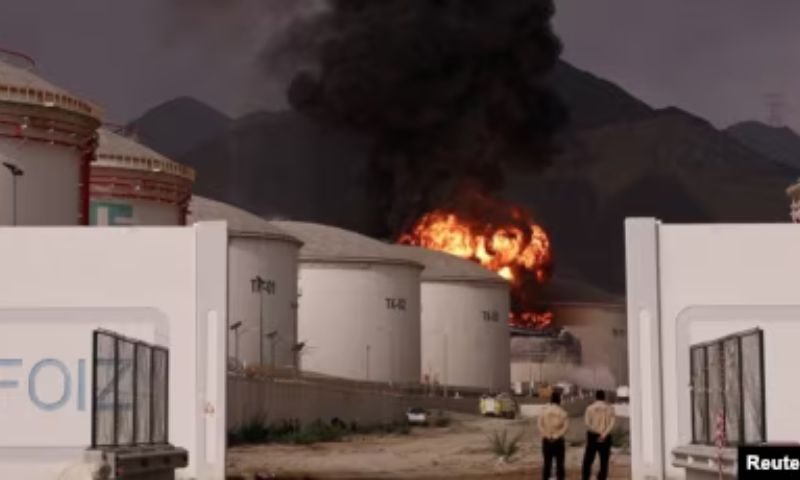
The surge in prices follows a series of Iranian strikes on major energy facilities across the region.
Iran launched attacks on infrastructure in Qatar and Saudi Arabia after Israel struck Iran’s South Pars gas field, one of the world’s largest.
QatarEnergy confirmed “extensive damage” to the Ras Laffan industrial complex — the world’s largest liquefied natural gas (LNG) facility — forcing operations to halt.
The site accounts for roughly 20 percent of global LNG supply.
Energy major Shell plc said it was assessing damage to its Pearl gas-to-liquids plant at Ras Laffan, adding that all staff were safe.
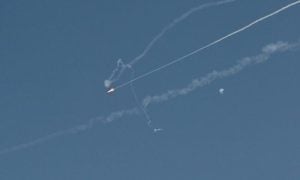
In Saudi Arabia, the Samref refinery at Yanbu was also reportedly targeted, but the attempt was foiled with successful interception.
Facilities in Kuwait and Abu Dhabi were also affected, with some operations shut down as a precaution.
Supply shock drives market volatility
Energy analysts described the situation as a major supply shock affecting both oil and gas markets.
Amena Bakr, head of Middle East and OPEC+ insights at Kpler, told CNBC that oil prices could rise to $150 per barrel or higher if the conflict continues through March.
“This is a supply shock — not only of oil — that hits the world,” she said, warning that markets had yet to fully reflect the scale of disruption.
ING commodities strategists Warren Patterson and Ewa Manthey said the attacks “raise fears of a more prolonged disruption to Arabian Gulf energy supplies” and point to further upward pressure on prices.
Gas markets face strain
Gas markets have been hit particularly hard due to the damage to Qatar’s LNG infrastructure.
European benchmark gas prices rose sharply, with Dutch wholesale prices climbing to their highest level since late 2022.
Bloomberg Intelligence warned prices could reach €90 per megawatt-hour later this year, up from around €66, citing potential long-term supply disruptions.
In the United Kingdom, wholesale gas prices surged by around 140 per cent since late February, reaching levels not seen since 2023.
Inflation risks and economic fallout
Economists warned that sustained high energy prices could trigger wider economic consequences, including inflation and slower growth.
James Meadway, co-director of UK think tank Verdant, told Al Jazeera that the price surge was unlikely to be temporary.
“What’s happened now is… a severe disruption to the basic production of oil and gas,” he said, adding that the increase in prices would likely be “substantial”.
Germany’s economy minister Katherina Reiche warned that rising energy costs could force companies to relocate, adding pressure on Europe’s largest economy, which has already faced sluggish growth.
In financial markets, the surge in energy prices triggered a global sell-off. Japan’s Nikkei index fell 3.4 per cent, while major European indices including Germany’s DAX and the UK’s FTSE 100 also declined.
Meanwhile, US Treasury Secretary Scott Bessent said Washington may ease restrictions on Iranian oil already at sea and consider releasing strategic reserves to stabilise global supply.
Energy ‘weaponised’
Sultan Al Jaber, chief executive of Abu Dhabi National Oil Company (ADNOC), condemned the attacks, warning that “energy flows are being weaponised” in what he described as “global economic warfare”.
Analysts said the scale of disruption has fundamentally altered the outlook for global energy markets.
Consultancy Wood Mackenzie estimated that each additional month of disruption at Ras Laffan could remove around 1.5 per cent of annual global LNG supply.
Market participants said oil prices could climb towards $150 per barrel or higher in the near term, with some warning of a possible spike to $200 if the conflict escalates further.