GENEVA: The number of people forced to flee their homes due to war, violence and persecution declined in 2025 for the first time in more than a decade, according to a new report released by the United Nations refugee agency (UNHCR) on Thursday.
Despite the encouraging trend, the organisation warned that millions of refugees remain trapped in long-term displacement with limited prospects of rebuilding their lives.
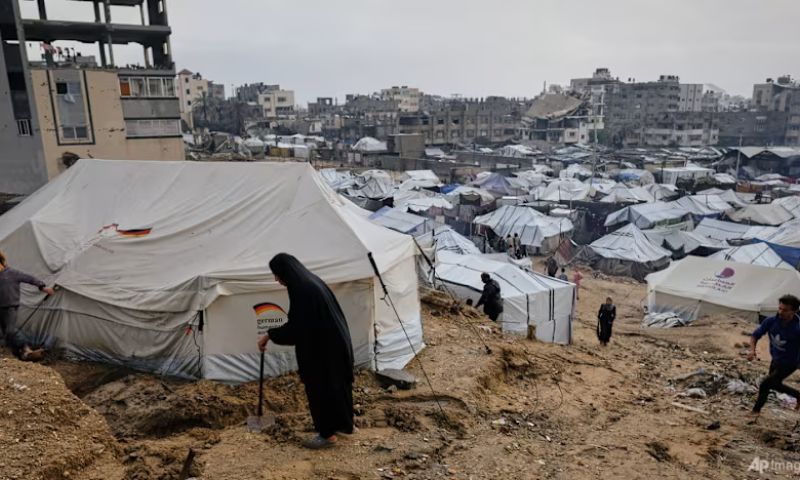
The report revealed that 5.4 million people were newly displaced during 2025, bringing the total global refugee and refugee-like population to 41.6 million by the end of the year. The figure includes approximately six million Palestinian refugees registered worldwide.
At the same time, nearly 14.7 million refugees and internally displaced persons (IDPs) returned to their places of origin during the year, representing a 50 per cent increase compared with 2024. UNHCR described the figure as the second-highest annual total of returns recorded since 1965.
According to the agency, the majority of return movements occurred in six countries: the Democratic Republic of the Congo, Sudan, Syria, Afghanistan, Ukraine and Myanmar.
While these returns contributed significantly to reducing global displacement figures, UNHCR cautioned that many people returned to environments still plagued by insecurity, damaged infrastructure and inadequate access to essential services.
The report highlighted Afghanistan as one of the most notable examples. Approximately 2.9 million Afghans returned home in 2025, including around 1.9 million refugees. This represented a fivefold increase compared with the previous year.
UNHCR noted that stricter immigration and residency policies implemented by neighbouring countries played a major role in driving the increase, with many returnees reporting that they had little choice but to leave their host countries.
As a result of the large-scale repatriation, the global Afghan refugee population fell sharply from 5.8 million in 2024 to 3.7 million by the end of 2025.
Syria also witnessed a significant rise in returns following major political developments. Around 1.3 million Syrians returned to their homes in 2025, nearly three times the number recorded a year earlier.
The increase followed the collapse of former President Bashar al-Assad’s government in December 2024, leading to a reduction in the global Syrian refugee population from six million to 4.9 million.
However, UNHCR stressed that conditions in Syria remain challenging. Many returnees continue to face insecurity, widespread destruction of infrastructure, fragile economic conditions, limited employment opportunities and sporadic outbreaks of violence in various parts of the country.
The agency further noted that developments in the Middle East have already begun influencing global displacement trends in 2026. According to the report, approximately 3.2 million people have been temporarily displaced within Iran following joint United States-Israeli military strikes launched in late February.
In neighbouring Lebanon, around one million people have reportedly been forced to leave their homes since the outbreak of conflict on 2 March, amid ongoing Israeli attacks and evacuation orders.
Despite the reduction in overall displacement figures, UNHCR warned that the world continues to face a severe and persistent refugee crisis. The agency reported that roughly 70 per cent of all refugees worldwide have been living in exile for five years or longer, often in countries such as Lebanon, Jordan, Türkiye and Iran.
To address this challenge, UNHCR has announced an ambitious goal of reducing by half the number of refugees and displaced people living in protracted situations and dependent on humanitarian assistance by 2035.
The strategy focuses on expanding access to education, employment opportunities and economic inclusion, particularly in low- and middle-income countries that host the vast majority of the world’s refugees.
UNHCR High Commissioner Barham Salih said that while asylum and international protection remain essential and non-negotiable, the international community must do more to ensure refugees are not left in limbo for years or even decades.
He emphasised that millions of displaced people require realistic opportunities to rebuild their lives through education, jobs and long-term solutions rather than relying indefinitely on humanitarian aid.
The agency said its long-term approach will combine support for voluntary returns with efforts to improve refugees’ access to labour markets and educational institutions in host countries.
By enabling displaced people to become economically self-reliant, UNHCR hopes to reduce dependency on aid while creating sustainable pathways toward stability and integration.
Although the decline in global displacement recorded in 2025 marks a significant milestone, the report concludes that the scale of forced migration remains historically high.
Ongoing conflicts, political instability and humanitarian crises continue to uproot millions, underscoring the need for sustained international cooperation and durable solutions for the world’s displaced populations.