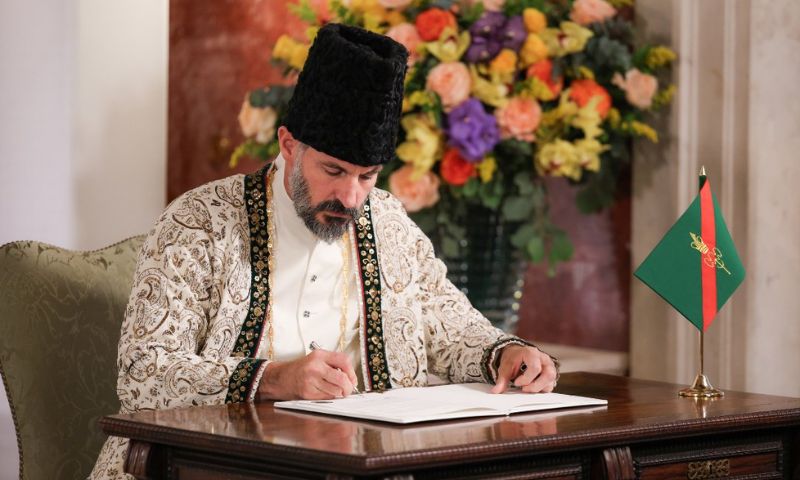



GILGIT: Authorities in Pakistan’s northern Gilgit-Baltistan region have intensified preparations ahead of the upcoming visit of Rahim Aga Khan V, as communities across the mountainous region prepare to welcome a leader whose institutions are widely credited with transforming the socio-economic landscape of Gilgit-Baltistan over several decades.
Officials said Prince Rahim Aga Khan V will visit various parts of Gilgit-Baltistan from May 21 to May 25 and will be accorded the status of a state guest during his stay.
The visit is expected to attract large public gatherings in areas including Hunza’s Passu Cones region, Gilgit city, Gahkuch Bala and Taus Yasin.
Preparations and security arrangements were reviewed during a high-level meeting chaired by Pakistan’s Minister for Kashmir Affairs and Gilgit-Baltistan Amir Muqam.
Legacy of Education and Human Development
The vision and legacy of Aga Khan IV transformed Gilgit-Baltistan into a recognised model of community-driven development, high literacy and social stability.
Operating under the Aga Khan Development Network, institutions such as the Aga Khan Foundation and the Aga Khan Rural Support Programme pioneered development models centred on human dignity, gender equity, education and pluralism across the mountainous region.
Pioneering Education and Literacy
Education remained central to Aga Khan’s vision for uplifting communities from poverty and isolation.
The Aga Khan Education Services operates more than 100 schools in Gilgit-Baltistan, significantly expanding access to quality education, especially for girls.
As a result, districts such as Hunza and Ghizer now record some of Pakistan’s highest literacy rates.
The Aga Khan Foundation’s School Improvement Programme trained more than 1,900 public and private school teachers while improving learning standards across over 560 schools in the region.
Meanwhile, the Professional Development Centre, North — an extension of Aga Khan University — has equipped teachers, administrators and education professionals with modern pedagogical skills.
Promoting Peace, Pluralism and Intercommunal Harmony
Aga Khan institutions have promoted coexistence through inclusive and non-denominational development initiatives.
Projects implemented by AKF and AKRSP were designed to benefit all communities.
Through the creation of Village Organisations and Women’s Organisations, communities from different backgrounds jointly managed local resources and development projects, strengthening social cohesion and trust.
The Aga Khan Trust for Culture also restored historic landmarks, including the centuries-old Amburiq Mosque in Baltistan, preserving shared cultural heritage and encouraging intercommunal harmony.
Rural Development and Economic Transformation
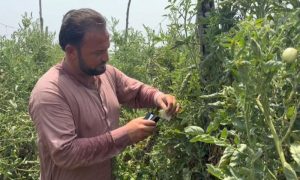
AKRSP has introduced a grassroots development model focused on social mobilisation and self-reliance instead of traditional top-down charity approaches.
The programme formed more than 5,200 Village and Women’s Organisations, mobilising a majority of households across Gilgit-Baltistan into collective decision-making structures.
AKRSP also encouraged micro-savings initiatives that later contributed to the establishment of the First MicroFinance Bank, helping expand financial inclusion and support small businesses.
Thousands of infrastructure projects — including roads, bridges, irrigation channels, drinking water systems and flood protection works — were constructed in remote mountain communities.
The organisation also pioneered renewable energy initiatives through micro-hydro power projects and solar-powered irrigation systems, while environmental campaigns led to the plantation of more than 51 million trees across the region.
Women’s Empowerment and Social Inclusion
Before the expansion of AKRSP programmes, women in many rural parts of Gilgit-Baltistan had limited economic opportunities and little public representation.
Through dedicated women-focused organisations, vocational training and agricultural programmes, tens of thousands of women gained skills in livestock management, handicrafts, farming and entrepreneurship.
Women-only marketplaces introduced by AKRSP enabled female entrepreneurs to safely enter local economies and improve household incomes.
Early Childhood Development initiatives also trained local women to manage education and healthcare programmes at the community level.
Through its long-term focus on education, social mobilisation, economic empowerment and pluralism, the Aga Khan development model helped transform the Gilgit-Baltistan region into one of Pakistan’s leading examples of sustainable community development and social harmony.