Key Points
- Rs23bn allocated for development expenditure.
- Departments’ non-development budgets face cuts of up to 30 per cent.
- Rs1bn allocated for social protection for the first time.
- Rs4bn social sector endowment fund proposed.
- Health, education and agriculture receive increased allocations.
- Government and opposition members get equal development funds.
- One per cent climate levy to be deducted from projects.
GILGIT, Pakistan: The Gilgit-Baltistan cabinet on Tuesday approved a Rs218 billion budget for fiscal year 2026-27, placing social protection, human development, employment generation and fiscal austerity at the centre of the regional government’s spending priorities.
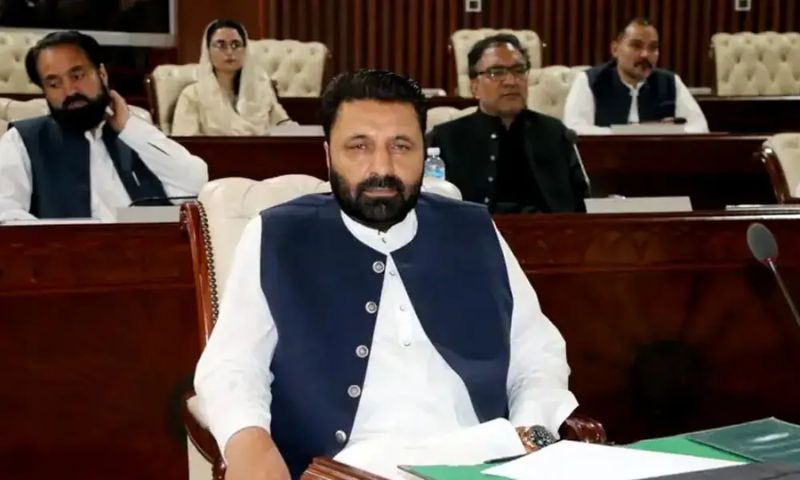
The budget was approved unanimously during a cabinet meeting chaired by Chief Minister Amjad Hussain, where the provincial finance secretary and additional chief secretary development briefed cabinet members on its major contours.
The approved package includes Rs23 billion for development expenditure and Rs88 billion for non-development expenditure, while the federal government’s stabilisation package has been incorporated to bring the overall budget size to Rs218 billion, according to the government.
The previous year’s budget had an overall outlay of about Rs148.63 billion, including Rs88.19 billion for non-development expenditure and Rs37 billion for development.
Social sector focus
Chief Minister Amjad Hussain said the budget had been prepared despite limited resources, with its primary focus on the social sector, welfare of deserving people, youth and employment opportunities for women.
He said the government was taking measures to reduce non-development expenditure, with all departments facing cuts of up to 30 per cent in their non-development allocations.
The chief minister said further austerity measures would be introduced in view of rising oil prices and the broader economic difficulties confronting the country.
The cabinet approved an increase in the minimum wage for employees of government and private-sector institutions from Rs40,000 to Rs44,000.
The chief minister said measures had also been proposed to reduce disparities in government employees’ salaries and improve the living standards of middle and low-income households.
Health, education boost
Health, education and agriculture have been identified as major priority sectors under the new budget.
The chief minister said additional funds had been earmarked for healthcare, including a Rs170 million increase for the purchase of medicines.
The budget also envisages a larger Health Endowment Fund and increased scholarships for talented students.
The emphasis on endowment-based funding is intended to provide more sustainable support for healthcare and education beyond annual departmental allocations.
Agriculture and water
The government has also proposed Rs50 million for water management to support the agricultural sector.
The allocation is aimed at strengthening water management and supporting agricultural activity in a mountainous region where terrain, water availability and climate-related risks pose persistent challenges to farming.
For the first time in Gilgit-Baltistan’s history, the government has allocated Rs1 billion for social protection, according to the chief minister.
It has also proposed establishing a Rs4 billion endowment fund for the social sector.
The measures are intended to strengthen support for vulnerable and deserving segments of society while creating a more structured financing mechanism for social welfare initiatives.
Climate financing
The government has introduced a new mechanism for financing climate-related interventions.
Chief Minister Amjad Hussain said development projects previously included climate funds, but deductions were not being practically implemented.
Under the new arrangement, one per cent of development-project allocations will be deducted as a climate fund and deposited into the consolidated account.
The cabinet also decided that hybrid vehicles would be purchased for government departments as part of efforts to respond to climate and fuel-related challenges.
Older government vehicles that consume excessive fuel will be auctioned.
Development spending
Chief Minister Amjad Hussain said the high “throw-forward” — the accumulated cost of ongoing development schemes yet to be completed — had badly affected the development process in G-B.
He said the government was reducing the throw-forward to restore the development cycle and accelerate implementation of development projects.
The chief minister directed the additional chief secretary development and other relevant secretaries to improve and ensure transparency in the PC-I, tendering and other stages of development projects.
He said the objective was to ensure that development funds were used effectively and actually translated into completed projects.
Equal development funds
In another major decision, the chief minister said government and opposition members had been allocated equal development funds for the first time.
The stated objective is to ensure equitable distribution of resources among different areas and allow development to proceed on an equal basis.
The policy could also reduce accusations of politically selective development spending, although its implementation and geographical distribution will determine its practical impact.