Key Points
- GCC leaders demand restoration of navigation in the Strait of Hormuz
- Strong condemnation of Iranian strikes on civilian and infrastructure sites
- Reaffirmation of collective self-defence under international law
- Emphasis on unity: GCC security described as “indivisible”
- Call for Iran to rebuild trust and reduce regional tensions
- Praise for rapid recovery of energy facilities and supply chains
- Push to accelerate joint projects, including Gulf Railway and defence systems
RIYADH: Saudi Crown Prince Mohammad bin Salman chaired a high-level consultative meeting of the Gulf Cooperation Council (GCC) in Jeddah on Tuesday, where leaders strongly called for the restoration of freedom of navigation in the strategically vital Strait of Hormuz amid escalating regional tensions.
The summit brought together heads of state and senior representatives from GCC member countries to deliberate on pressing regional and international developments, with a particular focus on recent security challenges and coordinated responses, according to the Saudi Press Agency (SPA).
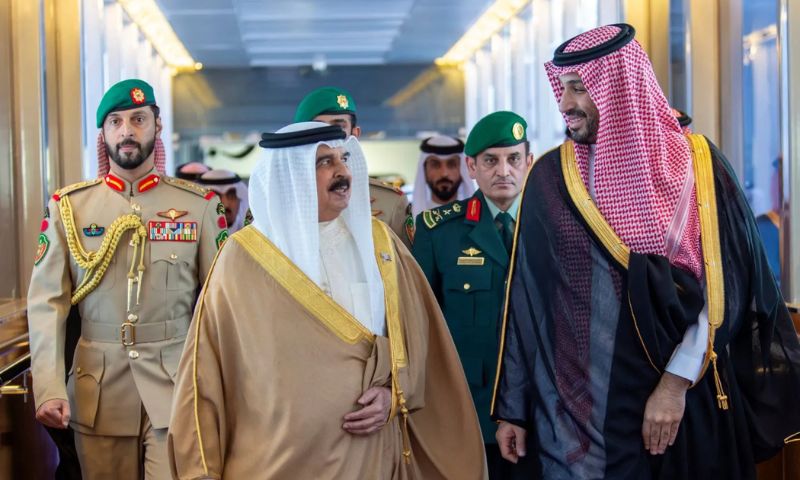
Ahead of the formal proceedings, the Saudi crown prince received key Gulf leaders upon their arrival.
Among them were Kuwait’s Crown Prince Sabah Al-Khalid Al-Sabah, Bahrain’s King Hamad bin Isa Al-Khalifa, and Qatar’s Emir Sheikh Tamim bin Hamad Al-Thani.
UAE Deputy Prime Minister and Foreign Minister Sheikh Abdullah bin Zayed Al-Nahyan was also welcomed by Saudi Foreign Minister Prince Faisal bin Farhan.
Following the meeting, GCC Secretary-General Jassim Mohammed Al-Budaiwi stated that discussions were dominated by concerns over rising regional instability, particularly in light of recent Iranian strikes targeting GCC member states and Jordan.
Al-Budaiwi said the Gulf leaders issued a strong condemnation of the attacks, describing them as violations of sovereignty and international law, especially as they targeted civilian areas and critical infrastructure.
He stressed that such actions undermine regional peace and security, urging Iran to take concrete steps to rebuild trust with its neighbours.
The secretary-general emphasised that the leaders reaffirmed the bloc’s collective right to self-defence under international law, underscoring that the security of GCC nations remains interconnected and indivisible.
A key outcome of the summit was the unified rejection of any attempts to disrupt maritime navigation in the Strait of Hormuz – a crucial artery for global energy supplies.
Leaders called for immediate measures to ensure stability and the uninterrupted flow of shipping through the waterway.
In addition to security concerns, the summit also highlighted the resilience of GCC countries in responding to recent crises.
Leaders praised the readiness of their armed forces and the swift recovery efforts undertaken, including the rapid restoration of damaged energy infrastructure and steps taken to safeguard supply chains.
According to Arab News, the meeting also underscored the urgency of accelerating joint Gulf initiatives.
These include long-standing projects such as the Gulf Railway, regional energy and water interconnection schemes, and enhanced military coordination mechanisms.
Among the proposals discussed was the development of a unified early warning system to counter missile threats more effectively, reports Arab News.
The summit concluded with a renewed commitment to deeper regional cooperation, reflecting a shared determination among GCC states to confront emerging challenges collectively while ensuring long-term stability and economic continuity.