


KEY POINTS
- Ganish served as a crucial stop for Silk Route caravans.
- Iconic man-made pond provides water from Ultar Glacier.
- Villagers historically preserved butter using glacial water pits called Dhar.
- Sawaab-e-Haa guesthouse offered rest and lodging for travellers.
- Ancient wooden mosques represent four major tribes of Ganish.
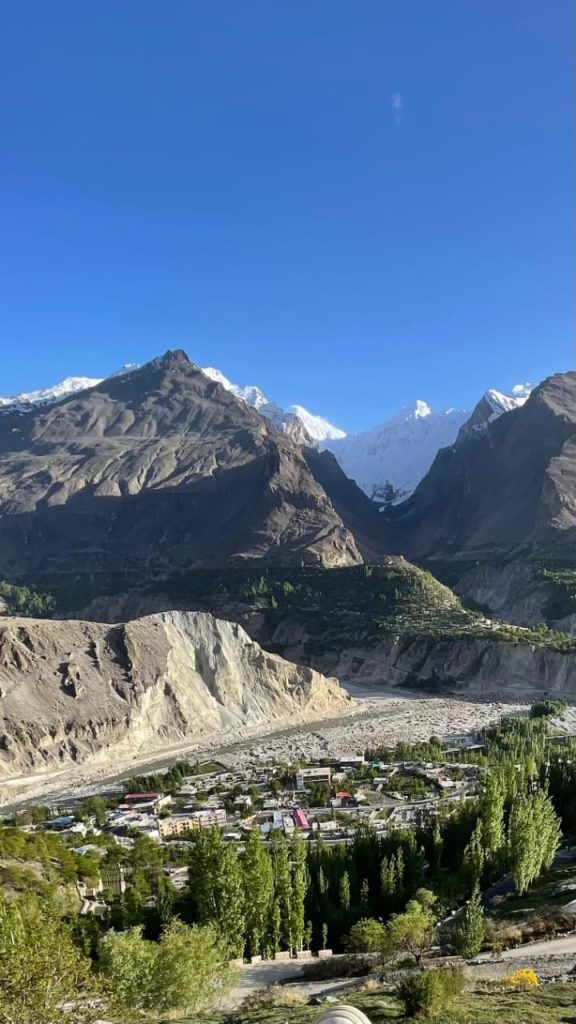
HUNZA, Pakistan: Along the mighty Karakoram Highway (KKH) — the modern artery linking Pakistan with China and echoing the footsteps of the ancient Silk Route — rests Ganish, a thousand-year-old settlement that has long served as a point of reception for travellers and traders entering the Hunza Valley from Central Asia and China.
Located nearly 100 kilometres northeast of Gilgit city, the provincial headquarters of Gilgit-Baltistan (G-B), Ganish is celebrated for its preserved heritage, ancient watchtowers, traditional mosques, and a remarkable water reservoir that stands as a symbol of collective ingenuity.
Walking through history
The origin of the name Ganish remains uncertain, though locals believe it is derived from the Burushaski word Ghenish, meaning gold.
Burushaski, still spoken widely in Hunza and Yasin valleys, reflects the linguistic richness that shaped the culture of this historic village.
A brief walk from the KKH into the heart of the old settlement feels like crossing a threshold into another era. Houses constructed from stone, mud, and wood line the narrow alleys, their textures telling silent stories of craftsmanship and survival.
These dwellings were built not merely as shelters but as reflections of communal living, environmental adaptation, and cultural identity.
Amjad Hussain, 53, an educationist and historian, says for centuries, Ganish served as an important resting point for caravans navigating the harsh terrain of the Karakoram.
Traders arriving from Yarkand, Kashgar, and Gilgit considered it a crucial stop on the Silk Route. This unceasing movement of people enriched the village culturally, architecturally, and economically, making it a melting pot of influences.
The settlement had only one small wooden entrance door, secured from inside with a heavy beam to protect residents from foreign invaders.” – Ejazullah Baig, historian from Hunza
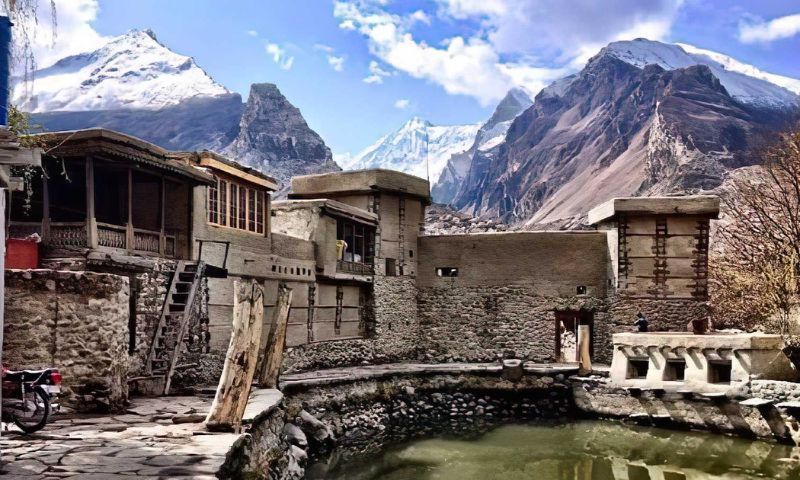
At the village entrance stands a massive man-made pond — one of Ganish’s most iconic features. Surrounded by centuries-old homes and communal spaces, the reservoir was constructed in phases and served for generations as the primary water source.
Alongside the pond flows a narrow water channel carrying glacial water from the Ultar Glacier, the lifeline for the entire valley.
Gul Bashir,78, a village elder, says that in ancient times, villagers practiced a unique method of food preservation using the flowing stream. “They dug small pits called Dhar beneath the channel to store butter.”
The cold glacial water kept it fresh for months, and each household had its own designated pit. These community-driven practices highlight the resourcefulness of Ganish’s early inhabitants.
Adjacent to the pond stands a two-storey guesthouse known locally as Sawaab-e-Haa. For weary travellers, this structure served as a much-needed station of rest.
Wooden pegs fixed along the outer walls were used to tie horses, while the rooms provided basic lodging for caravan groups.
The guesthouse survives as a reminder of the hospitality traditions embedded deeply in the social fabric of Ganish.
Ejazullah Baig, a historian from Hunza, says that the old residential cluster, known as Ganish Khun, was designed with defence as a priority.
“The settlement had only one small wooden entrance door, secured from inside with a heavy beam to protect residents from foreign invaders.”
He adds that its narrow, curved alleys and elevated walkways were deliberately built to confuse intruders and provide vantage points for defence.
Climate-shaped architecture
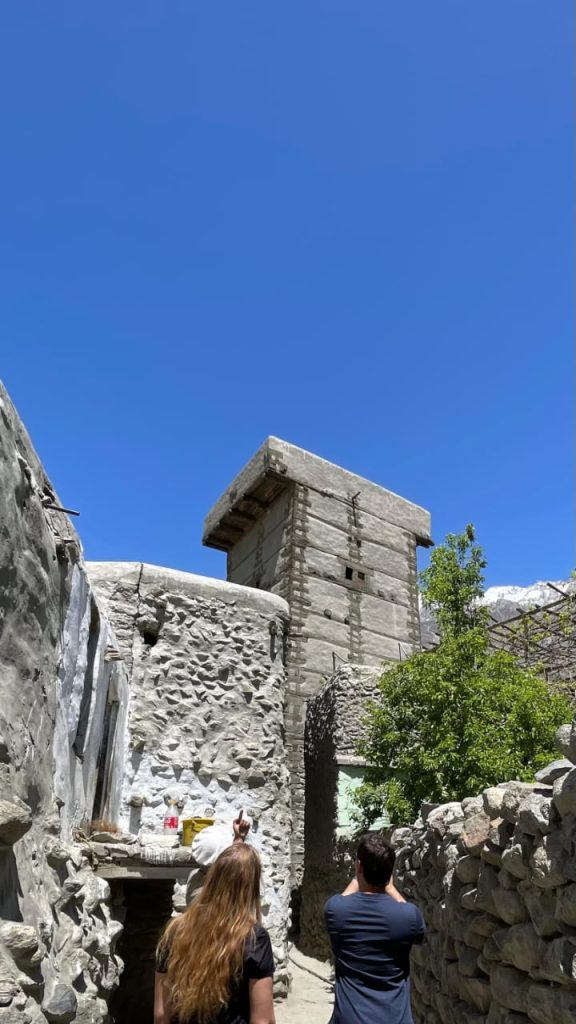
Once protected by at least 14 watchtowers, Ganish today retains four towers in their original shape. Built of stone, mud, and timber, these towers offered residents a clear view of incoming threats and served as strategic lookout points.
Their remains stand as testaments to the village’s resilience through centuries of unpredictable conflict and movement along the Silk Route.
The region’s harsh climate — severe winters and comparatively warm summers — influenced the traditional architectural style of Ganish.
Most homes were constructed in two storeys: the ground floor for winter, where thick walls and insulated designs provided warmth; and the upper floor for summer, where ventilation and sunlight improved comfort.
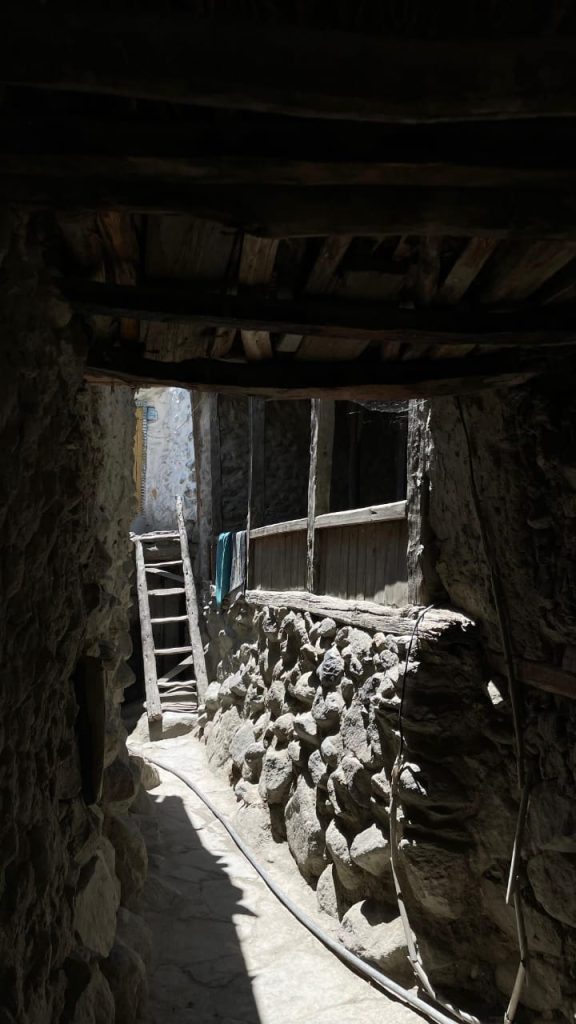
Many such houses remain in good condition and are still inhabited, though some structures have deteriorated with time and environmental changes.
UNESCO recognised heritage
In the centre of the settlement lie four ancient wooden mosques, each representing a major tribe of Ganish: Yarikutz, Rupikuz, Kuyokutz, and Mamorukuz.
Built as family legacies, these mosques are simple yet deeply spiritual. One mosque features two rooms, while the other three have single prayer rooms with plain walls, minimalist mihrabs, and beautifully carved wooden elements.
Travellers from all over the world come here. Visiting Hunza is incomplete without seeing Ganish.” – Abbas Ali, tour guide
These structures showcase the evolution of early Islamic architecture in the region and highlight how faith was woven into the daily life of the community.
For its exceptional efforts in preserving such cultural heritage, Ganish received two UNESCO Asia-Pacific Awards for Cultural Heritage Conservation, first in 2002, and again in 2009.
Walking through the narrow lanes of Ganish feels like entering a living museum. The pathways bend gracefully between high stone walls, opening occasionally into small communal courtyards where families once gathered for meals, festivals, and ceremonies. Every corner reflects stories of human endurance, adaptation, and harmony with nature.
Another local historian, Shabbir Hussain, 57, describes Ganish as “one of the main tourist attractions in Hunza Valley due to its unmatched heritage and history.” He says earlier restoration efforts gave new life to a village that was once on the brink of collapse.
Likewise, Ashraf Hussain,39, a tour guide working at Ganish Khun, notes the increasing footfall of visitors: “A large number of tourists visit this place. It is one of the most unique heritage-rich spots in Hunza Valley.”
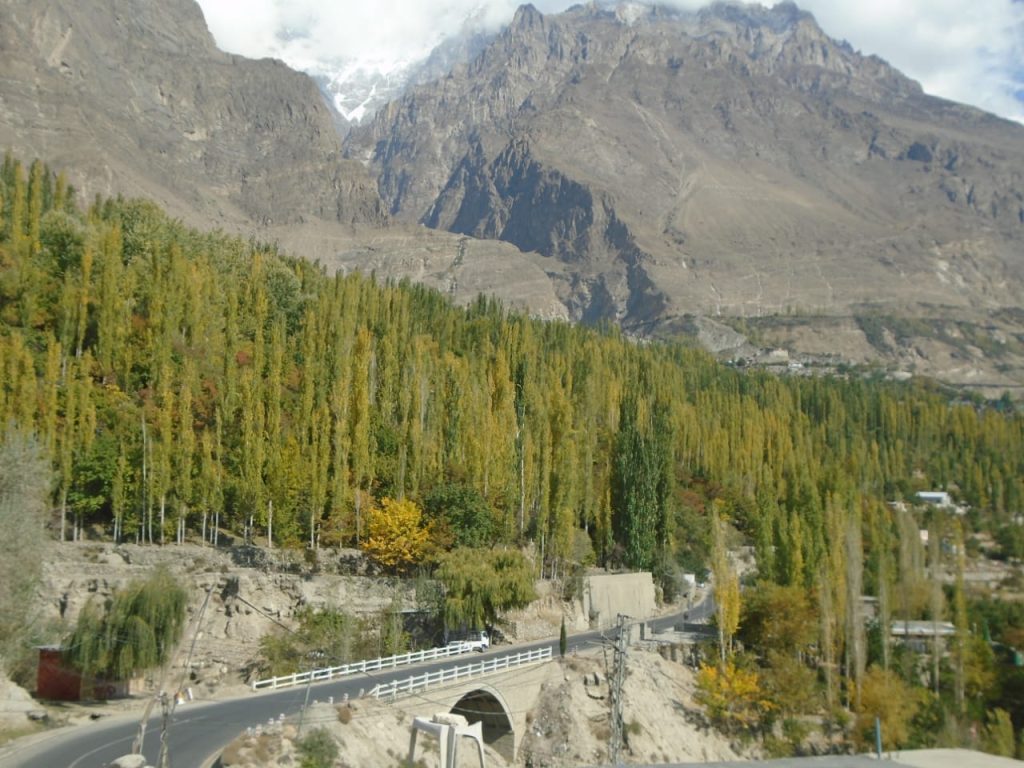
Tour guide Abbas Ali, 40, based in Hunza, adds: “Travellers from all over the world come here. Visiting Hunza is incomplete without seeing Ganish.”
Enduring Silk Route
While tourism brings economic opportunities, it also presents challenges. Zulfiqar Ali, 47, from Ganish, a community member, expresses concern over the rising number of visitors: “The abrupt surge in tourism is creating pressure on the fragile heritage structures and the cultural integrity of the village.”
Migration has reshaped the human landscape of Ganish. Many younger residents have moved to major cities for education, employment, and better opportunities.
As a result, heritage preservation has increasingly fallen on a small group of committed locals who continue to safeguard their ancestral legacy.
Despite the pressures of modernisation, Ganish continues to embody the soul of the ancient Silk Route. Its watchtowers, mosques, water systems, and houses together form a narrative of endurance, cultural exchange, and community strength.
As tourists walk through its multi-storey lanes, they are not merely exploring a village — they are witnessing a millennium of history preserved in stone, wood, and memory.