


KEY POINTS
- Gadani remains the world’s third-largest ship-recycling hub.
- Small-scale dismantling began before Pakistan’s independence in 1947.
- Government recognised Gadani as a port in 1978.
- International pressure reduced competitiveness in 2000s, Hong Kong Convention compliance required.
- Over 15,000 vessels face early retirement 2025–2035 globally.
- Pakistan’s ship-recycling market could exceed $10–12 billion annually.
- Rs 12 billion green-revival programme approved for infrastructure, safety, environment.
- ILO emphasises labour safety, hazardous-waste management, and training improvements.
- Green yards aim to attract $150–200 million foreign investment.
- Gadani can dismantle 30–31% of retired Russian, Ukrainian vessels.
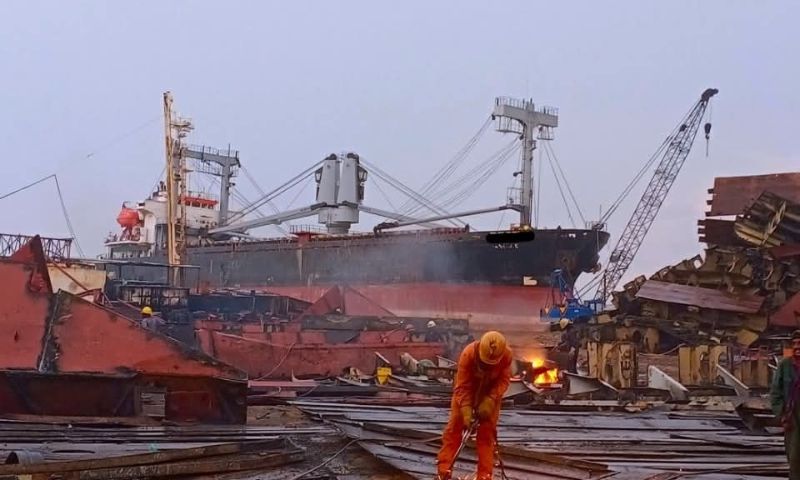
Pakistan’s shipbreaking industry, based along the 10-kilometre (km) coastline of Gadani, around 60-km southwest of Karachi, remains the world’s third-largest ship-recycling hub.
Seven Ocean Services — a shipbreaking company — states that long before Pakistan’s independence in 1947, small-scale dismantling operations had already taken root on this rugged Balochistan shoreline, laying the groundwork for fueling South Asia’s rise as the global shipbreaking powerhouse and that Gadani was where the seeds were first sown.
Gadani’s rise and fall
When the Government of Pakistan formally recognised the yard as a port in 1978. It slashed import duties on end-of-life vessels and set up dedicated infrastructure units.
Gadani rapidly rose to international prominence. But its fortunes began to take a downturn as competitiveness, according to the web-based database ScienceDirect, took a nosedive in the 2000s, as international pressure increased for compliance with the Hong Kong International Convention on the Safe and Environmentally Sound Recycling of Ships.
The International Maritime Organisation remarks that with the Convention becoming globally binding on 26 June 2025, Pakistan now faces a now-or-never moment — both an urgent opportunity and a financial imperative to rebuild the yard as a green, climate-aligned industrial asset.
Vessels face last voyage
A new wave of investment and regulation is being driven by the global shipping industry’s ongoing decarbonisation cycle, where old vessels face their last voyage.
The International Maritime Organisation remarks that with the Convention becoming globally binding on 26 June 2025, Pakistan now faces a now-or-never moment — both an urgent opportunity and a financial imperative to rebuild the yard as a green, climate-aligned industrial asset.
According to the International Maritime Organisation (IMO), supported by Baltic and International Maritime Council (BIMCO)’s analysis, more than 15,000 vessels worldwide are expected to be pushed towards early retirement between 2025 and 2035 due to new carbon-intensity regulations and lifecycle-efficiency requirements.
Shipping-market analytics platform Clarksons Research, headquartered in London, estimates that global ship-recycling demand could rise from the current 6–7 million light displacement tonnes (LDT) per year to more than 15 million LDT annually by 2030, representing a recycling market value of more than $10–12 billion a year — a pie Pakistan cannot afford to let others eat alone.
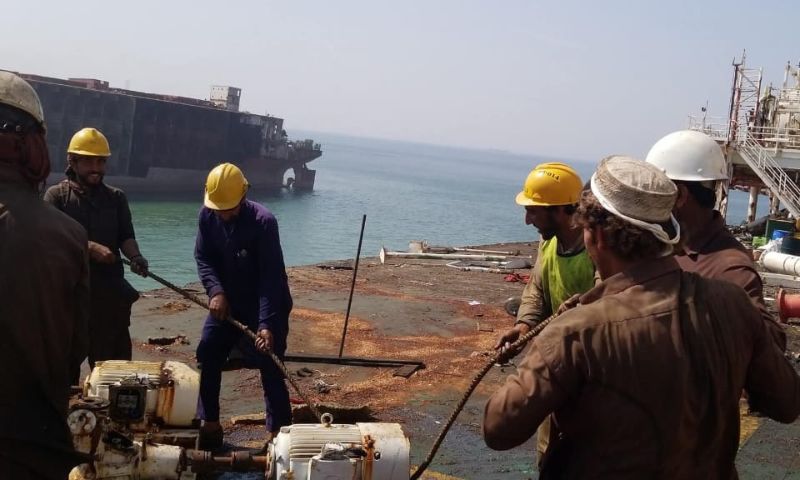
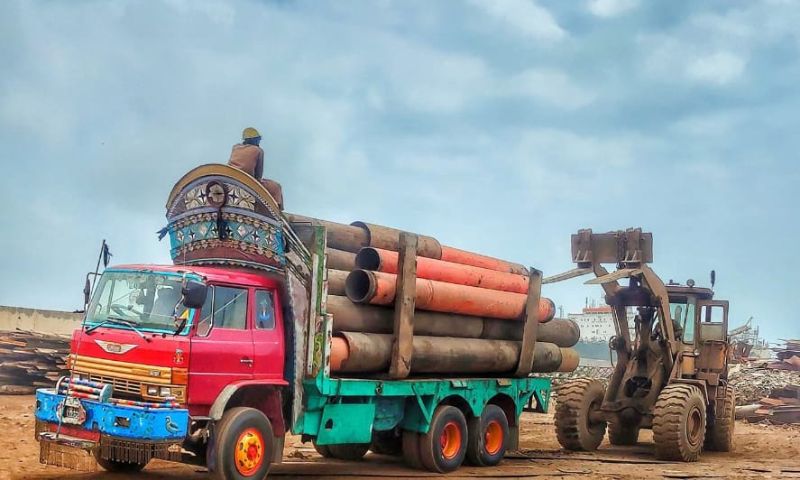
Despite its economic contributions, the shipbreaking sector has yet to be formally recognised as an industry and therefore remains largely unregulated. It creates substantial employment and supplies a significant quantity of re-rollable scrap to Pakistan’s iron and steel sector.
Yet, government oversight remains minimal, working conditions are often precarious, and supporting infrastructure is badly deteriorated. The industry generates over Rs 5 billion in annual revenue, yet little has been reinvested into improving safety or standards.
Environmental and health impacts, however, remain a central challenge. Multiyear environmental-quality studies led by the Pakistan Council of Scientific and Industrial Research (PCSIR), the National Institute of Oceanography (NIO), detected elevated concentrations of heavy metals, including lead, chromium, cadmium, and mercury, in coastal waters and sediments near Gadani.
Green recycling readiness
These findings reinforce the necessity of modern hazardous-waste management, impermeable flooring, controlled cutting zones, and year-round environmental monitoring — core requirements under the Hong Kong Convention that addresses all environmental and safety aspects relating to ship recycling by placing responsibilities and obligations on all parties concerned.
Shipping-market analytics platform Clarksons Research, headquartered in London, estimates that global ship-recycling demand could rise from the current 6–7 million light displacement tonnes (LDT) per year to more than 15 million LDT annually by 2030, representing a recycling market value of more than $10–12 billion a year — a pie Pakistan cannot afford to let others eat alone.
The International Labour Organization (ILO), noting systemic deficiencies in emergency response systems, personal protective equipment, and chemical-exposure practices, emphasised labour and safety conditions of workers at the Gadani shipbreaking yard.
Since 2021, ILO-supported capacity-building projects have begun to introduce training modules, safety standard operating procedures, and pilot monitoring units at selected plots.
The ILO’s 2023 Progress Review stresses that Pakistan can regain international market share only if it institutionalises hazard controls and aligns operational procedures with global labour-safety benchmarks.
Recognising the scale of reforms required, the Government of Pakistan has approved a Rs 12 billion (approximately $42 million) modernisation programme.
The Ministry of Maritime Affairs says that the investment covers waste-management plants, fire-control systems, an environmental-monitoring laboratory, training centres, coastal infrastructure, and compliance certification mechanisms, as announced by the Ministry of Maritime Affairs and Federal Minister for Maritime Affairs Muhammad Junaid Anwar Chaudhry in a meeting on June 25, 2025.
He argued that compliance with the Hong Kong Convention is not merely regulatory alignment, but a turning of the tide for economic recovery. Speaking at a recent high-level meeting, he noted that 11 yards are on track for green-recycling readiness, and another 20 can be upgraded by mid-2026.
He emphasised the need for collaboration with the Government of Balochistan to transform Gadani into a regional model for climate-aligned ship dismantling.
Gadani revival drive
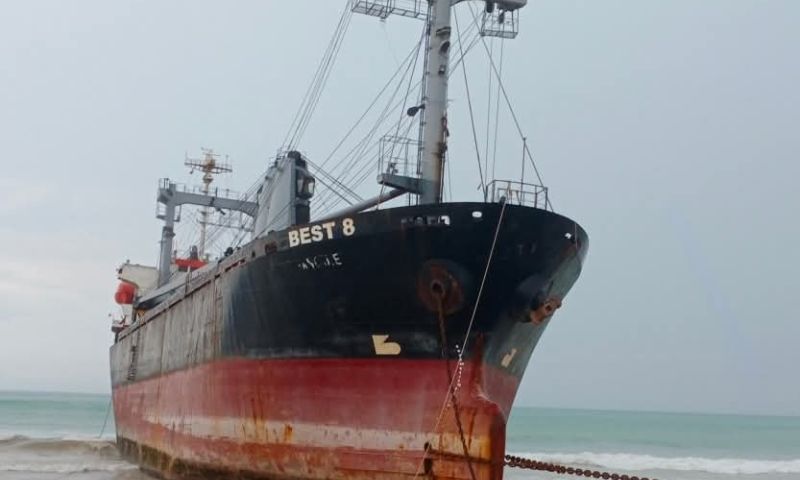
Community welfare has become a central pillar of the revival plan. The Maritime Affairs Ministry recently announced that the government will build a 30-bed hospital, residential quarters for medical staff, new labour colonies, a school, a public park, upgraded water-supply facilities, and 32 kilometres of new access roads under the Gadani uplift programme — a long-overdue effort to show that workers will no longer be left out in the cold.
Community welfare has become a central pillar of the revival plan. The Maritime Affairs Ministry recently announced that the government will build a 30-bed hospital, residential quarters for medical staff, new labour colonies, a school, a public park, upgraded water-supply facilities, and 32 kilometres of new access roads under the Gadani uplift programme — a long-overdue effort to show that workers will no longer be left out in the cold.
In another move, a multi-stakeholder steering committee, chaired by the Technical Advisor of the ministry, is overseeing the transition, while the Ports and Shipping Wing has been instructed to issue the first “green yard” certificate imminently to convert the Gadani shipbreaking yard into a global model for green recycling, with infrastructure upgrades and sustainability measures underway.
FDI prospects rise
In a meeting on 29 August 2025, Federal Minister for Maritime Affairs Muhammad Junaid Anwar Chaudhry said that as a part of the broader national maritime strategy to modernise the maritime sector with a focus on environmental sustainability and climate resilience, the government is also setting up a National Centre of Excellence for Green Ports, Shipping, and Integrated Maritime Industries in Karachi.
International private-sector interest is re-emerging as well. A delegation from PakEco Marine Solutions and Dubai-based PakEco Ship Recycling recently briefed Balochistan Governor Sheikh Jaffar Khan Mandokhail on plans to establish a state-of-the-art Hong Kong Convention-compliant green yard. Officials indicated that such projects could attract foreign direct investment worth $150–200 million, generate thousands of jobs, and enhance Pakistan’s competitiveness in the global circular-steel economy.
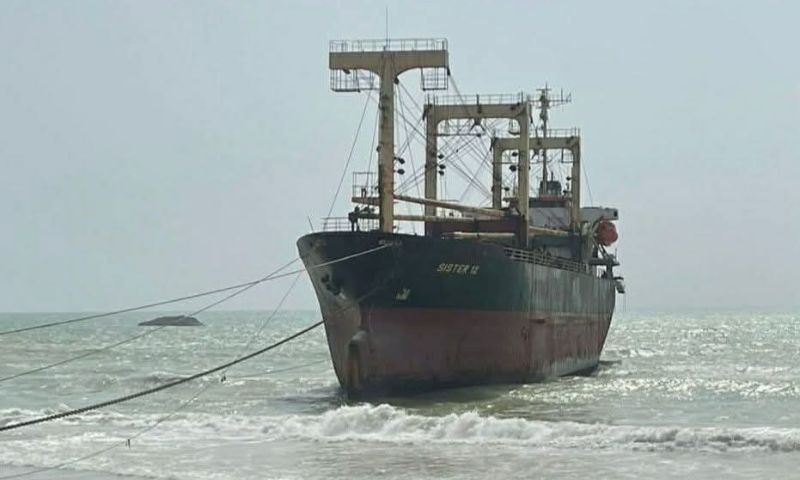
A significant opportunity lies in the fleet of nearly 400 vessels from Russia and Ukraine expected to be abandoned, scrapped, or retired due to wartime disruptions and insurance-market restrictions.
Gadani shipbreaking yard can potentially dismantle about 30-31 per cent of these vessels annually. This estimate is based on Gadani’s current annual capacity of breaking up to approximately 125 ships of all sizes, including super-tankers.
The maritime-shipping intelligence firm Lloyd’s List reveals that South Asia is likely to be the primary destination for these vessels once Hong Kong Convention compliance mechanisms become mandatory.
Maritime decarbonisation push
Gadani stands at a strategic crossroads — between its legacy as a leading shipbreaking hub and the demands of a decarbonising global maritime economy.
With new IMO climate rules accelerating vessel retirement, a rapidly expanding global recycling market, and the Hong Kong Convention entering into force, Pakistan’s maritime policymakers view Gadani as a cornerstone of the country’s emerging blue-economy strategy.
If implemented with transparency, strict enforcement, and sustained investment, the Rs 12 billion green-revival programme could restore Gadani’s competitiveness, protect marine ecosystems, strengthen labour safety, and position Pakistan as a major player in the global transition towards circular, climate-aligned shipping.