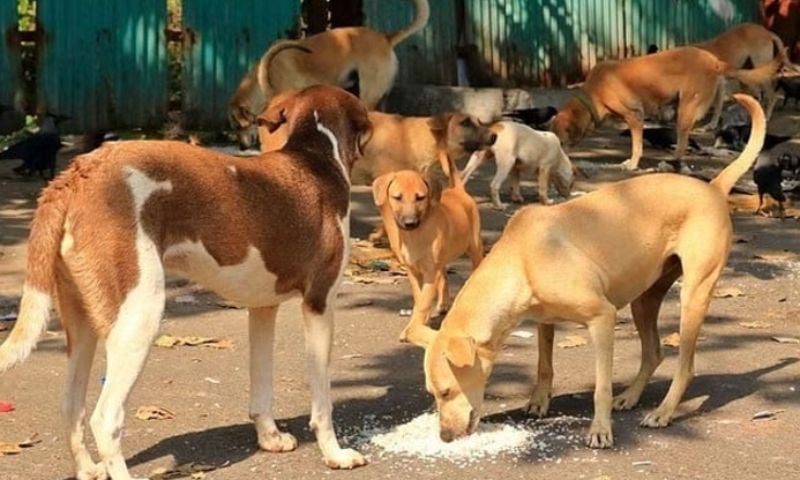



PESHAWAR, Pakistan: In late December last year, Ghulam Dastageer — a middle-aged resident of Peshawar — was visiting his ancestral village in the Kot Momin tehsil of central Punjab’s Sargodha district when an announcement echoed from a nearby mosque, urging villagers to keep their dogs indoors.
The warning came from the district administration following reports of rabid dog bites a few days earlier.
Within hours, authorities scattered poisoned meat throughout the area in an effort to curb the problem by eliminating stray dogs roaming the village.
This remains a common response to rabies outbreaks in Punjab — poisoning and culling — despite a May 2025 ruling by the Lahore High Court that explicitly prohibited the killing of stray dogs.
While such practices persist in Punjab despite court orders, Khyber Pakhtunkhwa (KP) has taken the bull by the horns with a markedly different strategy — one that trades bullets for bandages, replacing poison and guns with surgery, vaccination and long-term population control.
From guns to gauze
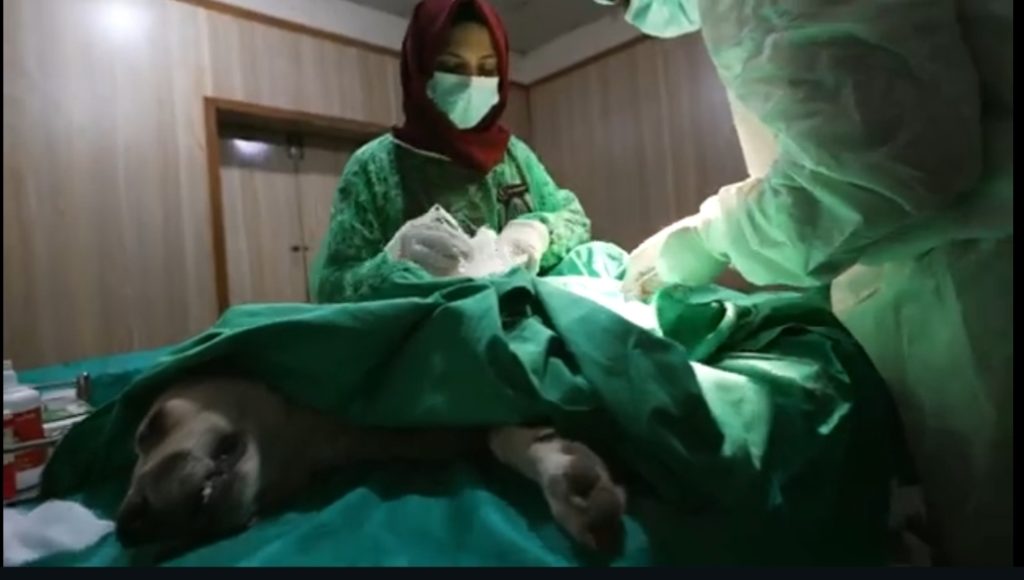
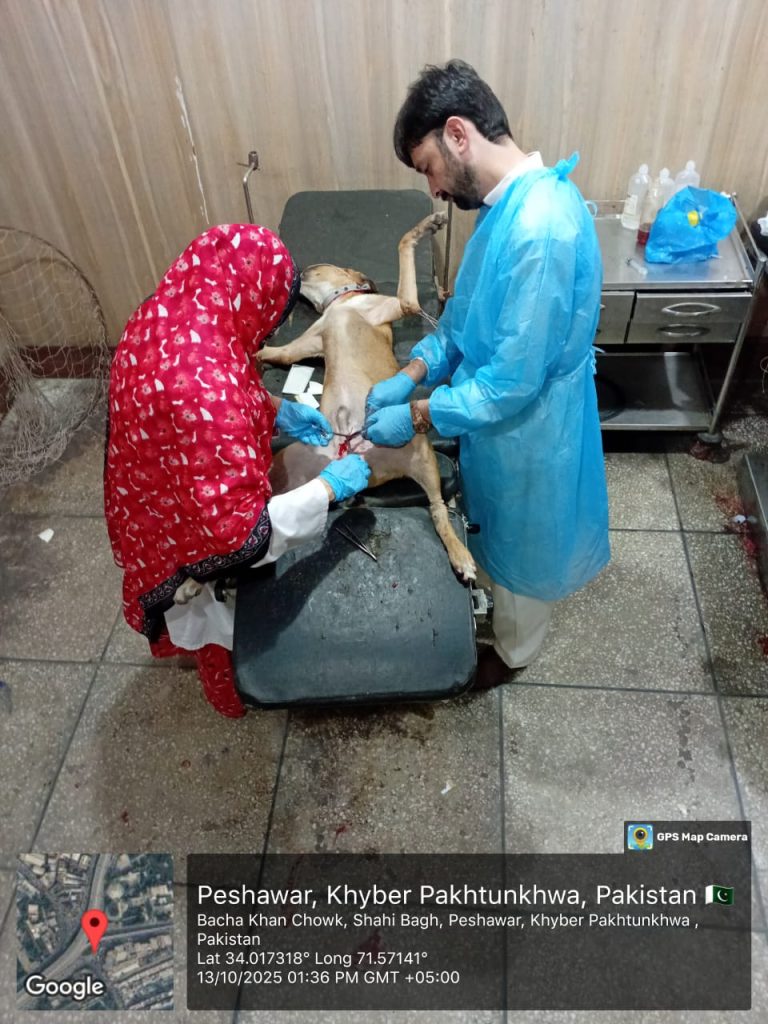
Covering her head with a red scarf, a female veterinarian at a livestock hospital in Peshawar bends over an operating table to neuter a stray dog.
This is a key part of a broader effort aimed at controlling the overpopulation of street canines and stemming the spread of the deadly disease.
From fear and cruelty to compassion and cooperation, Khyber Pakhtunkhwa has undergone a sea change in its rabies control programme, transitioning from killing to a humane, science-based neutering and vaccination approach.” – Dr Muhammad Riaz
The practice of sterilising street dogs has replaced a decades-old legacy of culling through the brutal approach of shooting or poisoning by professional ‘dog killers’.
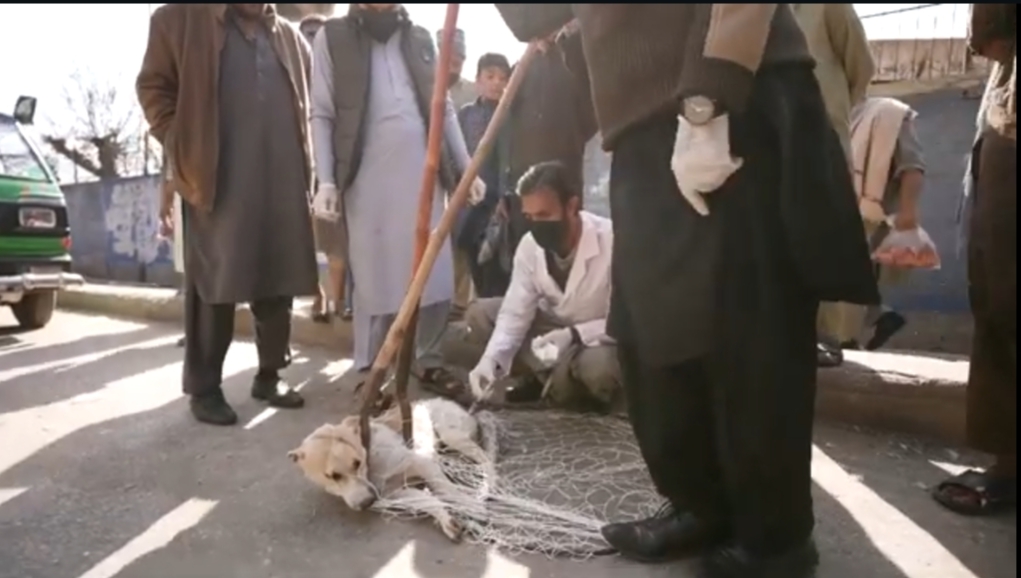
“Instead of wielding guns or offering poisoned meat to kill stray dogs, the dog catchers now carry nets and clubs to trap the animals and take them for neutering at the livestock hospital,” says Dr Muhammad Riaz, Project Director of the Control of Rabies Disease Through Neutering Techniques of Stray Canines.
“From fear and cruelty to compassion and cooperation, Khyber Pakhtunkhwa has undergone a sea change in its rabies control programme, transitioning from killing to a humane, science-based neutering and vaccination approach,” Dr Riaz tells WE News English.
Humane control model
For the last few years, the Khyber Pakhtunkhwa Livestock Department has embraced the World Health Organization’s (WHO) recommended Trap-Neuter-Vaccinate-Return (TNVR) approach.
Under the programme, stray dogs are humanely captured, surgically sterilised, vaccinated against rabies, medically treated, and then released back into their original areas, Dr Riaz explains.
The initiative was launched in the provincial metropolis, Peshawar, in 2021 as a pilot project and later in 2024, spread its wings to seven divisional headquarters across the province.
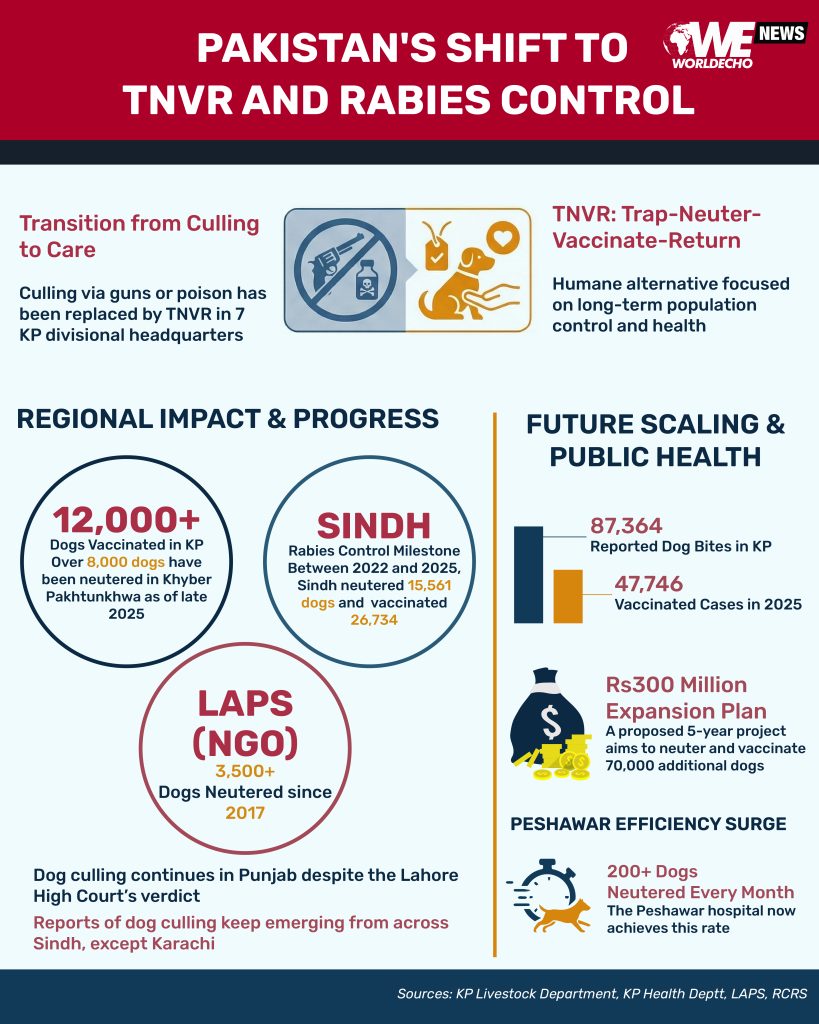
By December 2025, more than 8,000 stray dogs had been neutered in Khyber Pakhtunkhwa, with around 3,000 — nearly 38 per cent — completed in the six months from June to December.
“We neuter more than 200 dogs each month at the livestock hospital in Peshawar,” informs Dr Humera Ubaid, Senior Veterinary Officer at the Pet Clinic.
In September 2025 alone, more than 300 surgeries were conducted under one roof in Peshawar.
The staff of the Peshawar Development Authority (PDA) and Water and Sanitation Service Peshawar (WSSP) bring trapped dogs to the hospital almost daily to be operated on and sterilised.
Veterinarians tag neutered dogs by placing a collar around the animal’s neck to indicate that it has already been sterilised.
Dr Humera explains that under the TNVR programme, only male dogs are initially neutered; while spaying of females is avoided due to procedural complexities, inadequate staff training and the heavy lifting required for the lengthy post-operative care.
The female dogs brought by the staff of concerned departments are only vaccinated against rabies and returned to their respective areas.
The total number of vaccinated canines in the province is around 12,000. In cases where an animal is diagnosed with rabies, the dog or bitch is euthanised in the interest of the ‘greater good’.
Meat-laced death
An ex-dog killer reveals the past use of cyanide to control stray populations.
Khan Zaman, a dog killer in Peshawar district who retired around two and a half years ago, shares that he used cyanide — an extremely toxic chemical — by mixing it into chopped meat.
We neuter more than 200 dogs each month at the livestock hospital in Peshawar.” – Dr Humera Ubaid
Complaints about the rising stray dog population or incidents of dog bites were addressed by throwing caution to the wind, using cyanide-laced meatballs.
Once consumed, the poison acted rapidly, causing death within eight to 10 minutes, Zaman recalls.
“In a single day, we used to kill around 10 to 15 stray dogs, which were later disposed of properly at a dumping site outside the city,” Zaman says, adding that the practice of gun shooting was discontinued completely around a decade ago, following an unfortunate incident in Khyber Bazaar in Peshawar where a man was struck by a stray bullet intended for a dog.
Backlash and reform
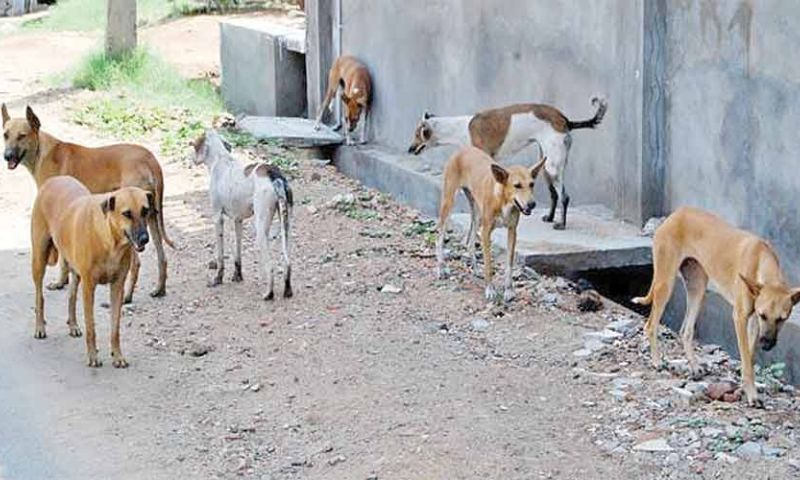
The practice of dog killing was adopted as a quick response to public safety concerns, but raised serious ethical, public health and animal welfare questions, comments Riaz.
After each culling campaign, the Department of Livestock would face a backlash from the public over the brutal treatment of animals.
He discloses that the Livestock Department has proposed a plan for the start of dog neutering activity in all 35 districts of Khyber Pakhtunkhwa.
The project, with an estimated cost of Rs300 million, is expected to neuter 70,000 dogs in the province over the coming five years.
In the proposal, Town Municipal Administrations (TMAs) will also be assigned the task of conducting surveys in their respective areas to compile data regarding the population of stray dogs in the province.
Currently, he says, there is no exact figure for the total population of stray dogs.
The summary about the expansion of TNVR at the district level in Khyber Pakhtunkhwa awaits approval from the Provincial Development Working Party (PDWP).
Responding to a question about the reporting of thousands of dog bite cases in Khyber Pakhtunkhwa during 2025, Dr Riaz says the TNVR approach would begin to bear fruit over the long term, with tangible results expected over the next two decades.
According to media reports published in December 2025, the number of dog bite cases reported in Khyber Pakhtunkhwa during the year reached 87,364.
However, Dr Gul Sartaj, an official of the Integrated Disease Surveillance and Response (IDSR), clarifies that these figures reflect suspected cases.
In a single day, we used to kill around 10 to 15 stray dogs, which were later disposed of properly at a dumping site outside the city.” – Khan Zaman, a retired dog killer
The confirmed cases in which the Health Department administered anti-rabies vaccines were 47,746 during 2025.
This distinction highlights the importance of accurate reporting in measuring the impact of the TNVR programme on public health.
Welcome policy shift
Animal welfare advocates have welcomed the policy shift, calling it a landmark move in a country where culling has long been the default response to stray dog issues.
“This is a highly commendable and welcome decision, fully aligned with the policy recommendations of the WHO,” comments Advocate Altamush Saeed, a dedicated animal rights activist and a managing partner at the Environmental and Animal Rights Consultants.
In Punjab, an Animal Birth Control (dogs) Policy was adopted in 2021, but the old practice of killing dogs still persists in the province, says Altamush Saeed.
Altamush also shares a decision by Lahore High Court (LHC) over a petition filed by him against the killing of dogs in Rawalpindi district.
The petition pleaded that the mass killing of dogs is not only ineffective in controlling rabies but also unlawful.
The court, in its order issued on January 6, 2026, restrained the authorities from continuing dog culling operations in Rawalpindi until further proceedings.
Shelter, not shooting
“Killing dogs never solved the problem. This humane approach protects both public health and animal welfare,” says Javed Ahmed, owner of Lucky Animal Protection Shelter (LAPS), the only sanctuary for maltreated, beaten, injured and starving stray dogs in Peshawar.
LAPS was established in 2017 as first ever sanctuary providing protection and shelter to maltreated, beaten and starve stray dogs.
Besides providing shelter to thousands of dogs, LAPS has also made a remarkable contribution to containing rabies by neutering 3,500 stray dogs.
Sindh’s rabies strategy
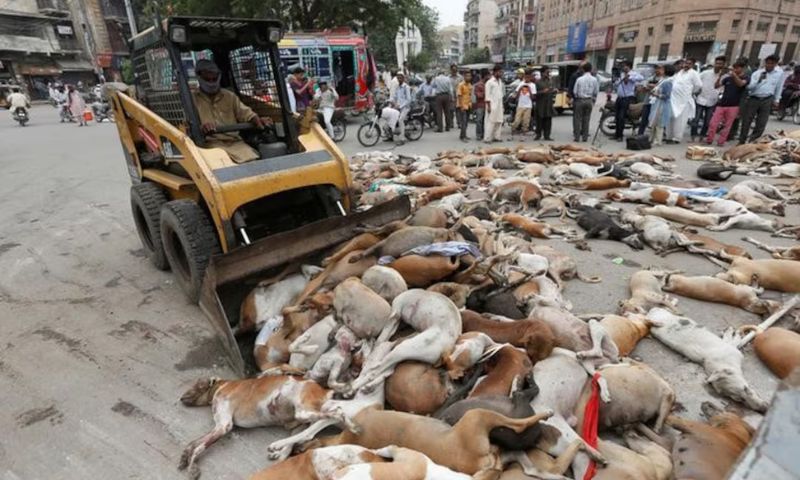
Junaid Nazir, Director Operations Sindh and Baluchistan of Benji Project — an initiative of Comprehensive Disaster Response Services (CDRS) — says that dog killing has stopped in some areas of Karachi, including Malir Cantonment.
However, in other districts, reports of dog culling continue to surface, he adds.
Meanwhile, according to the website of Rabies Control Programme Sindh (RCRS), around 15,561 number of canines have been neutered or spayed in Sindh from February 5, 2022, to May 15, 2025. Around 26,734 dogs have been vaccinated.