


KEY POINTS
- Traditional cuisine is organic, plant-rich, and deeply rooted in history.
- Local food culture shaped by self-grown produce and high-altitude farming.
- Visitors admire Hunza dishes for purity, taste, and cultural significance.
- Hunza diet linked to low chronic disease and obesity rates.
- Hareesa, Sharbat, Chap Shuro, and Burus Sapik are signature dishes.
- Seasonal foods connect communities during weddings, festivals, and celebrations.
HUNZA, Pakistan: Sulaiman, 96, recalls the kitchens of his youth with a sparkle in his eyes. He says that in Hunza, every meal told a story, and every dish was a thread connecting generations.
“We worked hard, and despite challenges and difficulties, people helped each other. The food was simple, yet it kept us strong and healthy, and life felt full,” the elderly historian from Hunza says, his voice carrying the weight of decades.
Valley of enduring beauty
Cradled among snow-dusted peaks and fed by the icy veins of glacier streams, Hunza Valley — located nearly 100 kilometres northeast of Gilgit city, the provincial headquarters of Gilgit-Baltistan (G-B) — has long been wrapped in an aura of wonder.
Renowned for its beauty, the valley has also become synonymous with the remarkable longevity of its people.
Alongside being a major tourist attraction, the valley offers a rich variety of traditional cuisines that are organic in nature and deeply rooted in centuries-old traditions.
Travellers may arrive for the scenery, but they often leave talking about the food — and the quiet vitality it seems to bestow.
Surrounded by towering mountains, the people of Hunza historically depended entirely on their own agriculture and local produce, living off the land and within its limits.
In this high-altitude bowl of stone and sky, necessity became virtue, shaping a food culture that is simple, nutritious, and sustainable.
Hunza through writers’ eye
Writers and tourists visiting this unique region are consistently drawn to the delicacy, purity, and richness of Hunza’s traditional foods.
These dishes are not merely meals; they are edible history, carrying the memory of seasons, rituals, and communal life.
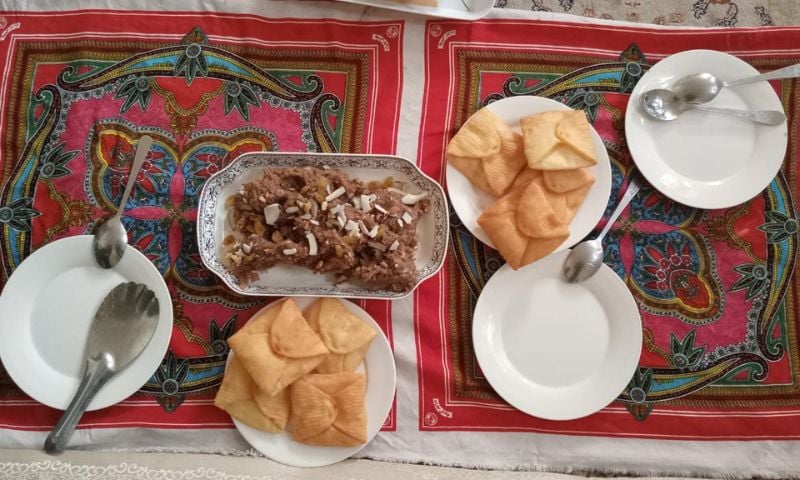
Hareesa, Sharbat, Chap Shuro, Diram Phitti, Burus Sapik, Gyalin, Mul, Mulida, and several other delicacies have become widely admired by visitors from within Pakistan and abroad.
Traditionally, specific dishes were prepared for special occasions such as weddings, festivals, childbirth, and seasonal celebrations, binding food inseparably to community life.
In her book Hunza Health Secrets for Long Life and Happiness, Renee Taylor — a British writer and researcher who documented the traditional lifestyle, diet, and health practices of the Hunza people — writes that the people of Hunza often live beyond 100 years while maintaining strong physical and mental health.
She observes that chronic illnesses such as heart disease and cancer were historically rare, attributing this longevity largely to a simple, plant-rich diet.
During our time, resources were limited and people had fewer options, but the food was full of health. We worked hard, and the food provided us with the required energy.” – Sagi Ali, a local resident
Historic research by a British nutritionist, Robert Mc Carrison, along with later writings by Jay M Hoffman — an American health writer — further supports the view that the Hunza diet — rich in whole grains, fruits (particularly apricots), and minimal animal fat — played a central role in their exceptional health and long life. In Hunza, it seemed, people truly reaped what they sowed.
Dishes that tell a story
Hareesa

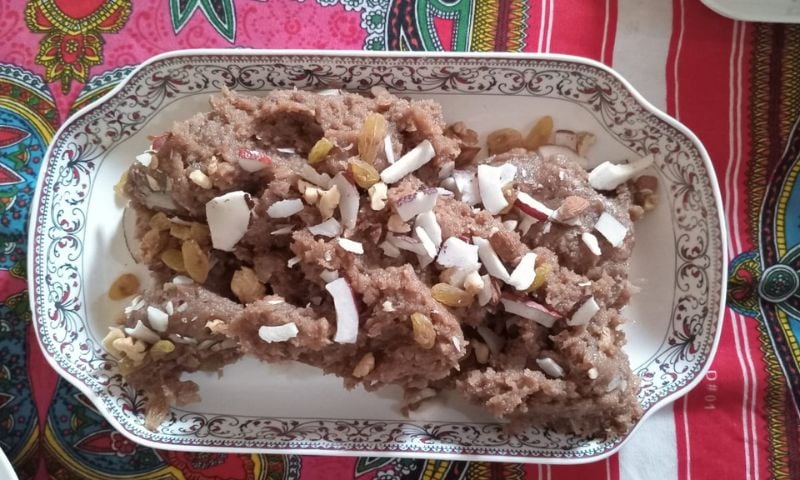
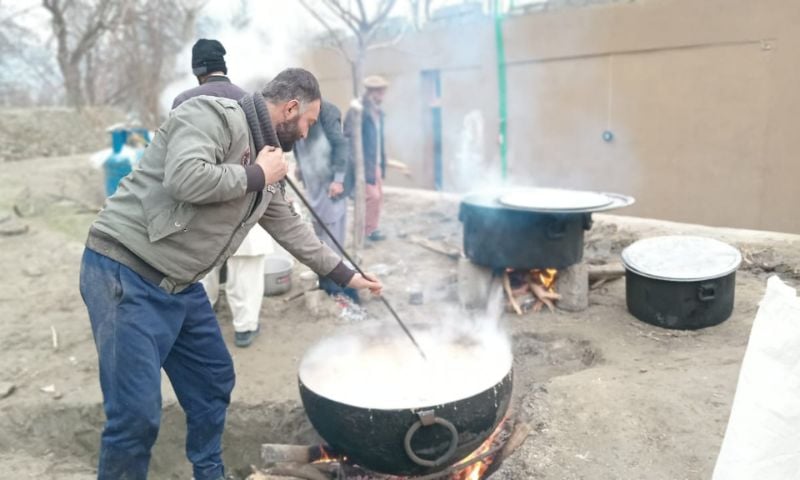
It is made from ground wheat, beef or mutton broth, and butter. Slow-cooked and deeply comforting, the meat is boiled for several hours in a large open-mouthed utensil locally known as Xana, placed over a high flame.
Once fully cooked, the meat is separated, while ground wheat is gradually added to the broth. Butter is then mixed continuously until the mixture thickens.
When ready, Hareesa is served with meat and is traditionally prepared during festivals and communal gatherings.
Though it shares a name with Kashmiri Hareesa, the Hunza version marches to the beat of its own drum in taste and texture. Variations of Hareesa are also found in different regions and countries across the world.
Sharbat

It is prepared using wheat, butter, salt, and water. Ground wheat is added to boiling water, followed by butter — preferably aged butter, which lends depth and aroma.
This dish is commonly prepared during wedding ceremonies and distributed among villagers, reinforcing the idea that joy tastes better when shared.
Diram Phitti

Soaked in wheat and water and later dried under the sun, Diram Phitti is a sweet delicacy and an essential part of wedding ceremonies in Hunza Valley.
Dough is then prepared and cooked with or without oil. It is served after being mixed with dried fruits and walnut or apricot oil, a dessert that speaks softly but leaves a lasting impression.
Burus Sapik

It is one of the most cherished dishes in the Hunza Valley. Several breads are placed one over another to form layers.
Each layer is filled with apricot or walnut oil, local cheese, and green onions. The dish is widely admired for its unique and mouthwatering taste, rich without being heavy and indulgent without excess.
Gyalin

Filled with apricot or walnut oil, it is prepared by cooking wheat bread and forming layers. It remains a common household food across the valley, quietly keeping hunger at bay.
Mul

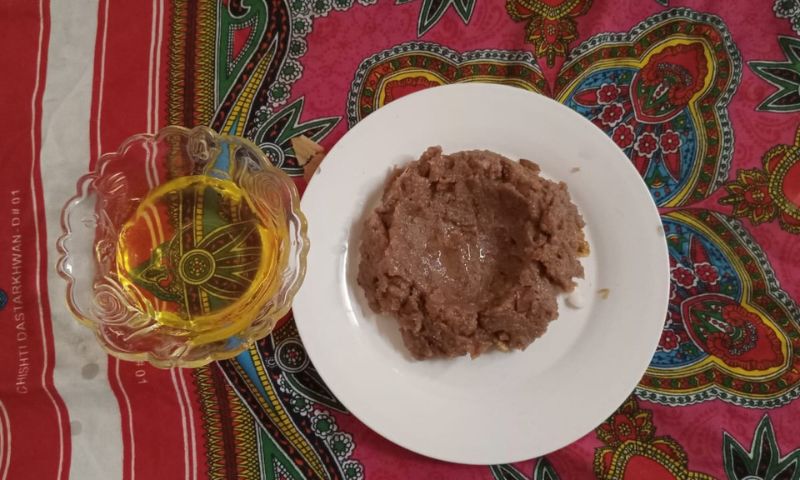
Mul iss a traditional dish prepared on the birth of a newborn and offered to guests. Wheat flour, water, butter, and walnut or apricot oil are used in its preparation.
The dish is presented with apricot oil placed in the centre, while guests add salt or sugar according to their taste, a subtle nod to life’s many flavours.
Dowdo

It is prepared from hand-made wheat noodles cooked with meat and vegetables. Consumption of Dowdo increases during winter to cope with the harsh climatic conditions of the valley.
Many restaurants catering to tourists and locals include Dowdo in their menus, bridging past and present.
Batterin Dowdo

The word Batterin means dried apricot. In Batterin Dowdo, dried apricots are added to boiling water until the soup thickens.
Traditionally, locals also used this dish as an alternative remedy to cure flu during winter, blurring the line between food and medicine.
Hoi Lu Garma
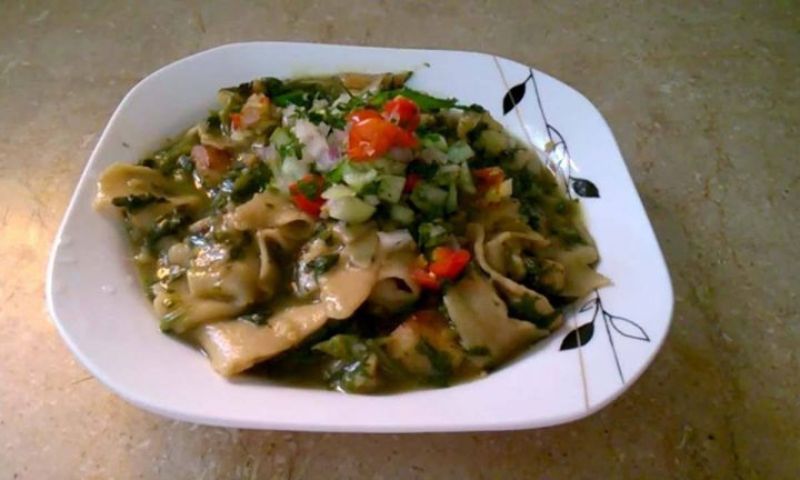
It is prepared using locally grown spinach. Once the spinach is cooked, a round-shaped uncooked roti (bread) is placed on top and cooked together.
The dish is simple and remains a regular part of the Hunza diet, proving that less can indeed be more.
Chap Shuro

Popular in Hunza, Nagar, and Gilgit, minced meat is placed inside bread and cooked on a griddle. Often described as a local version of pizza, it is highly popular among tourists.
Many restaurants offer Chap Shuro on their menus, while small temporary shelters selling the dish can be seen along the Karakoram Highway while travelling from Gilgit to Hunza and Sost, serving travellers hot, fresh comfort on the road.
Sultan Qoq

It is a powerhouse of energy. Dried fruits such as mulberries, apricots, walnuts, and apricot kernels are mashed together and shaped into small balls.
Its distinctive taste and nutritional value make it a highly valued traditional food, designed for hard work and harsh climates.
Memories and modern challenges
Sagi Ali, 92, a resident of Garelth village, recalls how local dishes helped people endure the harsh winters.
“During our time, resources were limited and people had fewer options, but the food was full of health. We worked hard, and the food provided us with the required energy,” he says, adding that people lived long lives with minimal illness.
In the beginning, I sold Chap Shuro in an open space. Over time, demand increased and I opened a proper restaurant with a separate family area. During summer, I employ at least five people and have witnessed growth in my business purely because of this traditional dish.” – Abbas Ali, a food vendor
Food was more than sustenance; it was a cornerstone of community life, binding people together through shared labour and care. Malik Shah, 78, a village elder, remembers the abundance of traditional fare prepared for traditional occasions.
“Every household slaughtered an animal for winter between December 21 and 27. Those who did not have an animal received a share from their neighbours. People were healthy, happy, and evergreen,” he says, lamenting that such affection and unity have thinned with time.
Beyond seasonal feasts, daily reliance on homegrown produce shaped a culture of self-sufficiency and resilience. Nadir Aman, 74, notes that people were entirely dependent on self-grown fruits, vegetables, and beans.
He recalls that boiled Bukak was prepared during Nauroz, the festival that ushers in the new year according to the Iranian solar calendar, usually falling on 21 March.
The celebration is marked by prayers, cultural gatherings, music, local sports, visiting relatives and sharing of traditional foods. It is also celebrated in parts of Gilgit-Baltistan, including Hunza, Nagar, Gilgit, and Skardu.
Sharbat prepared during wedding ceremonies was distributed among villagers and called Hanik, while Hareesa was prepared at the community level and distributed among people on special occasions,” he adds.
Even as Hunza opened to visitors, its culinary heritage continued to fascinate outsiders. Ali Gohar, 72, who moved to Garelth after the Attabad landslide in 2010, says Hunza’s local dishes have always captivated visitors.
“These foods are simple, tasty, and organic in nature. The recipes have been passed down from generation to generation.”
Today, this tradition has found new life in small businesses that bridge the past and present. Thirty-three-year-old Abbas Ali runs a restaurant along the Karakoram Highway famous for Chap Shuro.
“In the beginning, I sold Chap Shuro in an open space. Over time, demand increased and I opened a proper restaurant with a separate family area,” he says.
During summer, he employs at least five people and as his business has witnessed growth purely because of this traditional dish.
Preserving culinary wisdom
Research and travel accounts consistently highlight that Hunza’s food culture — rooted in fresh, locally grown produce, clean glacier water, and an active lifestyle —is associated with low rates of obesity and chronic illness.
Modern dietary analyses indicate that the Hunza diet is rich in unrefined whole foods such as nuts, vegetables, and apricot kernel oil, helping delay heart disease and support overall wellbeing.
Yet, emerging health challenges linked to changing lifestyles and increased consumption of low-quality processed foods are now visible in the valley. As convenience replaces custom, the writing on the wall is hard to ignore.
Reviving and preserving these traditional food practices has become the need of the hour, so future generations can benefit from a healthier, more balanced way of life before this quiet wisdom slips through the cracks of time.