


In the remote mountains of Shawal Tehsil in Pakistan’s North Waziristan, an eight-year-old girl briefly became a symbol of possibility.
Aena Wazir, a second-grade student, was filmed bowling with striking pace and rhythm — her action reminiscent of South African great Dale Steyn. The short video, shared on social media, drew admiration from cricket lovers across Pakistan and beyond. For a moment, her fast bowling embodied a simple idea: talent knows no gender.
یہ ہے آئینہ وزیر — جو لڑکوں کے ساتھ کرکٹ کھیلتی ہے، بہترین باؤلنگ کرتی ہے اور بیٹنگ بھی زبردست ہے۔ پاکستان میں ٹیلنٹ کی کوئی کمی نہیں۔ @TheRealPCB آئینہ وزیر کو مستقبل میں ویمن کرکٹ میں شامل کرے تو پاکستان کو ایک بہترین کھلاڑی مل سکتی ہے۔ pic.twitter.com/mVQmcParjX
— Mehwish Qamas Khan (@MehwishQamas) February 18, 2026
Then came the backlash.
Local militants, described by residents as Pakistani Taliban, abducted the young journalist who filmed and shared the video, accusing him of promoting “immorality”.
The charge — that showing a young girl playing cricket amounted to obscenity — underscored a broader ideological struggle unfolding across the Afghanistan-Pakistan borderlands.
The incident is not isolated. It reflects a deeper, transnational ideological framework — one that views women’s visibility in public life as a threat to social order.
واو: ماشاءاللہ اس بچی کی باولنگ چیک کرے۔
آئینہ وزیر کا تعلق تحصیل شیواہ شگہ زالول خیل سے ہے اور شہید #عمرگل کی بیٹی ہے ، یہ بچوں کا ایک ٹورنامنٹ ہے جس میں آئینہ کی اپنی ٹیم ہے، افسوس مواقع نہیں ہے ورنہ ہمارے بچوں میں بہت ٹیلنٹ ہے، pic.twitter.com/cPzVBJ9ulk
— Badshah Pashteen (@badshahpashten) February 18, 2026
Afghanistan’s Systematic Erasure of Girls from Public Life
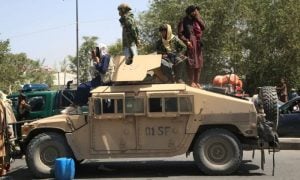
Since the Taliban’s return to power in Kabul in 2021, Afghanistan has witnessed one of the most sweeping rollbacks of women’s rights in modern history.
Secondary schools and universities for girls remain closed. Women are barred from most forms of employment, excluded from public spaces without male guardians, and largely erased from media and civic life.
Afghanistan is the only country in the world where girls are formally banned from secondary education.
In sport, the erasure has been equally stark.
The contracted players of the Afghanistan women’s national cricket team — recognised before the Taliban takeover — now live in exile, most of them in Australia. Their cricketing status inside Afghanistan has effectively ceased to exist.
Yet the players have refused to surrender their identity.
After years of uncertainty, their hopes received a boost when the International Cricket Council announced a dedicated task force to support displaced Afghan women cricketers.
For players, exile has meant both loss and resilience.
They train in Melbourne and Canberra leagues, attempting to preserve a sporting identity that their own national system can no longer officially recognise. None has received support from the Afghanistan Cricket Board, whose position is constrained by the Taliban government.
Their situation poses an uncomfortable question for international sport: Can a national team exist when its government denies its existence?
From Kabul’s Decrees to Waziristan’s Vigilantism
The Shawal incident reveals how Taliban ideology — whether under the Afghan Taliban’s state authority or the Pakistani Taliban’s militant enforcement — operates through similar premises:
-
Women’s visibility equals moral decline
-
Girls’ education invites Western corruption
-
Public celebration of female achievement challenges male authority
In Afghanistan, these ideas have been codified into state policy. The kidnapping of a journalist for filming a child playing cricket illustrates how cultural control becomes a method of social dominance.
It is not merely about sport. It is about who has the right to appear, to aspire, and to be celebrated.
Sport as Resistance
For Afghan women cricketers in exile, every match carries symbolic weight.
A January exhibition game in Australia — played with Afghan colours — was described by participants as “the beginning of a new chapter” after years of silence. It was, they said, a reminder that identity cannot be legislated away.
Their ambition remains simple: to compete at the highest level, possibly even at the Los Angeles Olympics, if pathways open.
Yet their existence in exile also exposes a paradox. International sport celebrates inclusion, but national recognition still depends on governments that may not recognise women athletes at all.
The International Community’s Dilemma
The ICC’s task force signals long-overdue acknowledgement, yet it also underscores a delicate diplomatic balancing act. Global sporting bodies must navigate between maintaining engagement with national federations and confronting stark human rights realities.
Meanwhile, Afghanistan’s girls remain shut out of classrooms, their futures constrained by decree. The story of a fast-bowling child in Waziristan and exiled athletes rebuilding their careers in Melbourne converges on the same fault line: whether girls’ ambitions are treated as dangers to be suppressed — or as human potential to be protected and allowed to flourish.
A Question for the World Map
Will Afghan women cricketers ever reappear on the official world stage? The answer hinges not only on decisions taken in boardrooms, but on political transformation inside Afghanistan itself.
More profoundly, it depends on whether societies governed by rigid interpretations of authority can find space for women to act, choose and compete as equals — without their aspirations being framed as defiance.
For now, the eight-year-old bowler in Shawal and the exiled professionals training in Australia stand as quiet acts of resistance — proof that talent, determination and identity endure, even when systems seek to confine them.
Since November, Taliban authorities have intensified enforcement of strict dress codes under the Ministry for the Promotion of Virtue and Prevention of Vice, requiring women and girls to wear the burka or full face coverings, with male guardians held responsible for compliance.
Women have reportedly been denied access to hospitals and detained over alleged violations, while religious seminaries and public transport have also come under tighter scrutiny. Checkpoints monitoring women’s clothing and movement have further restricted mobility.
Rights groups say the fluctuating but persistent enforcement reflects a broader policy aimed at limiting women’s visibility, autonomy and participation in public life.