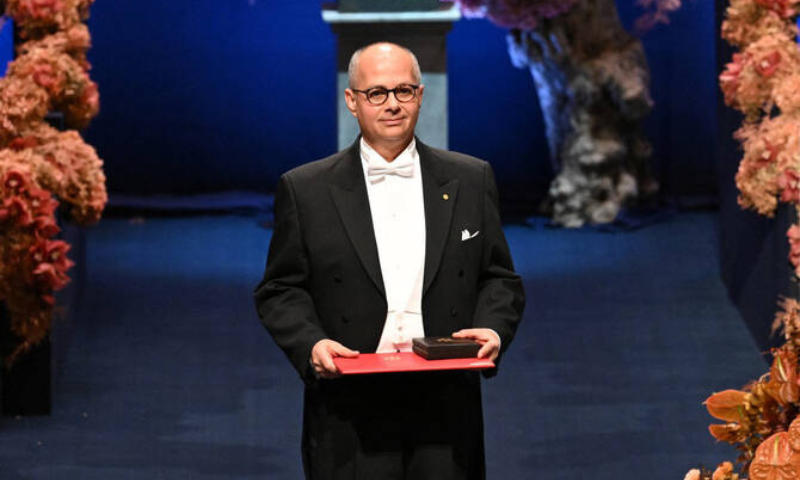



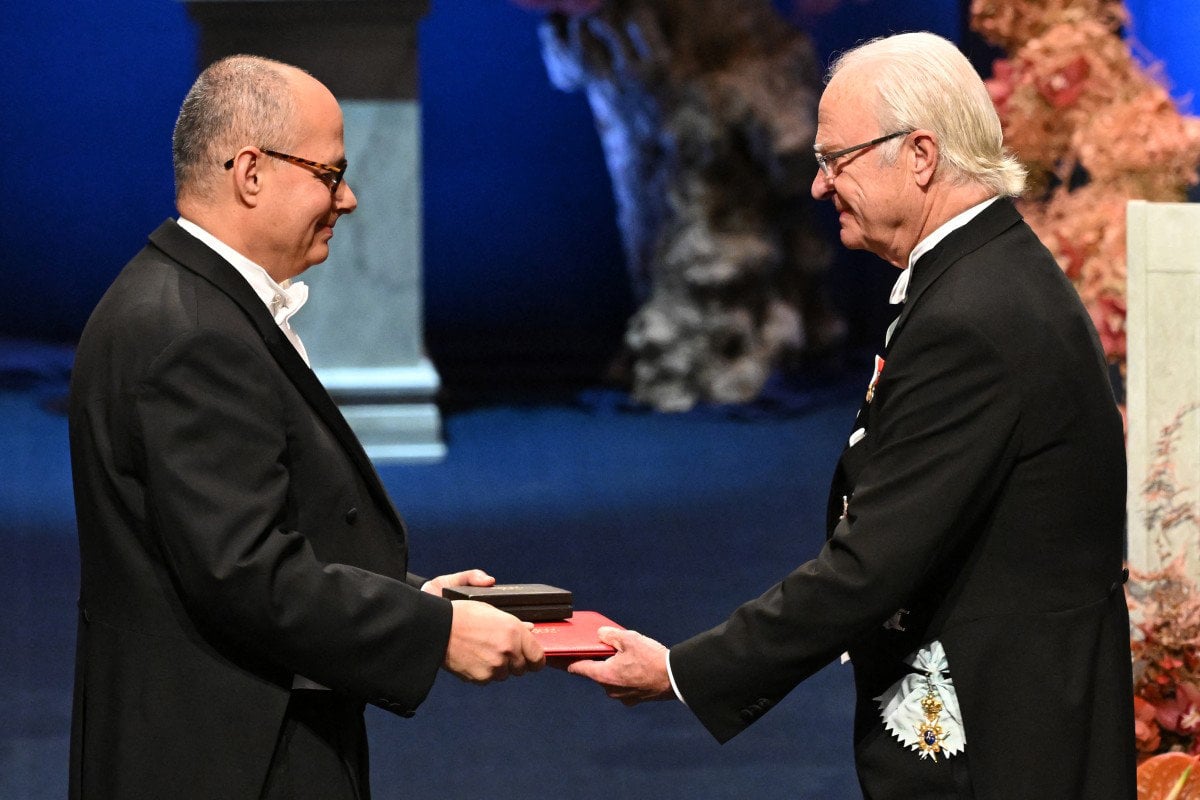
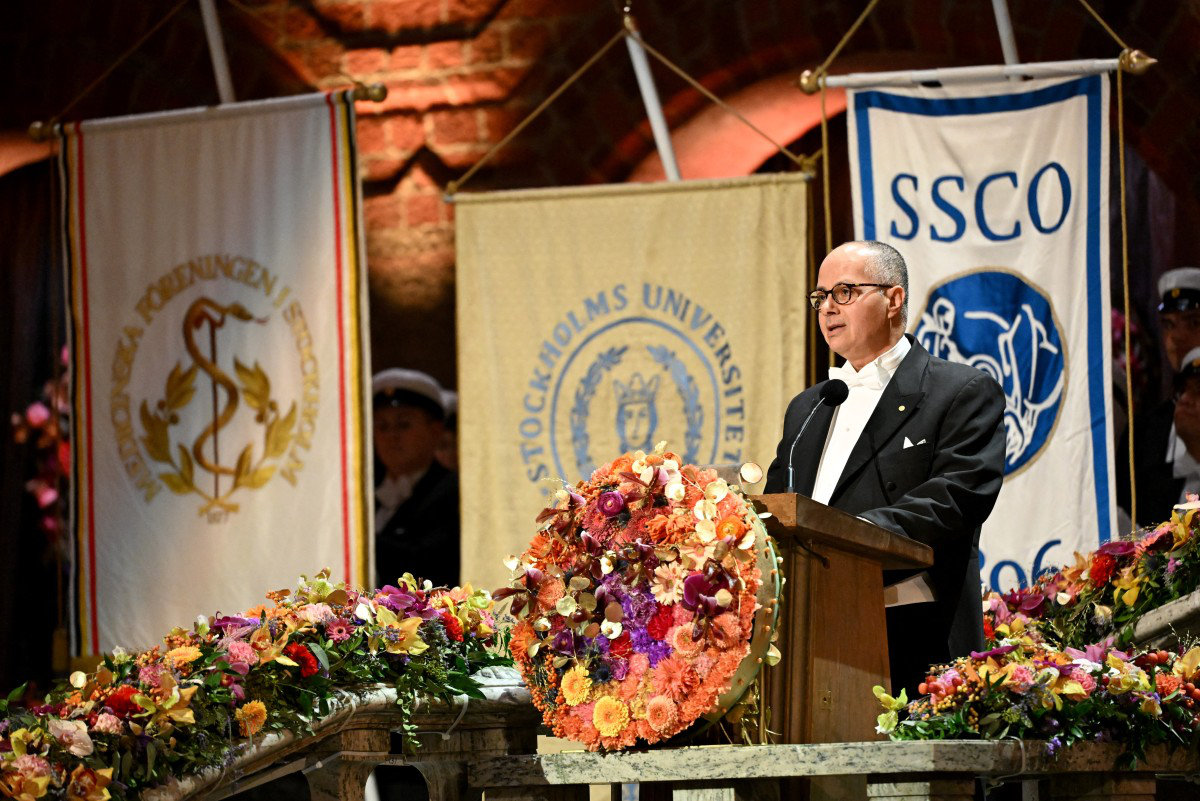
RIYADH: When Omar M. Yaghi stood in Stockholm in December 2025 to receive the Nobel Prize in Chemistry, the moment marked far more than a scientific triumph.
It was the culmination of a journey that began in a single-room home on the edge of a refugee camp, without electricity, with water arriving only once a week — sometimes less.
In becoming the first Saudi national to win a Nobel Prize, and only the second Arab-born scientist to receive the chemistry award after Ahmed Zewail in 1999, Yaghi joined the highest ranks of global science. Yet he remains strikingly clear about what brought him there — not privilege or planning, but curiosity, discipline and an unshakable belief in the power of knowledge, reports Arab News.
“I like basic research very much,” Yaghi says. “Because it allows you to be free. When you solve an intellectual challenge, you end up creating a foundation for many benefits to society.”
A Childhood Shaped by Displacement
A Historic Moment for Palestine.
Omar M. Yaghi, the son of refugees from al-Masmiyya in Gaza, has won the 2025 Nobel Prize in Chemistry. From a childhood in a refugee camp with no electricity, he turned exile into discovery, and struggle into brilliance.
His journey is more… pic.twitter.com/G7tr4GsScD
— Adrian Zahir⚡ (@ForwardsMarch) October 8, 2025
Yaghi was born in 1965 in Amman, Jordan, to a Palestinian refugee family originally from Al-Masmiyya, a village between Jerusalem and Jaffa that was destroyed in 1948. He grew up near the Al-Wehdat refugee camp, one of 10 children in a household that relied on resilience as much as routine.
“There was no electricity. Water came once a week, sometimes once every two weeks,” he recalls. “When it came, everyone rushed to fill every bucket.”
His world revolved around three places: the family home, where cows were raised; his father’s butcher shop on King Talal Street; and Bishop’s School in Jabal Amman, where mathematics and science were treated as essential disciplines.
From his father, Mounes, he learned discipline and honesty. “That shop figured prominently in my life,” Yaghi says. “I learned the power of work ethic — and that when you deal with people, you must be honest.”
Despite being registered with UNRWA, his father chose private schooling, wanting regular feedback on his children’s progress. It was there, at age 10, that Yaghi encountered molecular drawings in a library — abstract shapes that quietly altered his future.
“I didn’t know what they were,” he says. “But I was captivated by their beauty.”
Yaghi Credits Saudi Support After Nobel Win
In remarks carried by the Saudi Press Agency, Yaghi also expressed gratitude to Saudi Arabia’s leadership for sustained support of scientific research, thanking Crown Prince Mohammed bin Salman for what he described as pivotal encouragement throughout his career.
He credited the King Abdulaziz City for Science and Technology (KACST), particularly its partnership with UC Berkeley, as instrumental to his work, and said the Nobel Prize was not only a personal honour but a source of pride for Saudi and Arab scientists.
Yaghi said he hoped the achievement would inspire younger generations across the region to pursue research and innovation.
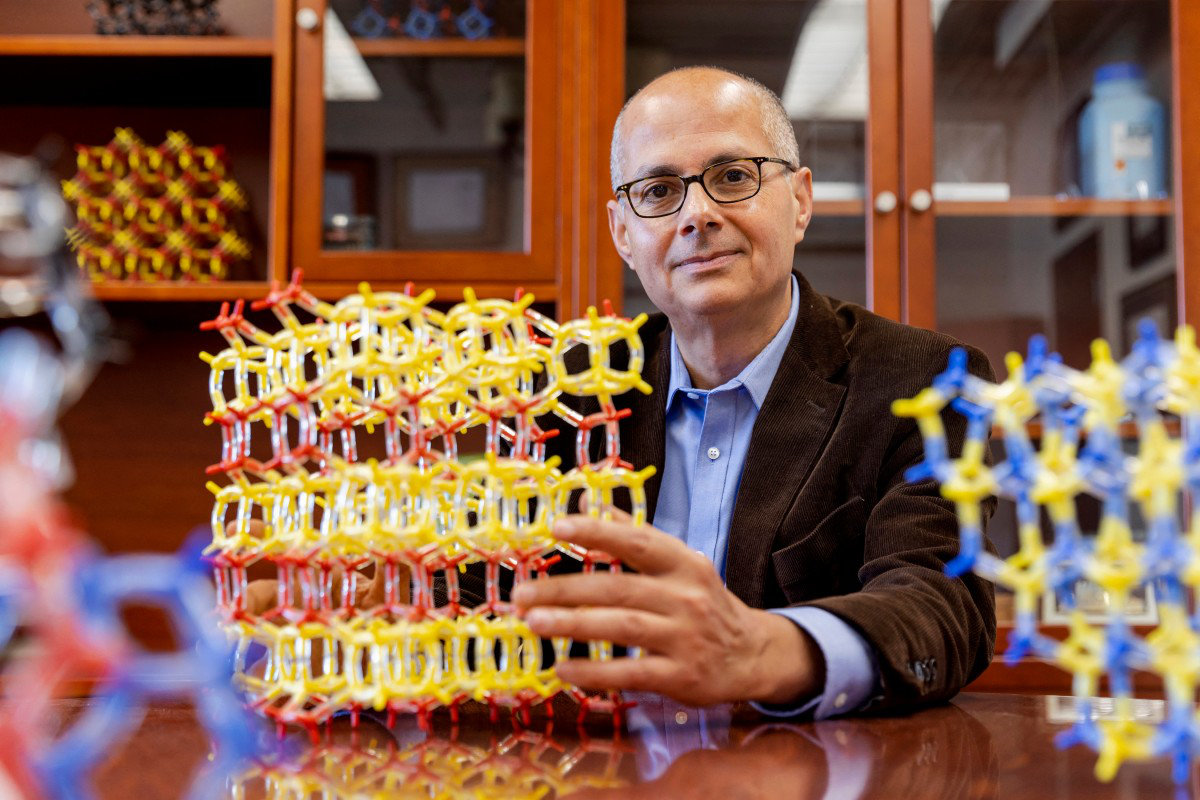
Yaghi has donated a model of MOF-5 to the Nobel Prize Museum, where it will be displayed alongside Ahmed Zewail’s femtochemistry apparatus — linking two Arab-born scientists whose work redefined chemistry across generations.
Alone at 15, Armed With Curiosity
At just 15 years old, Yaghi travelled alone to the United States to study at Hudson Valley Community College in New York. His family’s savings — around $9,000 — lasted two years. To survive, he worked supermarket jobs and tutored classmates in mathematics.
Though he could read and write English, spoken American English overwhelmed him. So he immersed himself — watching news broadcasts, reading newspapers daily, and consulting a dictionary he had carried from Amman.
“Most words weren’t even in that dictionary,” he laughs. “But within six months, I was fluent.”
By 1985, he earned a bachelor’s degree in chemistry. Five years later, he completed his PhD at the University of Illinois Urbana-Champaign — setting the stage for a career that would reshape materials science.
Inventing a New World of Materials
In 1995, Yaghi coined a term that would soon echo across laboratories worldwide: metal-organic frameworks, or MOFs.
MOFs are crystalline, porous materials with extraordinary internal surface areas — so vast that a single gram can contain up to 8,000 square meters of usable space. These structures can store gases, capture carbon dioxide, harvest water from air, and potentially transform clean energy systems.
Four years after naming the field, Yaghi introduced MOF-5, a structure now considered foundational. By 2003, he demonstrated that MOFs could be deliberately designed and modified — unlocking their practical potential.
Today, MOF research spans more than 100 countries, with industrial applications ranging from climate mitigation to water security.
“It’s not about complexity,” says industrial scientist James Stephenson. “It’s about the space inside.”
From Basic Science to Global Impact
“It’s easy to fall in a pattern that everybody else follows and forget that the excitement lies off the track.”
Get to know our newest chemistry laureate Omar Yaghi in an article where he reflects on the beauty of chemistry and shares his love of the field: “I don’t separate… pic.twitter.com/pWglYcQfdN
— The Nobel Prize (@NobelPrize) October 12, 2025
Yaghi’s work has moved decisively beyond academia. Since 2018, he has founded and co-founded several ventures focused on water harvesting, carbon capture and hydrogen storage.
His company Atoco develops MOF-based water systems capable of producing 100 liters of water per day — with prototypes aiming for 2,000 liters.
“This isn’t just for deserts,” Yaghi explains. “It’s for places with water that isn’t clean.”
According to the World Health Organization, more than two billion people lack access to safely managed drinking water — a reality that continues to motivate him.
Recognition — and Responsibility
“I want to acknowledge my former graduate students. A lot of them are here in the audience. Thank you for failing, failing and failing so that you can succeed. You have truly inspired me over the years.”
During his Nobel Prize lecture, 2025 chemistry laureate Omar Yaghi spoke… pic.twitter.com/AV3VHTU009
— The Nobel Prize (@NobelPrize) December 13, 2025
Yaghi joined the University of California, Berkeley in 2012, where he holds the James and Neeltje Trett Chair and founded the Berkeley Global Science Institute. He has taught students from over 15 countries, including Saudi Arabia, China, and the UAE.
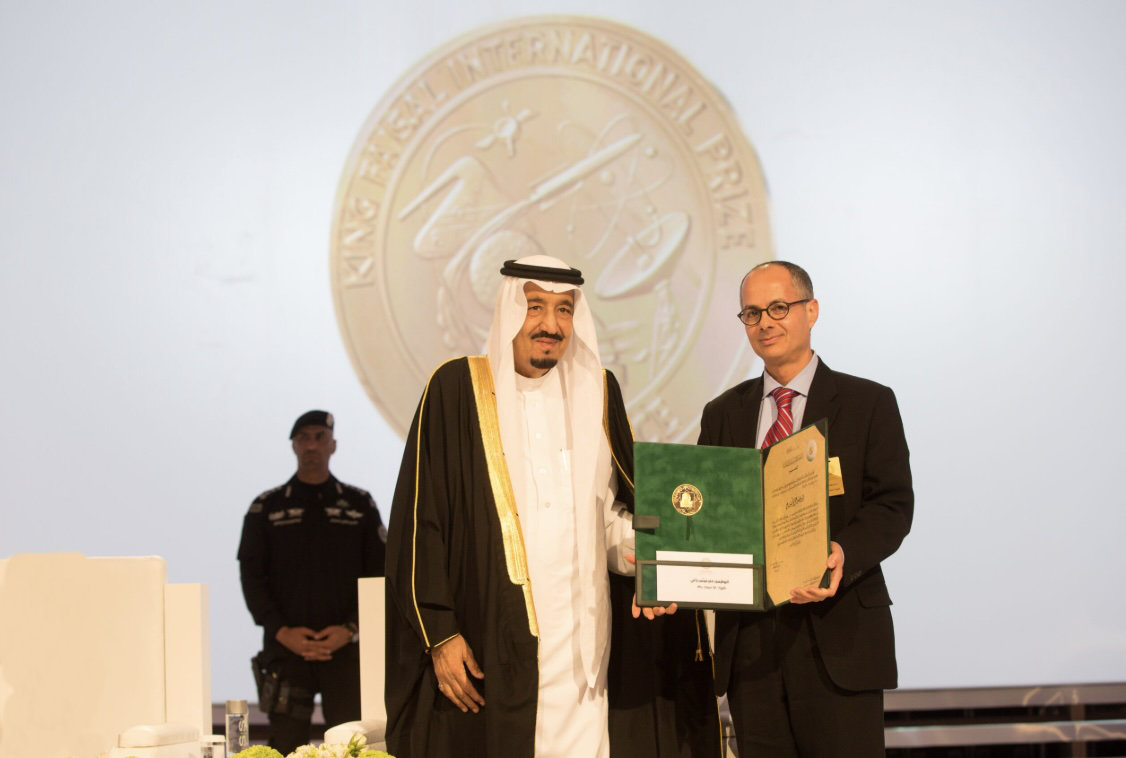
In 2015, he received the King Faisal International Prize. In 2021, King Salman granted him Saudi citizenship in recognition of his scientific contributions. Following his Nobel win, Yaghi expressed gratitude to Saudi Crown Prince Mohammed bin Salman and the King Abdulaziz City for Science and Technology for sustained support.
“The Saudis treated me very well,” he says simply.
Yet Yaghi remains deeply rooted in his layered identity. “I am proud of my Palestinian origin. I was born and raised in Jordan. I became an American citizen,” he says. “Science belongs to all humanity.”
The Meaning of Discovery
Asked what defines a scientist, Yaghi pauses.
“First and foremost, it’s about answering questions that advance knowledge,” he says. “When you push the frontier, the benefits follow — often in ways you could never have planned.”
From a childhood shaped by scarcity to discoveries reshaping the future of water and energy, Omar Yaghi’s life is a reminder that the most powerful tools for humanity are not resources — but curiosity, courage, and persistence.