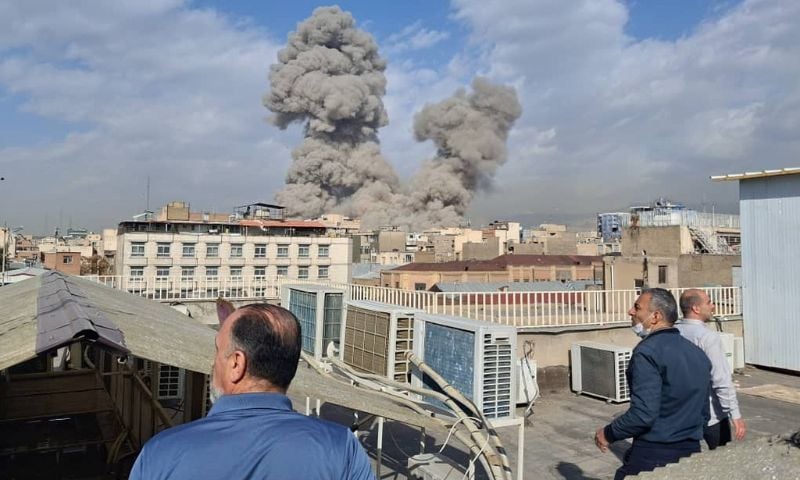



ISLAMABAD: The United States and Israel continued large-scale military operations against Iran on Sunday, a day after launching coordinated strikes that killed Iran’s Supreme Leader Ayatollah Ali Khamenei, as Tehran vowed revenge and carried out retaliatory attacks across the region.
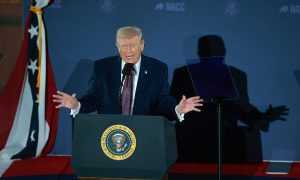
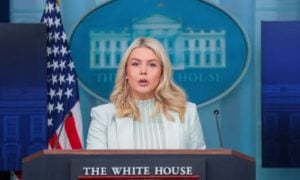
US President Donald Trump announced that “major combat operations” would continue uninterrupted throughout the week, or as long as necessary, following Saturday’s assault on Iranian military and strategic targets.
“The heavy and pinpoint bombing, however, will continue uninterrupted throughout the week, or as long as necessary to achieve our objective of peace throughout the Middle East and, indeed, the world,” said Trump.
Trump described Khamenei as a longstanding adversary of the United States and suggested the killing marked a response to the regime’s actions over decades.
The United States and Israel launched coordinated strikes on Iran on Saturday, with US President Donald Trump announcing the start of “major combat operations,” vowing to dismantle Tehran’s missile and naval capabilities and signalling support for the removal of Iran’s current leadership.
Iran responded within hours by firing missiles toward Israeli territory, triggering air-raid sirens and sharply escalating tensions in an already volatile region.
Iran launched retaliatory missile and drone attacks on Israel and US-linked targets across the Gulf on Saturday after Washington and Tel Aviv began what US President Donald Trump described as “major combat operations” against the Islamic Republic.
Trump Vows Continued Strikes
In a televised address, Trump said the objective of the operation was to eliminate “imminent threats,” dismantle Iran’s missile capabilities, and prevent Tehran from obtaining a nuclear weapon.
After claiming that Khamenei had been killed in the initial wave of strikes, Trump declared that operations would intensify.
“The hour of your freedom is at hand,” Trump said in remarks directed at the Iranian people, urging them to “take over your government.”
The White House indicated that air and naval assets in the region would remain fully engaged.
Iran Confirms Leader’s Death, Declares Mourning
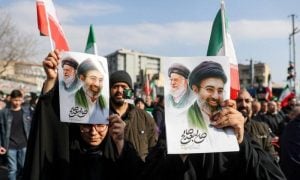
Iranian state media confirmed that Supreme Leader Ayatollah Ali Khamenei was killed in the joint US–Israeli strike on Saturday and announced 40 days of national mourning.
Under Iran’s constitution, the Assembly of Experts is responsible for appointing a successor.
In the interim, a temporary leadership council comprising the president, the head of the judiciary, and a cleric from the Guardian Council will assume the duties of the Supreme Leader.
Iranian Retaliation Targets Israel and Gulf Bases
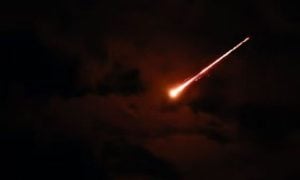
Within hours of Trump’s announcement, Iran launched retaliatory missile and drone strikes toward Israeli territory, triggering air raid sirens in several cities.
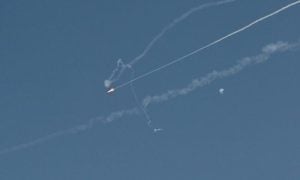
Israeli air defence systems were activated, and explosions were reported in parts of northern and central Israel as interceptors engaged incoming projectiles.
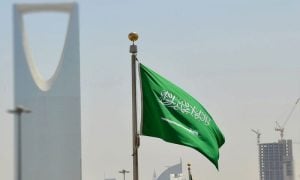
Iran also fired missiles toward US military installations in Gulf countries, including bases in Qatar, Bahrain, Kuwait, and the United Arab Emirates. Air defence systems were activated across the Gulf, with several countries reporting interceptions.
Tehran described the strikes as legitimate self-defence and warned of further action if US and Israeli operations continue.
Rising Regional Tensions
The rapid exchange of strikes has raised fears of a broader regional war, particularly as Gulf states hosting American military facilities find themselves directly exposed.
Energy markets and global shipping routes are also under scrutiny amid concerns about potential disruption in the Strait of Hormuz.
In Washington, the expanded military campaign has triggered political debate, with some lawmakers questioning whether congressional authorization was required for sustained operations.
A Dangerous Escalation
With US-Israeli strikes ongoing and Iran pledging severe retaliation, the coming days are expected to determine whether the conflict remains contained or spirals into a wider regional confrontation involving multiple actors.