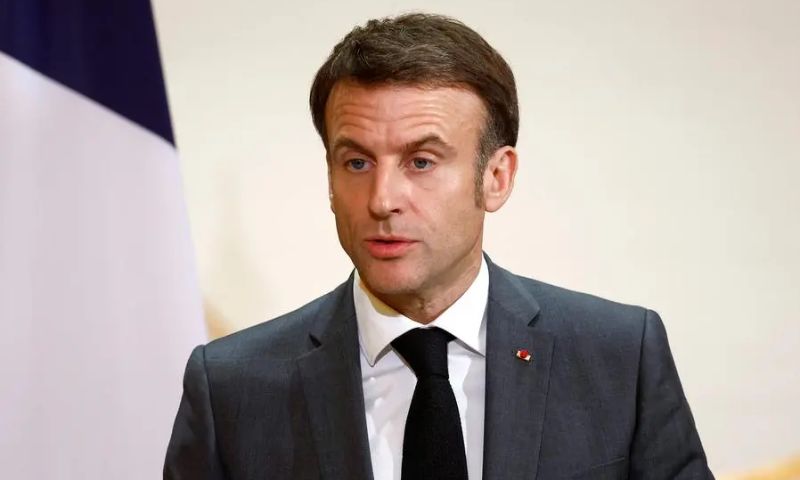



PARIS: French Emmanuel Macron said on Tuesday that France would not take part in any military operations to reopen the Strait of Hormuz, underlining a broader European reluctance to be drawn into the escalating US-Iran conflict.
“We are not party to the conflict and therefore France will never take part in operations to open or liberate the Strait of Hormuz in the current context,” the French president said at the start of a cabinet meeting focused on the Middle East crisis.
Macron added that Paris was instead working on plans for a coalition to ensure freedom of navigation once hostilities end.
Europe rejects military involvement
France’s stance reflects a wider position among European powers, many of which have ruled out sending warships to the vital shipping lane despite pressure from US President Donald Trump.
On Monday, German Chancellor Friedrich Merz said there had been no joint decision within Europe to intervene militarily.
“That is why the question of how Germany might contribute militarily does not arise. We will not do so,” he said.
Merz criticised Iran’s leadership but cautioned against military escalation.
“This Iranian regime must come to an end,” he said, adding that “bombing it into submission is, in all likelihood, not the right approach.”
Germany’s Defence Minister Boris Pistorius was more blunt, questioning the effectiveness of European naval involvement.
“What does Donald Trump expect from a handful of European frigates in the Strait of Hormuz that the mighty US navy cannot manage alone?” he said. “This is not our war.”
British Prime Minister Keir Starmer said the United Kingdom would not be “drawn into the wider war”, though he added that efforts were under way to develop “a viable plan” to stabilise shipping.
“Ultimately, we have to reopen the Strait of Hormuz to ensure stability in the oil market. That is not a simple task,” Starmer said, adding that any action would require broad international agreement.
Italy’s Foreign Minister Antonio Tajani also stressed diplomacy, saying Rome was not involved in any naval missions that could be extended to the Gulf.
“Diplomacy needs to prevail,” he said, casting doubt on expanding existing EU operations.
Trump warns of consequences for NATO
On Saturday, Trump urged allies to contribute naval forces to protect commercial shipping and reopen the waterway, which normally carries about one-fifth of global oil and gas supplies.
“It’s only appropriate that people who are the beneficiaries of the strait will help,” Trump told the Financial Times, warning that a lack of support could have consequences for the future of the NATO alliance.
At a separate press conference, he said some allies were “very enthusiastic” while others were not, adding that he was “not happy” with Britain’s position.
However, European governments have opted for caution. EU foreign ministers meeting this week declined to expand the mandate of the bloc’s Red Sea naval mission, Operation Aspides.
“There was a clear wish to strengthen this operation, but for the time being there was no appetite in changing the mandate,” said EU foreign policy chief Kaja Kallas.
Estonian Foreign Minister Margus Tsahkna said European allies were seeking clarity on Washington’s long-term objectives.
“What will be the plan?” he asked.
Greece, which hosts the headquarters of Operation Aspides, also ruled out taking part in military operations in the Strait.
Australia and Japan have similarly said they have no plans to deploy warships.