


Key Points
- Former Afghan lawmaker warns that diplomatic engagement without accountability could legitimise Taliban rule.
- Koofi says three of her family members were detained by Taliban authorities, with one allegedly tortured.
- Rights activist calls for gender apartheid to be recognised as a crime under international law.
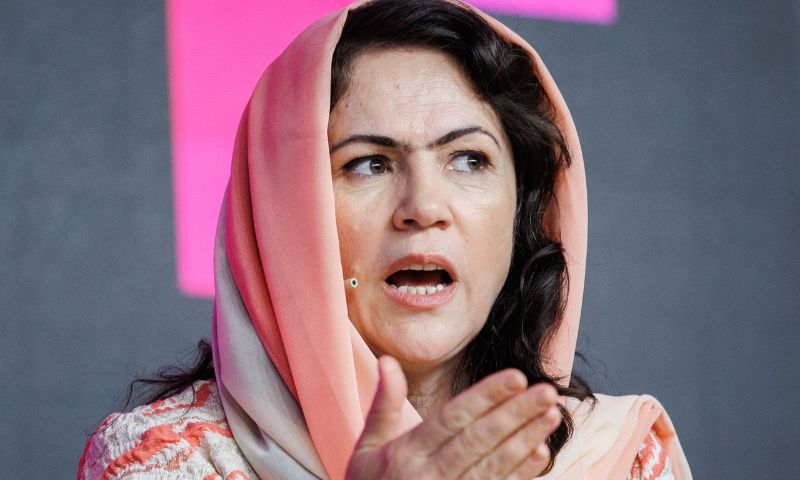
BRUSSELS: Former Afghan deputy speaker of parliament and women’s rights advocate Fawzia Koofi has strongly criticised plans to host Taliban representatives in Brussels, arguing that engaging with the group without meaningful accountability would betray Afghan women and girls living under increasingly restrictive rule.
In an opinion article, Koofi said the reported invitation extended to Taliban officials by European institutions came at a time when women in Afghanistan continue to face severe restrictions on education, employment, mobility and participation in public life. She described the move as deeply troubling, particularly as her own family members had recently been detained by Taliban authorities.
According to Koofi, three members of her family were arrested by the Taliban, one of whom was allegedly subjected to torture, while her property was confiscated. She claimed the actions were intended to silence her advocacy efforts and discourage criticism of the Taliban’s policies.
Reflecting on nearly five years of Taliban rule, Koofi questioned what improvements had been made for Afghan women since the group’s return to power. She pointed to the continued closure of secondary schools for girls, restrictions on women’s access to higher education and professional careers, and growing economic hardship affecting women across the country.
She argued that while girls remain barred from formal education beyond certain levels, religious seminaries have expanded across Afghanistan. At the same time, she said, women have been increasingly excluded from the labour market, leaving many families struggling to survive.
Koofi also accused the Taliban of introducing a series of regulations that further institutionalise discrimination against women. She alleged that recent legal measures have expanded male authority over women and girls while providing little protection against abuse and exploitation.
Drawing on consultations with women across Afghanistan, Koofi said many believe the central issue is not only poverty or unemployment but the absence of accountability for what they describe as systematic gender-based oppression. She stressed that many Afghan women now view their circumstances through the framework of what international activists have termed “gender apartheid”.
The former lawmaker called for gender apartheid to be formally recognised as a crime under international law. She argued that such recognition would create a legal mechanism to address state-sponsored discrimination and repression of women, both in Afghanistan and elsewhere.
According to Koofi, Afghan women are experiencing the consequences of institutionalised discrimination on a daily basis. She said the erosion of legal protections has left women with little access to justice, particularly following the removal of female judges, prosecutors and lawyers from public roles.
She further criticised recently introduced judicial and criminal regulations issued by Taliban authorities, claiming they reinforce social hierarchies and grant extensive powers to individuals within households and communities. Koofi argued that such measures undermine fundamental human rights and conflict with international legal standards relating to equality, freedom and protection from abuse.
One example she highlighted involved legal provisions governing domestic violence and animal welfare. She contended that the disparity between punishments prescribed in certain cases reflected a broader pattern of discrimination against women and demonstrated the limited legal protection available to them under the current system.
Koofi maintained that Afghanistan illustrates a significant gap in international law when it comes to addressing comprehensive systems of gender-based oppression. She said existing legal frameworks often focus on individual violations rather than the broader structures that enable and sustain discrimination.
The women’s rights campaigner also expressed concern over statements made by Taliban officials regarding education. She noted that restrictions on girls’ schooling remain firmly in place and argued that authorities have shown little willingness to reverse policies that exclude women and girls from public life.
Calling on European governments and international organisations to take stronger action, Koofi urged states to adopt legislation based on universal jurisdiction principles and support efforts aimed at recognising and prosecuting gender apartheid.
She said the establishment of accountability mechanisms would not only address abuses in Afghanistan but could also serve as a precedent for responding to similar systems of discrimination elsewhere in the world.
Koofi acknowledged recent international initiatives, including mechanisms established through the United Nations to investigate human rights concerns in Afghanistan. However, she warned that diplomatic engagement with the Taliban without corresponding pressure and accountability could undermine those efforts.
According to her, welcoming Taliban representatives onto European soil sends a troubling signal to Afghan women who have spent years resisting restrictions imposed on their rights and freedoms. She argued that such engagement risks conferring legitimacy on authorities accused of widespread human rights violations.
Koofi concluded by stressing that the situation facing Afghan women is not merely a domestic issue but one with broader regional and international implications. She warned that continued inaction could have long-term consequences for stability and security beyond Afghanistan’s borders.
Emphasising the urgency of the issue, she called on governments and international institutions to move beyond expressions of solidarity and pursue concrete measures aimed at protecting women’s rights and ensuring accountability for those responsible for violations.