


Key Points
- Five commercial vessels attacked in Gulf and Strait of Hormuz amid escalating Iran–US tensions.
- Two fuel tankers set ablaze near Iraqi waters after explosive boat attacks.
- One crew member confirmed dead, several missing following maritime strikes.
- Projectile attacks damage three additional ships, including a Thai bulk carrier.
- Shipping traffic slows sharply through the Strait of Hormuz, a route for about 20% of global oil trade.
DUBAI: A series of coordinated maritime attacks in the Gulf and near the Strait of Hormuz has intensified concerns over the widening Iran–US-Israel conflict, after five commercial vessels were struck in separate incidents on late Wednesday, leaving at least one crew member dead and several others missing.
According to Reuters quoting port authorities, maritime security agencies, and shipping companies, the assaults targeted vessels operating in Iraqi and Gulf waters, marking a sharp escalation in hostilities that are increasingly drawing civilian shipping into the conflict zone.
Two fuel tankers — Safesea Vishnu and Zefyros — were reportedly attacked by explosive-laden boats late at night in waters near Iraq. The vessels had recently loaded fuel cargo in Iraqi ports when the attacks occurred. Both ships caught fire following the explosions.
Rescue teams recovered the body of a foreign crew member from the sea while search operations continued for other missing seafarers. Authorities have not yet confirmed which vessel the deceased crew member belonged to.
Data from maritime intelligence firm Lloyd’s List shows that Safesea Vishnu, sailing under the Marshall Islands flag, is commercially operated by U.S.-based Safesea Transport Group.
Meanwhile, Zefyros, reportedly flagged in Malta, is owned by Zefyros Trading SA and operated by the UK-based Cygnus Tankers Limited, with beneficial ownership linked to the Greek shipping group run by the George & Vassilis Michael family.
Industry representatives said they were still gathering information about the extent of the damage and the condition of the remaining crew.
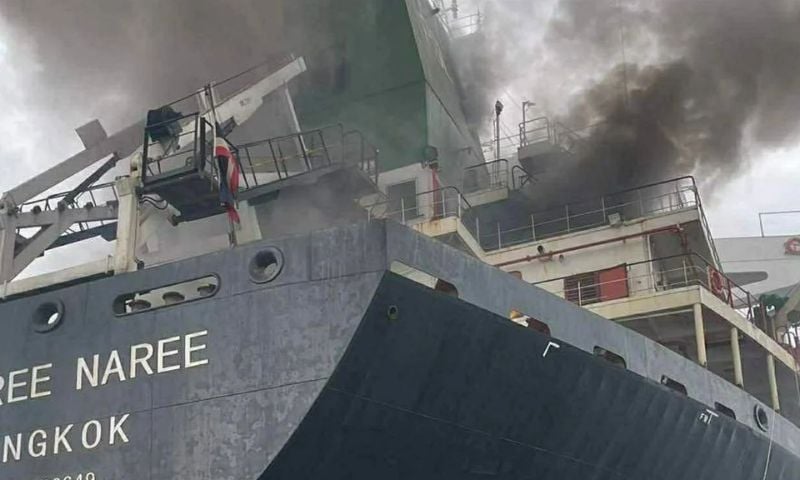
Earlier the same day, the Thai-flagged dry bulk vessel Mayuree Naree was struck by two projectiles while passing through the strategically critical Strait of Hormuz. The attack triggered a fire and damaged the ship’s engine room.
According to Precious Shipping, the vessel’s operator, three crew members remain missing and are believed to be trapped inside the engine room, while the remaining 20 crew members were evacuated safely and transported to Oman.
Images released by the Thai Navy showed thick smoke billowing from the ship’s stern after the strike.
Iran’s Revolutionary Guards later claimed responsibility for firing on the vessel, describing it as a direct engagement by Iranian forces. The Guards have previously relied primarily on missile and drone attacks rather than direct strikes by patrol craft.
Two additional vessels sustained damage in separate projectile incidents in the Gulf. The Japan-flagged container ship ONE Majesty was hit by an unidentified projectile while anchored roughly 25 nautical miles northwest of Ras Al Khaimah in the United Arab Emirates.
The vessel’s owner, Mitsui O.S.K. Lines, and its charterer Ocean Network Express confirmed that the impact caused only minor damage above the waterline and that the ship remained seaworthy with all crew safe.
Meanwhile, the Marshall Islands-flagged bulk carrier Star Gwyneth suffered hull damage after being struck about 50 miles northwest of Dubai.
Maritime risk management firm Vanguard said the projectile struck the vessel’s cargo hold area, though no injuries were reported among the crew.
Iran’s Revolutionary Guards warned earlier that ships passing through the Strait of Hormuz could be targeted amid the ongoing military confrontation.
The waterway is one of the world’s most critical energy corridors, carrying roughly 20 percent of global oil shipments.
Shipping activity in the region has slowed dramatically since the United States and Israel began strikes on Iranian targets on February 28.
Industry sources say merchant traffic through the Gulf has nearly halted due to safety concerns, contributing to a sharp rise in global oil prices.
Despite repeated requests from shipping companies for protection, the U.S. Navy has so far declined to provide regular military escorts through the strait, citing the heightened threat level. However, U.S. President Donald Trump has stated that Washington remains prepared to deploy naval escorts if necessary.
With at least 16 vessels reportedly attacked since the conflict erupted, analysts warn that continued strikes on commercial shipping could trigger major disruptions in global energy supply chains and maritime trade.