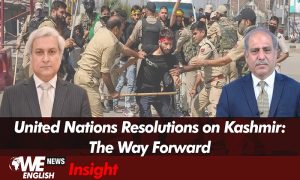

ISLAMABAD: Claims by Indian broadcaster WION that Azad Jammu and Kashmir is witnessing public unrest are misleading and omit critical context, including the AJK government’s decision to ban the group leading the protests under anti-terrorism legislation.
The report claimed that AJK was facing a major communication shutdown, deadly violence and a broad law and order crisis due to a protest call by the banned Joint Awami Action Committee. However, the framing ignored key facts and attempted to project a local security matter as political unrest against Pakistan.
WION described the protest as a mass movement driven by public anger.
The AJK government has banned the Joint Awami Action Committee under anti-terrorism laws, citing threats to public order, violence, hate promotion and attempts to create anarchy.
Authorities are taking action against elements trying to disturb peace under the cover of public rights.
Claim: Refugee seats are fuelling unrest
The report linked the controversy to the 12 refugee seats in the AJK Legislative Assembly.
Fact: The reserved seats are allocated to refugees from Indian Illegally Occupied Jammu and Kashmir (IIOJK) who migrated to Pakistan following the 1947 partition. The arrangement has long existed within AJK’s constitutional framework and reflects Pakistan’s political representation of displaced Kashmiris.
Omission of security concerns
Critics say the Indian broadcaster largely ignored the government’s justification for the crackdown and omitted reports that weapons were recovered during operations against members of the banned group.
Officials argue that presenting the situation solely as a political uprising overlooks the security dimension cited by authorities and risks creating a misleading picture of developments on the ground.
Pattern of selective coverage
Analysts say the report reflects a broader trend in sections of the Indian media, where isolated security incidents in AJK are frequently framed as evidence of widespread anti-Pakistan sentiment while providing limited context about the actions that prompted official intervention.
They argue that such coverage often downplays the complex security and political realities of the region in favour of narratives that cast Pakistan’s administration of AJK in a negative light.
The latest report has renewed debate over media responsibility and the importance of presenting contested developments with full context, particularly in a region as politically sensitive as Kashmir.