


ISLAMABAD: As the United States and Israel deploy some of the world’s most advanced military systems against Iranian targets, a central strategic question emerges: how does Tehran respond to overwhelming conventional firepower?
Iran’s answer does not lie in competing aircraft-for-aircraft or fleet-for-fleet, but in a doctrine built around ballistic missiles, long-range strike drones, hardened underground launch sites, and the ability to threaten energy routes in the Gulf.
The durability, scale, and coordination of these tools will determine whether Iran can sustain retaliation — or whether the balance of power decisively shapes the course of the conflict.
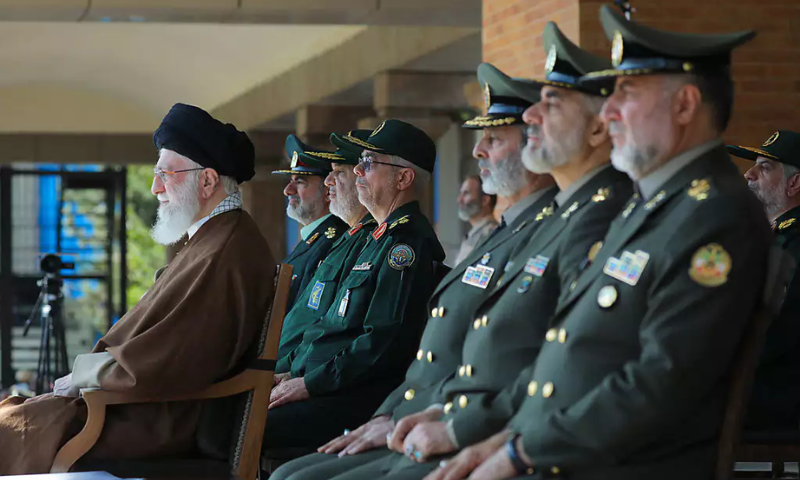
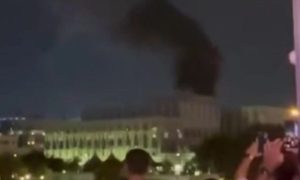
Iran said its retaliation targeted Israel and US-linked military sites across the region, including in Gulf states that host American forces.
The initial exchange has raised a pressing question for regional capitals and global markets: will this remain a contained cycle of reciprocal strikes, or develop into a longer and more disruptive campaign?
At the centre of that calculation is Iran’s missile arsenal and the broader set of tools it can deploy to impose military and economic costs.
Why This Confrontation Looks Different
Unlike the 12-day confrontation in June 2025, Iranian officials now frame the conflict as a fight for the Islamic Republic’s survival. In Tehran’s narrative, restrained retaliation could be interpreted as weakness and invite further attacks.
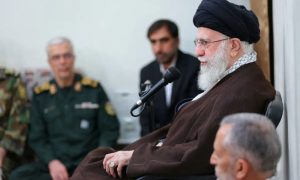
On Sunday, President Masoud Pezeshkian described revenge for the killing of Khamenei and other senior officials as the country’s “duty and legitimate right.”
That rhetoric suggests Iran may favour sustained, layered responses rather than a single symbolic strike.
Iran’s Missile Arsenal: Range and Strategy
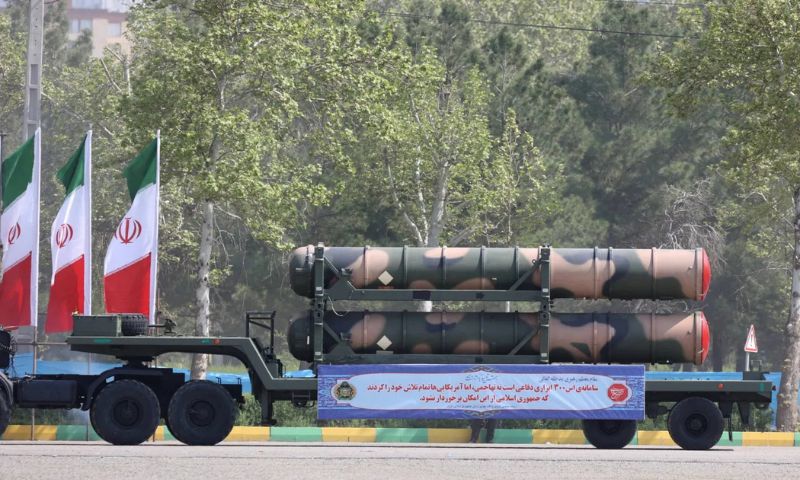
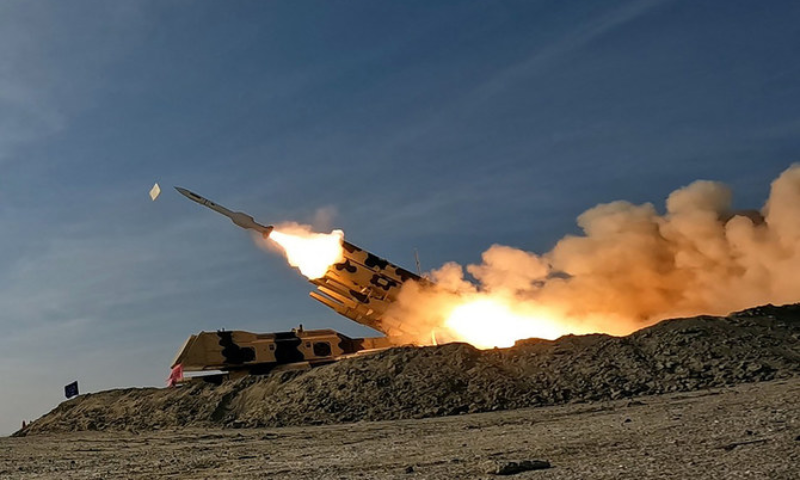
Iran’s missile force is widely regarded by defence analysts as the largest and most diverse in the Middle East.
Because Iran’s conventional air force relies heavily on ageing aircraft, missiles form the backbone of its deterrent strategy.
Tehran maintains a mix of short-, medium-, and longer-range ballistic missiles, alongside cruise missiles and drones. Iranian officials describe the programme as defensive; Western governments argue it contributes to regional instability and could one day support nuclear delivery — a claim Tehran denies.
The longest-range Iranian ballistic missiles are assessed to travel between 2,000km and 2,500km.
This range places Israel and US-linked bases across the Gulf within reach, but not the continental United States.
Short-Range Ballistic Missiles: The Immediate Strike Option
Short-range systems — roughly 150km to 800km — are designed for rapid strikes against nearby military targets.
Core systems include Fateh variants, Zolfaghar, Qiam-1 and older Shahab-1 and Shahab-2 missiles.
Their shorter range can be tactically advantageous: they can be launched in salvos, compressing warning times and complicating interception.
Iran demonstrated this approach in January 2020 when it fired ballistic missiles at Iraq’s Ain al-Assad airbase following the US killing of General Qassem Soleimani.
The strike caused significant infrastructure damage and left more than 100 US personnel with traumatic brain injuries, illustrating Iran’s ability to inflict costs without matching US air superiority.
Medium-Range Missiles: Expanding the Battlefield
Medium-range ballistic missiles — typically between 1,500km and 2,000km — allow Iran to transform retaliation into a regional equation.
Systems such as Shahab-3, Emad, Ghadr-1, Khorramshahr, and Sejjil form the core of this capability, alongside newer designs including Kheibar Shekan and Haj Qassem.
Sejjil is notable as a solid-fuel missile, which generally enables faster launch readiness than liquid-fuel systems — a key advantage if Iran anticipates incoming strikes.
These missiles place Israel and US-linked facilities in Qatar, Bahrain, Kuwait, Saudi Arabia, and the United Arab Emirates within reach, widening both Iran’s potential target set and the region’s exposure.
Cruise Missiles and Drones: Saturation Tactics
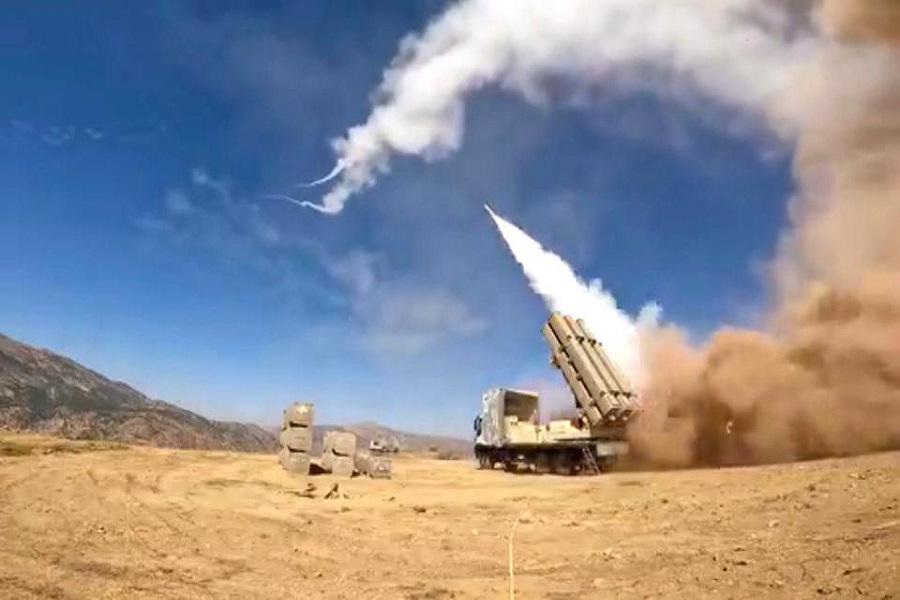
Cruise missiles fly at lower altitudes and can follow terrain contours, making them more difficult to detect and intercept, especially when combined with other attack types.
Iran is widely assessed to operate land-attack and anti-ship cruise missiles such as Soumar, Ya-Ali, Quds variants, Hoveyzeh, Paveh, and Ra’ad.
Some of these are reported to have ranges comparable to longer-range ballistic systems.
Drones add another layer. One-way attack drones are slower but cheaper and can be deployed in large numbers. Analysts believe Iran could use drone swarms to overwhelm air defences, keeping ports, airfields, and energy facilities under prolonged pressure.
This saturation strategy — combining ballistic missiles, cruise missiles, and drones — complicates defence planning and increases the probability that at least some projectiles penetrate.
Underground “Missile Cities”: Ensuring Survivability
Iran has invested heavily in underground storage tunnels, concealed bases, and hardened launch sites — often described domestically as “missile cities.”
These facilities are designed to protect launch platforms and stockpiles from pre-emptive strikes. For adversaries, this creates uncertainty: even a large initial bombardment may not eliminate Iran’s ability to continue launching missiles.
That survivability raises the risk that attempts to neutralise Iran’s arsenal could lead to prolonged exchanges rather than a swift campaign.
The Strait of Hormuz: Economic Leverage
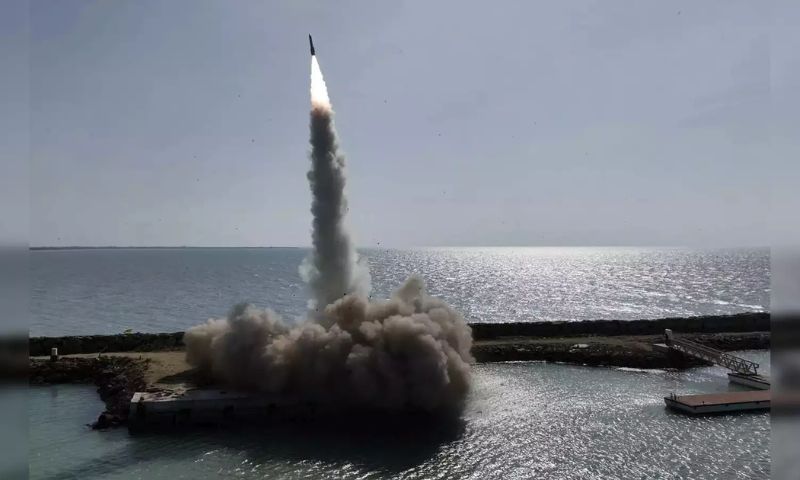
Iran’s deterrence toolkit extends beyond land targets. The Gulf region and the Strait of Hormuz — through which a significant share of global oil and gas trade passes — provide Tehran with economic leverage.
Iran can threaten naval vessels and commercial shipping using anti-ship missiles, naval mines, drones, and fast-attack craft.
It has also showcased what it describes as “hypersonic” systems, including the Fattah series, though independent verification of their operational maturity remains limited.
Even without declaring a formal blockade, disruption — such as threats to tankers, insurance hikes, or temporary suspensions by shipping companies — can ripple through global energy markets.
US Forces in the Gulf: Deterrence and Exposure
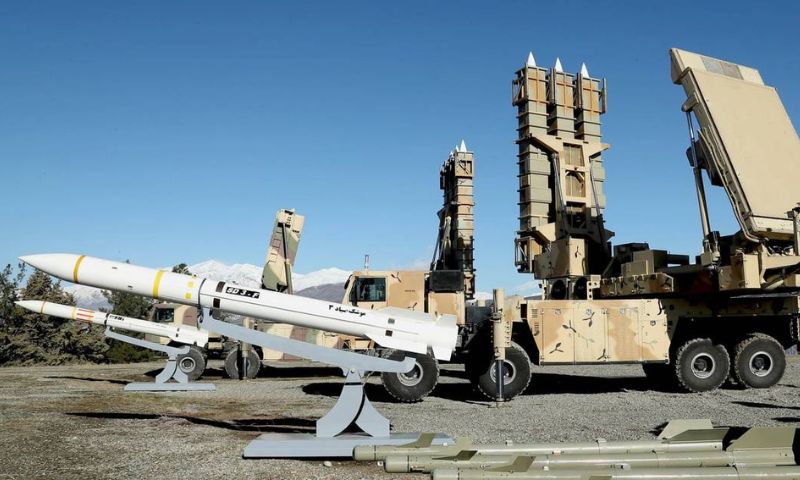
Washington has increased its naval and air deployments near Iran, strengthening strike capacity and air defences. However, the expansion of US assets across multiple bases also creates a broader array of potential targets.
US forces rely on a network of logistics hubs and command centres across the Gulf. Military analysts note that even limited penetration of defences at select sites could alter political calculations in Washington and among regional allies.
The Risk of Regional Expansion
Iranian officials have warned that any attack on Iranian territory would trigger a wider conflict rather than a limited exchange. Following Khamenei’s killing, that message has sharpened.
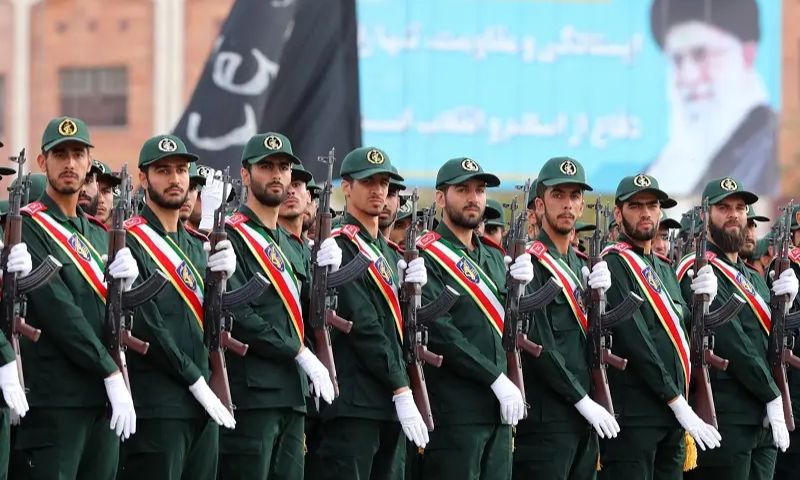
The Islamic Revolutionary Guard Corps (IRGC) has pledged continued retaliation. In addition, Iran-aligned groups such as Hezbollah in Lebanon and Yemen’s Houthis have condemned the killing and signalled alignment with Tehran.
Their potential involvement would further widen the theatre of conflict.
A Campaign, Not a Single Strike
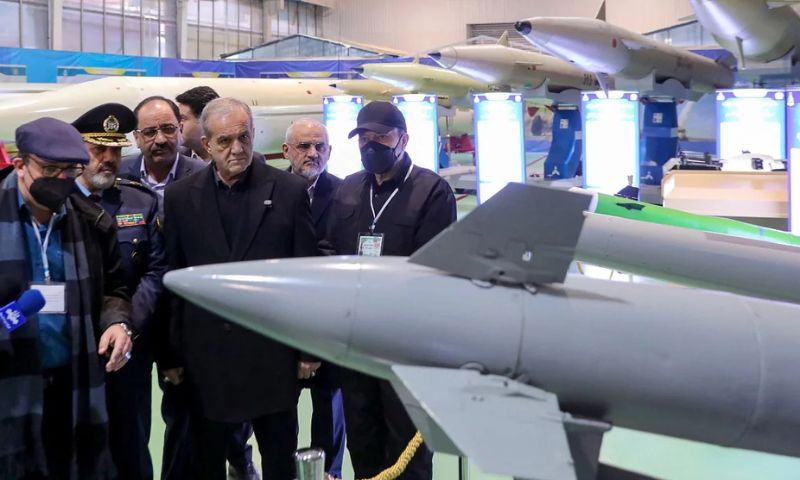
Iran’s military posture suggests a strategy built on layered deterrence: ballistic missiles for reach, drones and cruise missiles for saturation, underground infrastructure for survivability, and maritime disruption for economic leverage.
Whether the confrontation remains contained or evolves into a sustained regional war will depend not only on Tehran’s arsenal, but also on how Washington and its allies respond to each successive round of strikes.