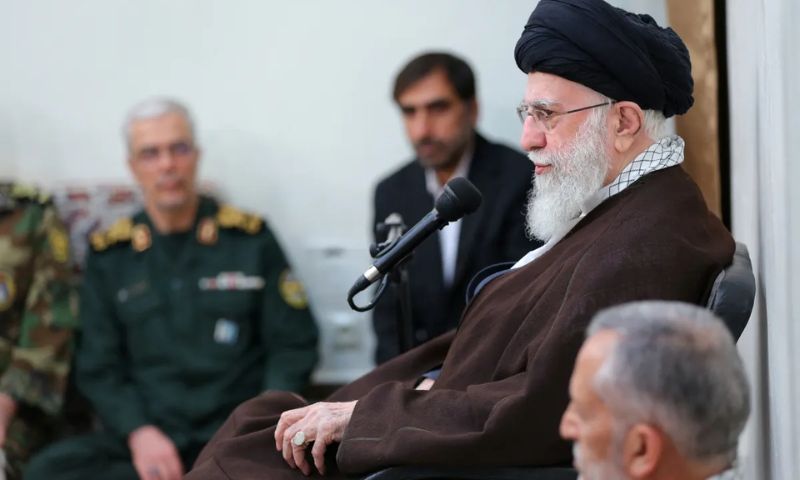



ISLAMABAD: Following the death of Iran’s Supreme Leader Ali Khamenei on Saturday, attention has turned to the constitutional process that will determine his successor.
In Tehran, a temporary leadership council has already taken over key duties as Iran’s clerical and political institutions prepare for a rare transition of authority.
Under Article 111 of Iran’s constitution, the 88-member Assembly of Experts — a clerical body elected by the public and tasked with appointing and overseeing the supreme leader — must now convene to vet candidates and elect a new head of state.
Until that process concludes, the interim Leadership Council, composed of the president, chief justice, and a Guardian Council cleric, bears the de facto responsibilities of the supreme leader’s office
The interim Leadership Council currently consists of President Masoud Pezeshkian, Chief Justice Gholam-Hossein Mohseni-Eje’i, and Guardian Council member Alireza Arafi.
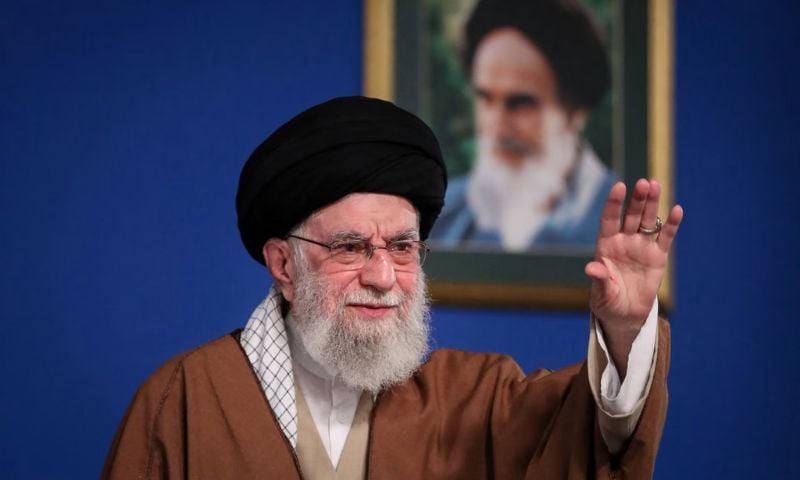
Until the 88-member Assembly of Experts elects a new Supreme Leader, the tripartite council represents Iran’s highest authority.
Khamenei did not publicly designate a successor, leaving the decision entirely in the hands of the clerical establishment.
Constitutional Framework for Succession
Iran’s post-revolutionary political system provides a detailed legal structure for leadership transition.
Since the 1979 Islamic Revolution, the Islamic Republic has had only two supreme leaders: Ruhollah Khomeini and Ali Khamenei, who succeeded him in 1989.
Article 111 of the Iranian Constitution states that in the event of the death, “the experts shall take steps within the shortest possible time for the appointment of the new Leader.
Till the appointment of the new Leader, a council consisting of the President, head of the judiciary power, and a faqih from the Guardian Council, upon the decision of the Nation’s Exigency Council, shall temporarily take over all the duties of the Leader.”
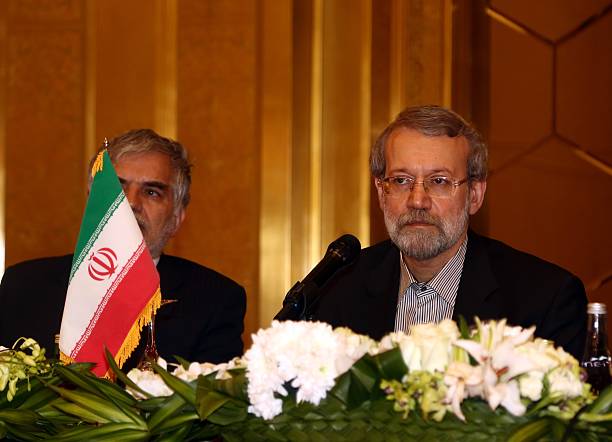
Article 107 of the Iranian Constitution states that “the determination of the Leader rests with the experts elected by the people,” ultimately placing the responsibility on the 88 members of the Assembly of Experts to vet and appoint the country’s top figure.
Beyond selecting the leader, the Assembly of Experts is also responsible for supervising his performance and holds the authority to dismiss him if he fails to fulfill his duties — a power that has never been exercised in the Islamic Republic’s history.
Key Institutions in the Process
Assembly of Experts
The 88-member Assembly of Experts, elected by public vote but vetted by the Guardian Council, holds the constitutional authority to appoint the Supreme Leader. Members are senior clerics tasked with evaluating candidates’ religious credentials, political standing, and ability to lead.
Guardian Council and Expediency Council
The 12-member Guardian Council plays a powerful gatekeeping role in Iran’s political system, overseeing elections and legislation. The Expediency Discernment Council, which arbitrates disputes between parliament and the Guardian Council, may also exert influence during consultations surrounding succession.
Leading Figures Widely Viewed as Contenders
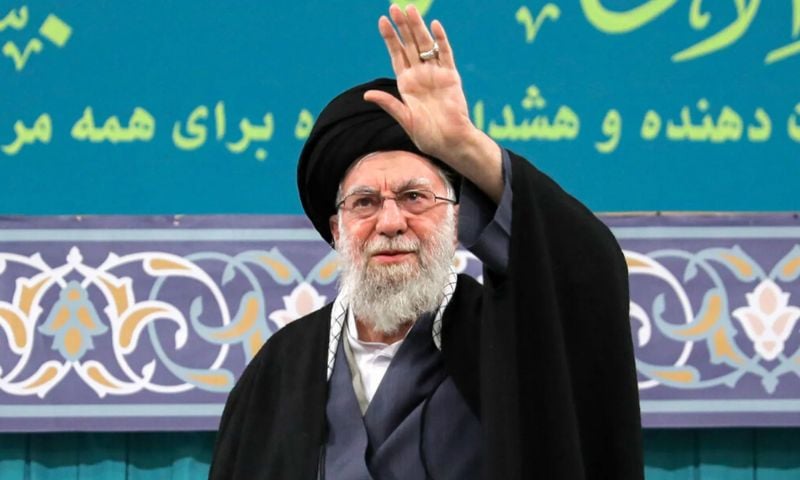
Although no formal list of candidates has been announced, several senior clerics and political figures are widely viewed as potential successors.
Alireza Arafi
A dual member of the Assembly of Experts and the Guardian Council, Alireza Arafi holds significant institutional influence. In addition to serving on the interim Leadership Council, he is head of Iran’s seminaries and the Friday prayer imam in Qom — a city central to Shiite religious authority.
His simultaneous presence in key bodies positions him at the heart of the transition process.
Gholam-Hossein Mohseni-Eje’i
Currently serving as chief justice, Mohseni-Eje’i was previously Iran’s intelligence minister from 2005 to 2009 and has held senior government roles since 1984.
As a member of the interim Leadership Council and the country’s top judicial authority, he is regarded as a central power broker. He is also widely associated with the state’s response to the 2025–2026 nationwide protests.
Sadiq Larijani
Sadiq Larijani, former chief justice and current chairman of the Expediency Discernment Council, has long been considered a potential successor.
Born in Najaf, Iraq, he is the son of Grand Ayatollah Hashim Larijani, who was reportedly exiled by Shah Mohammad Reza Pahlavi. The family later returned to Iran, where Sadiq Larijani rose to the rank of Grand Ayatollah and became a close aide to Khamenei.
His deep clerical credentials and long-standing ties to the political establishment keep him in contention.
Hassan Rouhani
Hassan Rouhani, born Hassan Fereydoun, served as Iran’s seventh president from 2013 to 2021.
A cleric and sharia lawyer, Rouhani previously served on the Assembly of Experts, the Expediency Council and the Supreme National Security Council. After leaving office, he was not appointed to a senior position and was barred from running in the 2024 Assembly of Experts elections, limiting his current institutional leverage.
Grand Ayatollah Hossein Noori Hamediani
Hossein Noori Hamedani, aged 100, is one of Iran’s most senior religious scholars and is known for his hardline and ultra-conservative positions.
Before the 1979 revolution, he was an outspoken opponent of the Shah and was arrested several times by SAVAK, the monarchy’s secret police. He currently resides in Qom and remains a member of the Assembly of Experts.
His advanced age, however, may factor into deliberations.
Mojtaba Khamenei
Mojtaba Khamenei, the second eldest son of Ali Khamenei, has long been the subject of speculation.
He served during the Iran–Iraq War from 1987 to 1988 and is widely regarded as the most influential of Khamenei’s children. He has been linked to the Basij force used to suppress protests following the disputed 2009 election.
Although he holds no formal public office, the US Treasury sanctioned him in 2019 “for representing the Supreme Leader in an official capacity despite never being elected or appointed to a government position aside from work in the office of his father.”
What Happens Next?
The Assembly of Experts is expected to convene to deliberate behind closed doors. The selection process is likely to involve consultation among senior clerics, security institutions and political factions.
While the constitution mandates swift action, the choice of Supreme Leader carries profound implications not only for Iran’s domestic governance but also for its regional posture and relations with global powers.
With Iran facing external military pressure and internal political strains, the succession process unfolds at a moment of heightened uncertainty — one that could shape the trajectory of the Islamic Republic for decades to come.