


BRUSSELS: European Union foreign ministers met on Monday to discuss whether to extend the mandate of the bloc’s Red Sea naval mission to help restore shipping through the strategically vital Strait of Hormuz, as the ongoing conflict involving Iran, the US and Israel disrupts one of the world’s most important energy routes.
The EU’s foreign policy chief, Kaja Kallas, said ministers were considering whether the bloc’s maritime security operation in the Red Sea could be expanded to address the growing crisis in the Gulf.
“It is in our interest to keep the Strait of Hormuz open, and that’s why we are also discussing what we can do in this regard,” Kallas told journalists as she arrived for talks in Brussels.
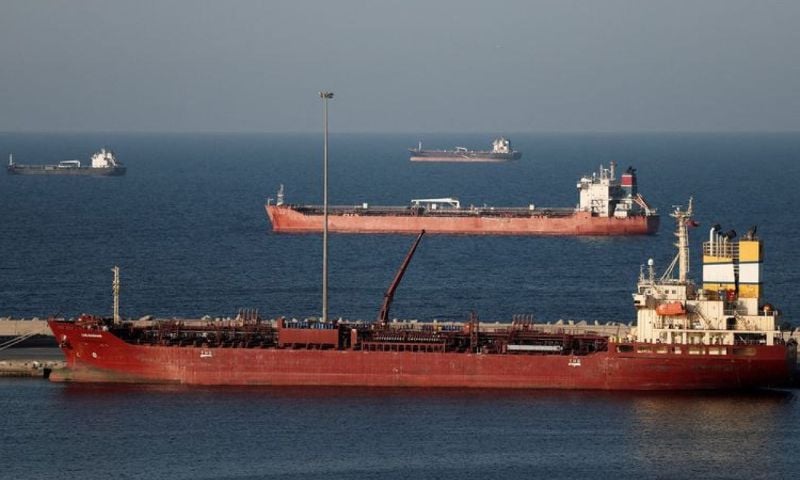
The waterway has been largely paralysed since the joint US–Israeli military campaign against Iran.
Roughly a fifth of global crude oil supplies normally pass through the strait, along with significant volumes of natural gas, making it one of the most critical energy chokepoints in the world.
Operation Aspides
Kallas said one option under consideration was modifying the mandate of Operation Aspides, the EU naval mission launched in 2024 to protect commercial vessels from attacks by Houthis in the Red Sea.
According to the EU’s top diplomat, expanding the mission’s scope could provide the fastest mechanism for the bloc to enhance security around the Strait of Hormuz.
“If we want to have security in this region, then it would be easiest to actually already use the operation that we have in the region,” she said.
However, she acknowledged that it remained uncertain whether all 27 EU member states would support changing the operation’s mandate.
“We will discuss with member states whether it’s possible to really change the mandate of this mission,” Kallas added.
The current deployment includes three warships contributed by France, Greece and Italy.
Last week, Emmanuel Macron said France and its allies were preparing a “defensive” mission aimed at reopening the Strait of Hormuz and ensuring freedom of navigation.
Paris also plans to strengthen its contribution to Operation Aspides by deploying two additional frigates over the longer term.
Kallas said the EU could also consider forming a “coalition of the willing”, though she did not elaborate on what such an arrangement might involve.
EU countries show caution
Several European governments expressed reservations about expanding the mission.
Spain’s foreign minister, José Manuel Albares, said the current mandate remained appropriate.
“The current mandate of Operation Aspides is correct and does not require any changes,” Albares said as he arrived for the meeting.
Italy’s foreign minister, Antonio Tajani, also voiced scepticism about extending the mission, emphasising that Rome preferred a diplomatic solution to the crisis.
Germany indicated it wanted more clarity on the trajectory of the conflict before considering additional security arrangements.
German Foreign Minister Johann Wadephul said Berlin wanted to hear from Israel and the United States about “when they believe they will have achieved their military objectives in Iran” before discussing a longer-term security framework for the region.
Iran issues warning over Strait of Hormuz
Iran has warned that the strategic waterway cannot be used by foreign powers to conduct military operations against it.
According to Iran’s foreign ministry spokesman Esmaeil Baghaei, ships would still be able to pass through the strait but under special conditions because of what he described as insecurity created by the United States and Israel.
Baghaei said Iran’s armed forces controlled the passage and would not allow any country to use the waterway to launch attacks on Iranian territory.
He added that Tehran had historically ensured safe passage through the strait but blamed Washington and Israel for creating the current tensions.
Iran’s Foreign Minister Abbas Araghchi said Tehran was prepared to continue the conflict as long as necessary.
“I think by now they have learned a good lesson and understood what kind of nation they are dealing with,” Araghchi said during a weekly briefing.
“We are ready to continue the war wherever it may lead and take it as far as necessary.”