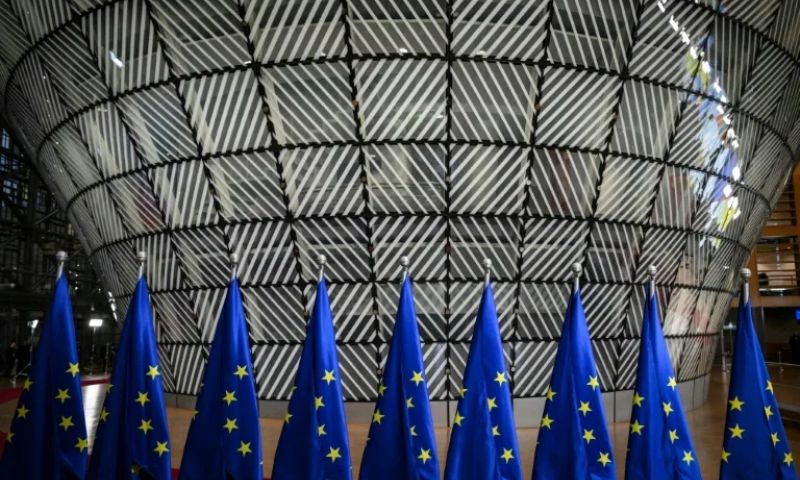



BRUSSELS: The European Union is moving forward with carefully structured plans to manage the return of Afghan nationals who no longer have the legal right to remain in the bloc.
This marks a significant shift in European migration policy and reopening complex discussions around humanitarian responsibility, security, and international cooperation.
Responding to sustained pressure from member states to address irregular migration, Brussels has initiated technical-level contacts with Afghanistan’s authorities to assess whether returns can be carried out in a safe, orderly, and workable manner. EU officials emphasize that the discussions are exploratory and focused on logistics rather than political recognition.
European Commission spokesperson Markus Lammert confirmed that EU officials have conducted two “technical missions” to Afghanistan, the most recent in January, aimed at “exploring the structuring of the work on readmission and the possible organization of return operations.” The missions examined practical issues such as airport capacity, documentation, and coordination mechanisms on the ground.
According to AFP, only a few years ago, such returns were widely considered impossible. Since the Taliban’s return to power in 2021, security, legal, and ethical concerns have dominated the debate. Human Rights Watch has continued to warn of restrictions on media, women, and civil liberties, highlighting the need for caution and safeguards.
At the same time, migration has become a defining political issue across Europe. Public opinion has hardened in many countries, contributing to electoral gains for right-wing parties and increasing pressure on governments to enforce existing asylum decisions.
“There has been a shift, where there’s much more talk about this,” said Arafat Jamal, the United Nations refugee agency’s representative in Afghanistan.
While welcoming dialogue, he stressed that policy decisions must remain grounded in evidence and humanitarian principles rather than short-term political reactions.
According to EU data, fewer than 20 percent of individuals ordered to leave the bloc are currently returned to their countries of origin. Between 2013 and 2024, EU member states received around one million asylum applications from Afghans, with roughly half approved.
In 2025, Afghans remained the largest group of asylum applicants, followed by Venezuelans and Syrians.
In October, Belgium—supported by Italy, Poland, Sweden, and a total of 20 EU countries—urged the European Commission to enable both voluntary and, where legally permissible, forced returns for rejected applicants.
Some governments have expressed frustration that even individuals convicted of serious crimes have been difficult to remove.
Freddy Roosemont, director general of the Belgian Immigration Office, said his administration is “currently working” with the European Commission and partner countries “to find a solution to this problem” within a coordinated European framework.
Several countries have already taken limited steps. Germany has deported more than 100 Afghans since 2024 through charter flights facilitated by Qatar, while Austria carried out its first return to Afghanistan since 2021 in October.
Officials in those countries point to domestic security concerns and public safety following a series of violent incidents involving Afghan nationals.
Other member states, including France, have urged caution. Lammert acknowledged that returns to Afghanistan “pose challenges,” citing the country’s ongoing humanitarian crisis, exacerbated by drought and sharp reductions in foreign aid.
Afghanistan is currently absorbing large numbers of returnees from neighboring Pakistan and Iran.
Since 2023, more than five million Afghans have returned, many facing unemployment and poverty. Aid agencies warn that any additional returns must be accompanied by increased international assistance.
Engagement with Afghan authorities also presents diplomatic and logistical hurdles.
European governments closed their embassies in Kabul after 2021, and while the EU maintains a limited diplomatic presence, it has stressed that technical engagement “does not bestow any legitimacy” on the Taliban administration.
Meanwhile, Afghan authorities do not recognize some overseas diplomatic missions linked to the former government, complicating the issuance of travel documents.
According to a source involved in the talks, EU missions have focused on operational details, including aircraft access, airport infrastructure, and assurances regarding the treatment of returnees.
“They’re testing the waters,” the source said, adding that Brussels wants to understand whether a large-scale system could function responsibly. If returns move forward, they must be paired with expanded humanitarian aid, Jamal warned.
“Returning people to Afghanistan without increasing assistance is incoherent and risks creating a dangerous imbalance,” he said, underscoring the need for a comprehensive approach that combines migration management with sustained support for stability and livelihoods.