


Key Points
- EU–India trade deal promises phased tariff reductions on automobiles
- High localisation rules and price sensitivity remain major barriers
- German luxury brands dominate the niche, but the mass market stays elusive
- Indian EV policy and supply chains favour domestic and Asian players
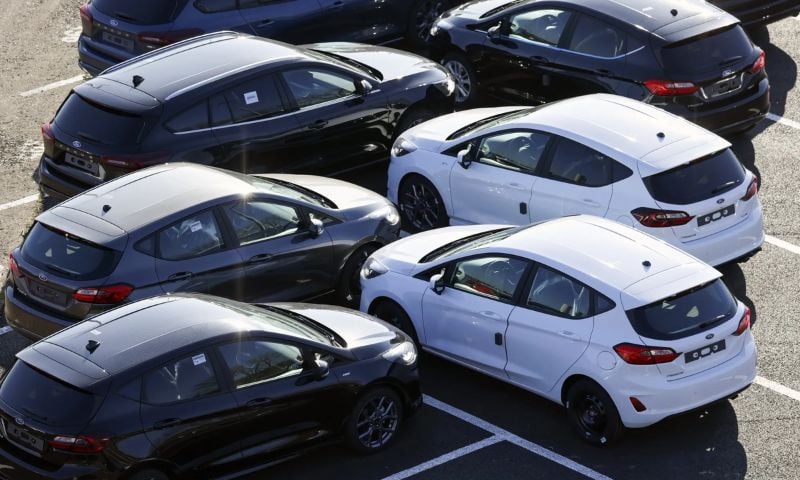
ISLAMABAD: The European Union’s long-awaited trade agreement with India has opened a new chapter for European carmakers, yet industry executives and analysts caution that access to one of the world’s most protective auto markets will remain challenging even after tariffs begin to ease.
Under the deal, India has agreed to gradually lower import duties on fully built vehicles and components from the EU, a move welcomed by manufacturers such as Volkswagen, BMW, Mercedes-Benz and Stellantis. However, India’s market realities, extreme price sensitivity, stringent localisation norms and entrenched domestic competitors are expected to blunt the immediate impact of tariff relief.
India currently imposes import duties of up to 100 per cent on fully assembled cars, a structure designed to protect local manufacturing and encourage foreign firms to produce domestically. Although the trade deal enables phased reductions, officials familiar with the negotiations say the cuts will be slow and selective, with safeguards to prevent a surge in imports that could hurt local industry.
European carmakers have long struggled to crack India’s mass market, which is dominated by domestic manufacturers and Asian brands offering low-cost, fuel-efficient vehicles. Even with lower tariffs, European models are likely to remain significantly more expensive than locally produced alternatives, limiting their appeal beyond affluent urban consumers.
Luxury brands from Germany have carved out a profitable niche, particularly in major cities, still volumes remain small. Mercedes-Benz and BMW have invested in local assembly to reduce costs, but executives acknowledge that scaling up remains difficult due to supply chain constraints and relatively low demand for premium vehicles.
Electric vehicles present another hurdle. India’s EV policy strongly favours local manufacturing through incentives tied to domestic value addition. Chinese and South Korean firms, along with Indian players, are better positioned in battery supply chains and cost-efficient production, putting European automakers at a disadvantage despite their technological edge.
“Tariff reductions alone will not transform market access,” said an industry analyst tracking India’s auto sector. “Success in India requires deep localisation, competitive pricing and alignment with government priorities on EVs and manufacturing.”
Indian officials, for their part, have played down expectations of a rapid influx of European cars. They argue the deal is aimed at boosting investment, technology transfer and joint ventures rather than increasing imports of finished vehicles.
For European manufacturers, the trade agreement remains strategically important, providing regulatory clarity and a framework for longer-term engagement. Several firms are exploring expanded local production, partnerships with Indian suppliers and tailored models designed specifically for the market.
Yet analysts say the benefits will accrue gradually, and only to those willing to commit capital and adapt to India’s unique conditions. In the near term, the trade deal may ease some barriers, but it is unlikely to alter the competitive landscape of India’s auto industry fundamentally.