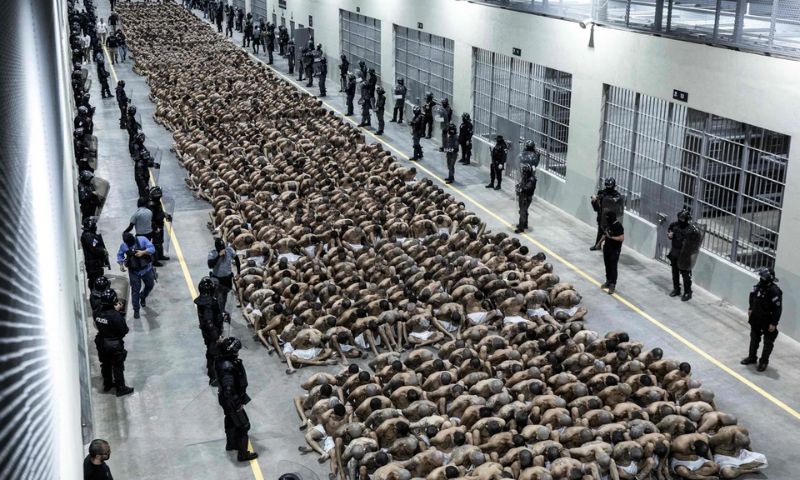



SAN SALVADOR, El Salvador: El Salvador announced on Sunday prison sentences for hundreds of convicted gang members, with some of them receiving centuries-long terms.
A campaign against crime gangs spearheaded by President Nayib Bukele in recent years has reduced homicide rates in the Central American country to historic lows, but human rights groups accuse the authorities of committing abuses.
The attorney general’s office said in a post on X that 248 members of the notorious Mara Salvatrucha (MS-13) street gang had received “exemplary sentences” for crimes including 43 homicides and 42 disappearances, reports AFP.
It did not specify the date of each sentencing or whether the accused had been tried altogether.
One individual was sentenced to 1,335 years in prison, while 10 others received prison terms ranging from 463 to 958 years, the post said.
Since March 2022, Bukele has been cracking down on gangs under a state of emergency that allows for arrests without warrants.
More than 90,000 people have been detained, and some 8,000 have been released after being found not guilty, according to official sources.
According to rights group Socorro Juridico Humanitario, 454 Salvadorans have died in prisons since the crackdown began.
The Salvadoran government says MS-13 and another gang, Barrio 18, are responsible for the deaths of approximately 200,000 people over the course of three decades.
The two gangs once controlled an estimated 80 percent of the country, and El Salvador had one of the highest homicide rates in the world.
The groups extorted “victims who owned businesses, demanding different amounts of money in exchange for not harming them,” the attorney general’s office said.
“Some people had to close their businesses out of fear of the threats,” it added.
‘No transparency’
Samuel Ramirez of the MOVIR movement for victims of rights abuses in El Salvador told AFP that while he agrees with “applying the law to criminals,” he questioned whether the punishment followed “due process.”
“Unfortunately, there is no transparency in judicial proceedings,” said Ramirez.
The harsh sentences were “a populist marketing strategy” in Bukele’s favor, he added.
Despite criticism and human rights concerns, some governments in the region have announced similar measures to combat crime.
Bukele agreed earlier this month to share his experience with Costa Rica’s conservative President Rodrigo Chaves, who is facing a rise in crime in his own country.
Chaves has hinted at plans to build a detention facility similar to Cecot, the Salvadoran mega-prison that has become a symbol of Bukele’s fight against gangs.
The United States has designated MS-13 and several other gangs in Central and South America as foreign terrorist organizations.