Key Points
- Drone strike hits two gas tankers in Egypt.
- Attack raises concerns over Suez energy corridor.
- Saudi oil exports increasingly routed through Egypt.
- Up to five million barrels per day potentially at risk
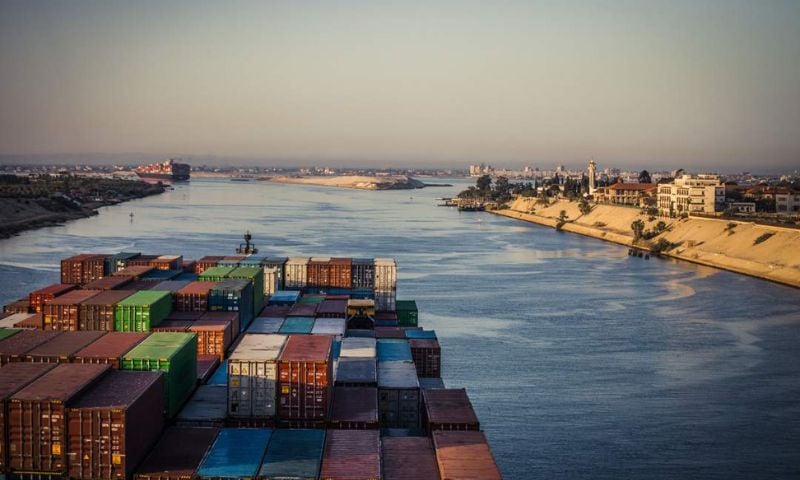
ISLAMABAD: A drone strike that damaged two gas tankers at Egypt’s Port of Damietta has heightened concerns over the security of the Suez Canal and the Sumed pipeline, key arteries for global energy supplies that have gained strategic importance amid the ongoing US-Iran conflict.
The attack took place on Wednesday near the Mediterranean port city of Damietta, located on a branch of the Nile Delta.
No group has claimed responsibility, and there have been no direct threats against the Suez Canal, but analysts say the incident unearthed the growing vulnerability of regional energy infrastructure.
Suez: Critical alternative
The Suez Canal and the Sumed pipeline are critical alternatives for Saudi Arabian oil exports since hostilities disrupted shipping patterns across the Arabian Gulf.
The Sumed pipeline transports crude from Egypt’s Red Sea coast to the Mediterranean port of Sidi Kerir, allowing cargoes to bypass the Strait of Hormuz.
According to shipping and market intelligence data, Saudi Arabia has redirected much of its oil exports to the Red Sea and its Yanbu terminal since the conflict began.
ALSO READ: Arab League Condemns Drone Strike on Ships at Egypt’s Damietta Port
Egypt’s transit infrastructure
However, recent threats and attacks by Yemen’s Houthis have prompted many vessels to avoid routes through the Bab el-Mandeb Strait, further increasing reliance on Egypt’s transit infrastructure.
Saul Kavonic, head of energy research at advisory firm MST Marquee, warned that risks to the Suez corridor could have far-reaching implications.
“The passage through the Red Sea, even via the longer Mediterranean route, could be put at risk, which threatens up to five million barrels per day of oil supply that can currently bypass the Strait of Hormuz,” he said.
The Strait of Hormuz, which normally handles roughly one-fifth of global oil and liquefied natural gas supplies, has witnessed a dramatic decline in tanker traffic in recent weeks as security concerns intensify.
Data from Kpler showed crude loadings through the Sumed pipeline climbed to 28.79 million barrels in July, up from 19.52 million barrels in April, highlighting Egypt’s growing role in maintaining global energy flows.
The increase accelerated after the Houthis threatened on July 20 to block Saudi oil shipments passing through the Bab el-Mandeb Strait.
Ship-tracking platform MarineTraffic also reported a buildup of vessels near Port Said at the Mediterranean entrance to the Suez Canal, with around 30 ships anchored on Thursday compared with approximately 20 earlier in the week.
The latest attack is expected to add to market anxiety over the resilience of global oil supply chains, as traders increasingly monitor the security of alternative export routes across the Middle East and North Africa.