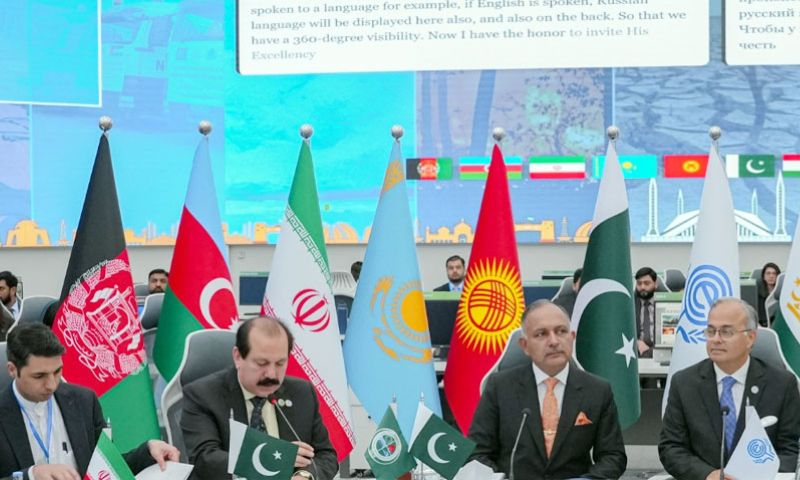



ISLAMABAD: The Economic Cooperation Organization (ECO) member states have reaffirmed their commitment to strengthening regional cooperation, enhancing disaster resilience, and taking coordinated action against disasters.
The 10th two-day Ministerial Meeting of the ECO on Disaster Risk Reduction concluded in Islamabad on Thursday with the adoption of the Islamabad Declaration.
The conference brought together representatives from member states to discuss strategies for enhancing regional collaboration in disaster management.
The gathering focused on improving preparedness, resilience, and coordinated responses to natural and man-made disasters across the region.
According to the National Disaster Management Authority (NDMA), the commitments made at the event, aligned with the Izmir Treaty, ECO Vision 2025, and the Sendai Framework, were incorporated into the Islamabad Declaration 2025.
During the conference, special emphasis was placed on leveraging technological solutions, data sharing, early warning systems, and innovative practices to address the evolving risk landscape and promote regional resilience.
Delegations from ECO Member States, including Pakistan, Türkiye, Azerbaijan, Kazakhstan, Kyrgyzstan, Tajikistan, Turkmenistan, Iran, Uzbekistan, and Afghanistan, participated in the two-day gathering.
Speaking at the occasion, NDMA Chairman Lt. Gen. Inam Haider Malik described the Islamabad Declaration as a collective commitment by ECO member states to protect their communities from the escalating threats posed by disasters.
He added that Pakistan is ready to share its expertise and advanced capabilities through the National Emergencies Operation Center, aiming to enhance the region’s preparedness and resilience across ECO countries.
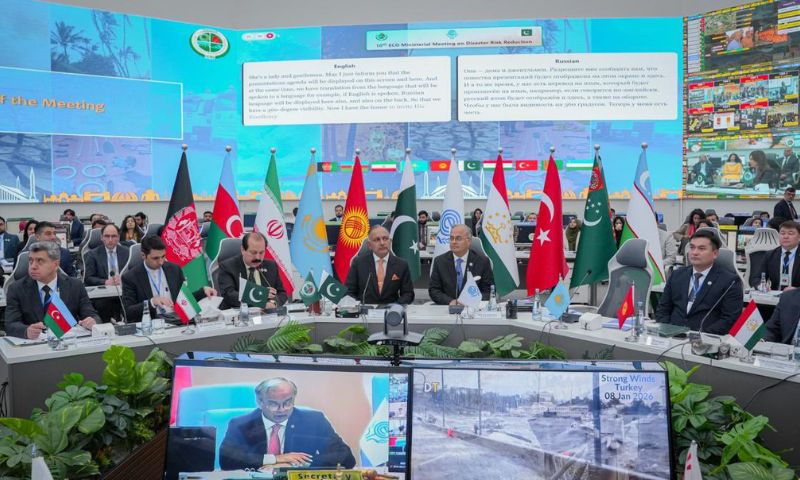
During the closing ceremony, the Minister for Climate Change and Environment Coordination emphasised that Climate-induced disasters are no longer distant possibilities; they are realities we face today.
“The ECO platform provides us with the opportunity to act collectively, ensuring that our strategies are inclusive, science-based, and people-centered. Pakistan is committed to leading by example, fostering regional solidarity, and empowering vulnerable groups to be at the heart of disaster risk reduction,” he said.
Pakistan hosted the ECO Ministerial Meeting on Disaster Risk Reduction for the first time, underscoring the country’s growing leadership in regional disaster resilience and cooperation.
Hosting the 10th ECO Ministerial Meeting on Disaster Risk Reduction highlights Pakistan’s commitment to regional solidarity and its dedication to fostering coordinated, inclusive, and forward-looking strategies for disaster risk reduction, while emphasising innovation and technology as key drivers of sustainable resilience across the ECO region.
The ECO member states, including Pakistan, Türkiye, Afghanistan, and others, have in recent years been hit hard by natural disasters such as floods and earthquakes, which have claimed tens of thousands of lives.
In Pakistan, heavy rains triggered catastrophic floods in 2022 and 2025, killing thousands and causing extensive damage to critical infrastructure, resulting in losses worth billions of dollars.
Since then, Islamabad has urged regional countries to work together to prevent future climate-related disasters and to promote early warning systems to mitigate the impact of such calamities.