Key Points
- UAE lifted airspace restrictions imposed on February 28
- Over 6 million passengers handled during disruption period
- More than 32,000 flights operated despite regional tensions
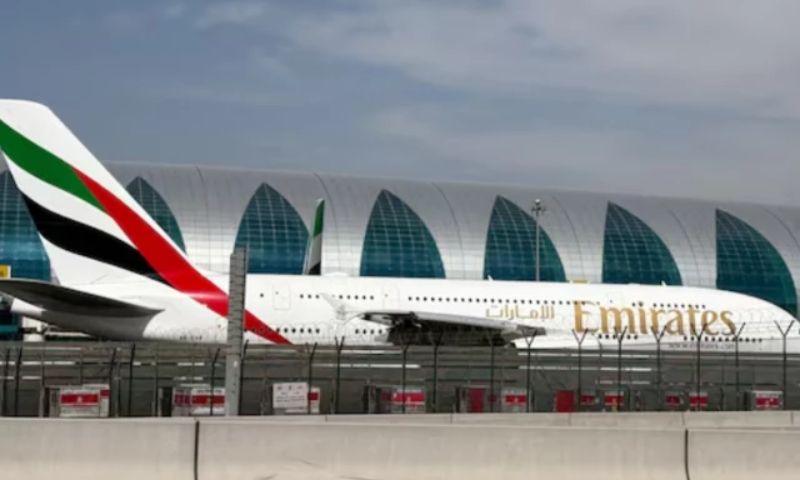
DUBAI: Dubai Airports has begun scaling up flight operations and capacity after the United Arab Emirates (UAE) fully restored its airspace, marking a return to normalcy following weeks of disruption triggered by the US–Iran conflict.
Chief Executive Paul Griffiths said on Monday that both operations and flight schedules are being steadily ramped up in line with available air routes, as restrictions imposed earlier this year are lifted.
The UAE’s aviation authority confirmed over the weekend that air traffic has returned to normal after precautionary measures introduced on February 28—at the onset of the conflict—were withdrawn.
Despite the operational challenges during the period of heightened tensions, Dubai’s two major aviation hubs—Dubai International Airport (DXB) and Al Maktoum International Airport—continued to handle significant volumes.
According to Griffiths, more than six million passengers travelled through these airports during the disruption, alongside over 32,000 aircraft movements and upwards of 213,000 metric tonnes of cargo.
He emphasised that travel demand through Dubai has remained robust, even as airlines adjusted schedules and routes due to temporary airspace closures across parts of the Gulf region.
Dubai International Airport, widely recognised as the world’s busiest hub for international passengers, recorded 18.6 million travellers in the first quarter of 2026, according to Reuters.
This marks a decline from 23.4 million passengers during the same period last year, reflecting the impact of regional instability on aviation flows.
“Demand for travel through Dubai remains strong, and DXB is well positioned to progressively increase capacity and support airlines and passengers through a period of continued adjustment,” Griffiths said in a LinkedIn post.
Prior to the outbreak of hostilities and the subsequent disruption of Gulf airspace, Dubai Airports had projected nearly 100 million passengers for the year.
The temporary closures and rerouting of flights, however, affected traffic for almost two months, prompting a reassessment of short-term capacity expectations.
With airspace now fully operational, aviation authorities and airport operators are focusing on restoring schedules, improving connectivity, and ensuring a smooth transition back to pre-crisis levels of activity.