



KEY POINTS
- Karachi reintroduces double-decker buses after nearly five decades.
- The revival taps into public nostalgia for the buses.
- Part of the fleet of 39 new buses, the service aims to address severe traffic and transit woes in the megacity.
- Officials plan to expand the service across Karachi and Sindh if the trial succeeds.
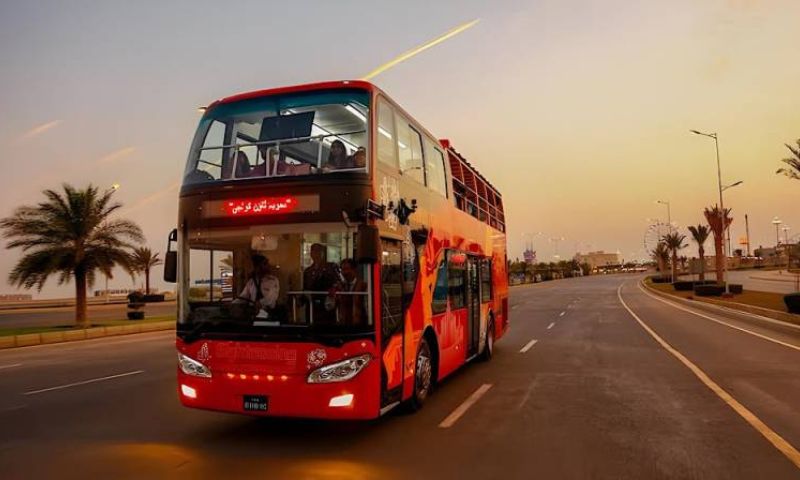
KARACHI, Pakistan: Double-decker buses returned to Pakistan’s Karachi city’s roads on Wednesday, nearly five decades after they disappeared from the city’s public transport system.
The new service was inaugurated on Wednesday by Sindh Minister for Transport Sharjeel Inam Memon and Local Government Minister Syed Nasir Hussain Shah along the bustling Shahrah-e-Faisal corridor.
The revival of double-decker buses evokes strong public nostalgia for their 1960s-70s heyday, when they were a city landmark, especially beloved by youth. Now, Karachi’s severe traffic and strained transit system persist despite new services, as aging infrastructure and project delays compound the crisis.
Double-decker buses have once again been introduced for the people of Karachi after 65 years.
Sindh Senior Minister Sharjeel Inam Memon and Provincial Minister for Local Government Syed Nasir Hussain Shah inaugurated the double-decker bus service in the city.
Speaking to the… pic.twitter.com/zlhQ0aojP7
— Sindh Information Department (@sindhinfodepart) December 31, 2025
The service, set to open to the public on January 1, will initially run on a trial basis. The 22-kilometer route will connect Model Colony to Zainab Market in Saddar, with designated stops at key points including Malir Halt, the airport, Nursery, and the Finance and Trade Centre.
Vision for the future
Minister Sharjeel Memon hailed the launch as the fulfilment of a pledge made by the Sindh government in late 2024.
“Today marks the beginning of double-decker bus [services] in the city. We had promised to introduce them by December 2025, and today is December 31,” he stated, addressing the media at the inauguration ceremony.
Sindh Cabinet has allocated more than Rs. 9 billion for road development in Karachi, and several mega projects are scheduled to be completed by March 2026: Sindh Senior Minister Sharjeel Inam Memon pic.twitter.com/nTwjjw0jKq
— Sindh Information Department (@sindhinfodepart) December 31, 2025
He positioned the buses as part of a broader solution to Karachi’s chronic mobility crisis.
“The double-decker buses will offer safe and comfortable travel and are expected to reduce traffic congestion,” Memon said, adding that the provincial government aims to run these buses “on every road in Karachi” in the coming year.
وزیراعلیٰ سندھ سید مراد علی شاہ کی کراچی کے عوام کو نئی ڈبل ڈیکر بس سروس کے آغاز پر مبارکباد!
نئی بس سروس کراچی کے شہریوں کے سفر کو آسان بنائے گی، وزیراعلیٰ سندھ سید مراد علی شاہ pic.twitter.com/vGSmHzWEkb
— Sindh Information Department (@sindhinfodepart) December 31, 2025
The initiative is seen as a significant step by the administration of Chief Minister Murad Ali Shah, whose office termed the buses “a gift” to Karachiites.
“Better transport facilities for Karachi is not a mere promise; it is now becoming a reality,” the CM was quoted as saying.
Fleet, fares, and future plans
The initial fleet consists of 39 new buses imported from China at a cost of Rs. 3 billion.
This includes five double-decker buses and 34 electric buses, with routes for the latter to be designated next week. The government plans to extend similar services to other cities across Sindh.
Fares for the double-decker service have been set between Rs. 80 and Rs. 120 for a one-way trip.
Minister Memon emphasised that all government-run transport services, including the People’s Bus Service used by over 125,000 daily commuters, are heavily subsidized to ensure affordability.
Nostalgic return to address a modern crisis
The return of the double-decker bus taps into deep-seated public nostalgia. In the 1960s and 1970s, these buses were a defining feature of Karachi’s landscape, with the upper deck being a favourite among students and young people.
They were eventually phased out due to population growth, traffic pressures, and maintenance challenges.
کراچی کی ترقی میں پبلک ٹرانسپورٹ کا اہم کردار، ڈبل ڈیکر بسیں اس کی مثال۔#DoubleDeckerBusKarachi pic.twitter.com/3TvoJ4e3XK
— Majid Baloch (@Majidbaloch0033) December 31, 2025
Today, Karachi, a megacity of over 23 million, grapples with severe traffic congestion and an overburdened, inadequate public transport network.
Despite recent initiatives like the Green Line and Pink Bus Service, the city’s mobility woes persist, exacerbated by dilapidated infrastructure and delayed development projects.
Officials expressed hope that if the trial run is successful, more double-decker buses will be introduced on additional routes.
The revival aims not just to ease transport woes but to restore a cherished symbol of Karachi’s past, blending nostalgia with a pragmatic solution for its challenging present.