


Key points
- Scientists warn of rising global dangers
- Nuclear conflict and climate crisis key threats
- AI risks are growing without proper controls
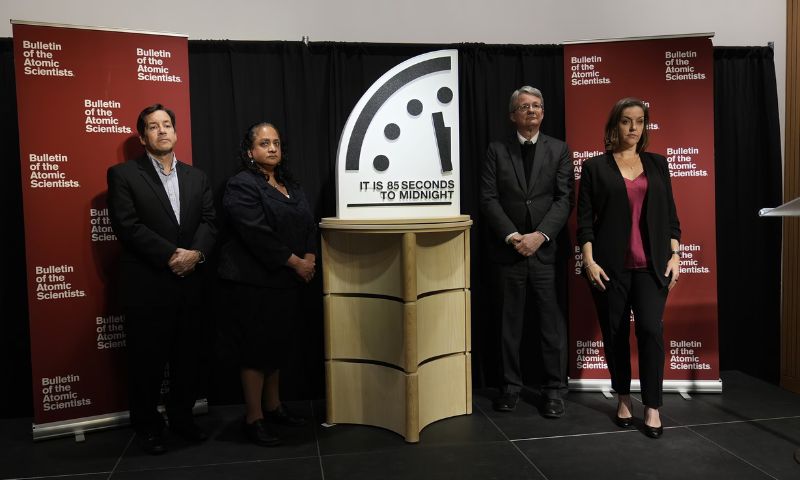
WASHINGTON: The Doomsday Clock has been moved to just 85 seconds before midnight, the closest it has ever been to symbolising global catastrophe, as experts warn of rising threats from nuclear conflict, climate change, and uncontrolled artificial intelligence.
The Doomsday Clock is a symbolic indicator used by scientists to assess how close humanity is to global catastrophe.
Maintained by the Bulletin of the Atomic Scientists, it reflects threats ranging from nuclear conflict to climate change and emerging technologies. Each adjustment is intended as a warning to world leaders rather than a prediction of the future.
According to The Guardian, the Bulletin of the Atomic Scientists announced the adjustment on Tuesday, citing increasing global instability as major powers such as Russia, China, and the United States become more aggressive, adversarial, and nationalistic.
The group said international cooperation is weakening at a time when it is most needed to confront existential dangers.
The clock, first introduced in 1947, represents how close humanity is to self-destruction. Last year, it stood at 89 seconds to midnight, but the Bulletin said worsening geopolitical tensions and environmental crises have pushed the world even nearer to disaster.
Nuclear escalation
Scientists highlighted the continued risk of nuclear escalation, pointing to the war in Ukraine and concerns over Iran’s nuclear capabilities following strikes by the US and Israel last summer.
The group also warned that extreme weather events such as droughts, heatwaves and floods are intensifying due to global warming, while governments have failed to adopt meaningful climate agreements. It singled out policies promoting fossil fuels and slowing renewable energy development.
In addition, experts raised alarms about the growing use of artificial intelligence without adequate safeguards, alongside the potential misuse of biotechnology.
Daniel Holz, chair of the Bulletin’s science and security board, said a fragmented “us-versus-them” world increases the likelihood of catastrophe.
The Bulletin stressed that the clock can still be turned back if world leaders act urgently and collectively to reduce global risks.