


Key Points
- Pakistan’s Defence Minister Khawaja Asif is leading Pakistan’s delegation.
- Afghan Defence Minister Mullah Yaqoob heads Kabul’s team.
- Next round of talks scheduled for Sunday morning.
- Pakistan seeks verifiable action against TTP and BLA militants.
ISLAMABAD: Pakistan and Afghanistan held high-level peace talks in Doha on Saturday, with Qatar mediating between the two uneasy neighbours after a deadly surge in cross-border clashes and militant attacks along their shared frontier.
Geo News reported that diplomatic sources confirmed to it that the Doha negotiations mark the first formal round of Pakistan-Afghanistan dialogue since tensions flared earlier this month, leaving dozens dead on both sides.
Pakistan told the Afghan delegation that the presence of militant groups in Afghanistan was “unacceptable”, the sources added.
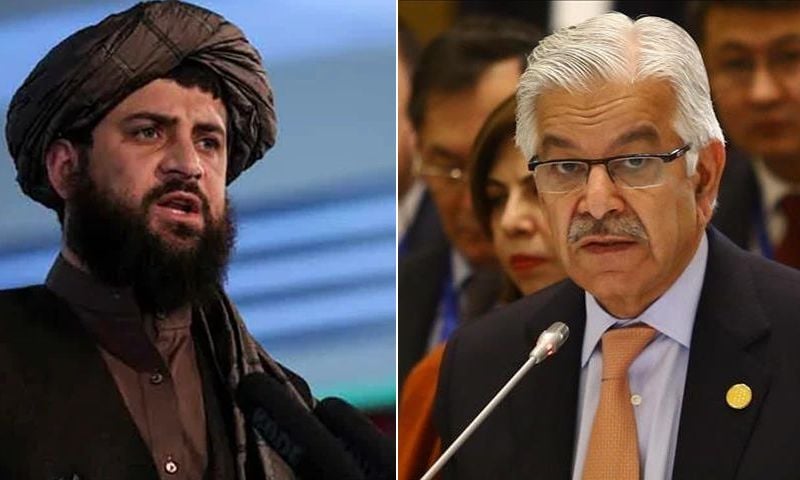
Defence Minister Khawaja Asif is leading the Pakistani delegation, while his Afghan counterpart, Mullah Mohammad Yaqoob Mujahid, heads Kabul’s team, accompanied by senior intelligence officials.
The next round of talks is scheduled for Sunday morning and will primarily focus on cross-border infiltration by militant groups allegedly operating from Afghan soil, Geo News quoted the officials as saying.
Verifiable action sought
Earlier, in a statement posted on X, Pakistan’s Ministry of Foreign Affairs announced that a high-level delegation led by the Defence Minister Khwaja Asif was holding talks with Afghan Taliban representatives in Doha to discuss immediate steps to end cross-border terrorism and restore stability along the Pak-Afghan border.
Pakistan said it does not seek escalation but expects Kabul to honour its commitments and take verifiable action against militant groups such as the Tehrik-i-Taliban Pakistan (TTP) and Baloch Liberation Army (BLA). Pakistan also appreciated Qatar’s mediation efforts and expressed hope that the talks would help promote regional peace.
Kabul accuses Islamabad
Meanwhile, Taliban spokesperson Zabihullah Mujahid said that Afghanistan’s delegation, led by Defence Minister Mawlawi Mohammad Yaqoob Mujahid, had left for Doha but accused Pakistan of undermining peace efforts through recent airstrikes in Paktika province—a claim that could not be independently verified.
He condemned what he described as repeated violations of Afghanistan’s sovereignty and blamed Pakistan for prolonging the conflict, while maintaining that Afghanistan remained committed to peace.
The Doha talks come amid heightened tensions between the two neighbours, strained by cross-border militancy and mutual accusations of harbouring insurgents. Defence Minister Khawaja Asif recently revealed that since the Taliban took control of Kabul in August 2021, 3,844 Pakistanis—including civilians and security personnel—have been martyred in over 10,000 terrorist incidents. He said those once sheltered by Pakistan are now “sitting in India’s lap and plotting against us,” adding that Islamabad can no longer maintain relations with Kabul as before.
Army chief’s stern warning
At a passing-out parade in Kakul, Army Chief Field Marshal Syed Asim Munir urged the Taliban regime to “choose mutual security over perpetual violence” and to rein in militant proxies using Afghan soil for attacks. He vowed that Pakistan’s armed forces, with public support, would defeat the menace of terrorism once again.
Islamabad maintains that its operations target only outlawed groups behind recent terror attacks and insists that peace will remain elusive until Kabul takes concrete steps to dismantle militant sanctuaries. Pakistan’s participation in the Doha talks, officials say, underscores its commitment to dialogue and stability—but patience is wearing thin as national security remains under threat.