


ISLAMABAD: Counting is underway across Bangladesh after polls closed in the country’s first general election on Thursday since the 2024 uprising that toppled former prime minister Sheikh Hasina, a vote seen as pivotal to the nation’s political transition.
Election officials began manually tallying ballots shortly after voting ended at 4:30 pm (1030 GMT), with the first significant results expected overnight. In addition to parliamentary votes, officials are also counting ballots cast in a referendum on a sweeping reform charter.
Earlier in the day, long queues formed outside polling stations in the capital, Dhaka, and other cities as voters turned out in large numbers across the South Asian nation of 170 million people. Nearly 127 million citizens were eligible to vote.
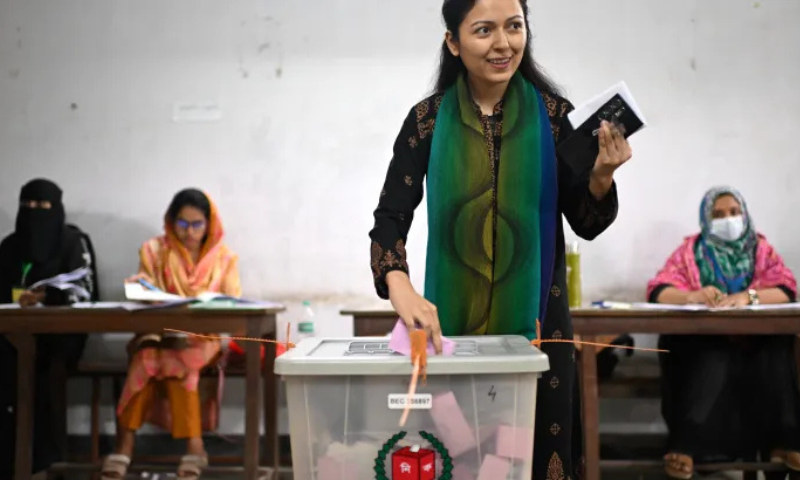
More than 300,000 soldiers and police were deployed nationwide following a tense pre-election period marked by arrests, major cash seizures, social media warnings, and scattered violence, but largely peaceful.
UN experts had warned ahead of the vote of “growing intolerance, threats and attacks” and a “tsunami of disinformation”, particularly targeting millions of young first-time voters.
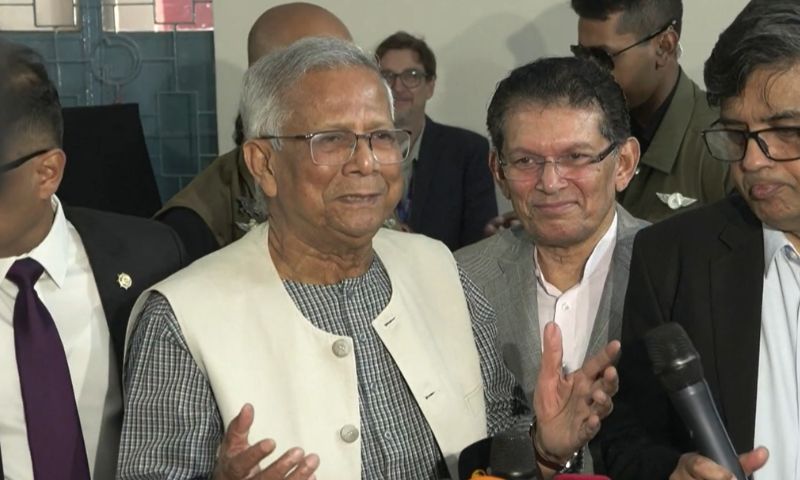
Bangladesh’s interim leader Muhammad Yunus cast his ballot in Dhaka earlier in the day, describing the election as the “birth of a new Bangladesh”.
“This is a day of great joy,” Yunus said after voting. “Through today’s process, we have gained the opportunity to build a new Bangladesh.”
The 85-year-old Nobel Peace Prize laureate has led the country since August 2024, when mass student protests over a civil service quota system escalated into a nationwide movement that forced Hasina from office, ending her 15-year rule.
Voters are directly electing 300 members of the Jatiya Sangsad, while an additional 50 reserved seats for women will be allocated proportionally, bringing the total strength of parliament to 350.
Rival blocs compete
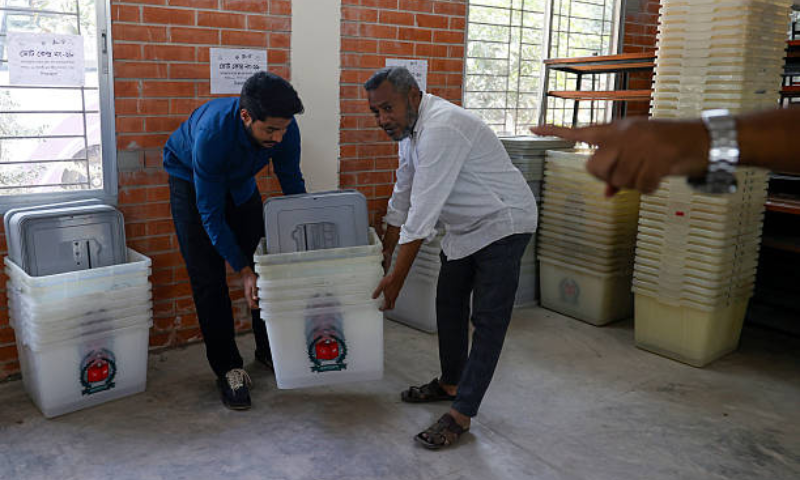
The main contest pits the Bangladesh Nationalist Party (BNP), led by Tarique Rahman, against a Jamaat-e-Islami-led alliance that includes the National Citizens Party, formed by student leaders who played a central role in last year’s uprising.
Hasina’s Awami League has been barred from contesting the election. The former prime minister fled to India following her removal and was later sentenced to death in absentia over the crackdown on protesters during her final months in power.
Referendum alongside the vote
Alongside the parliamentary contest, voters are also deciding on the National Charter 2025, a reform framework championed by Yunus that aims to overhaul state institutions and prevent a return to authoritarian rule.
Corruption, inflation, employment, and economic stability dominated the campaign in a country grappling with rising living costs and slowing growth.
The outcome of both the parliamentary vote and the referendum is expected to shape Bangladesh’s political direction for years to come.