


Key points
• Finance Minister says climate shocks now an economic reality for Pakistan
• Govt advancing green taxonomy and sustainability disclosure frameworks
• Push to formalise SME reporting and strengthen documentation
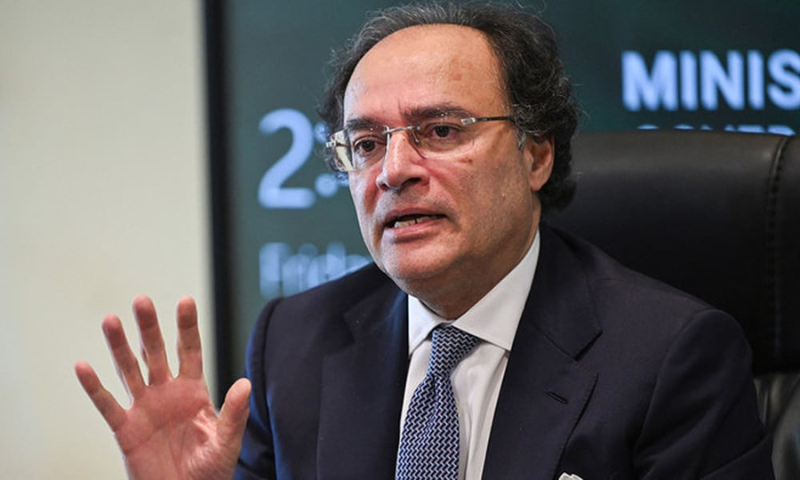
ISLAMABAD: Pakistan has reaffirmed its commitment to sustainable finance, SME reforms, and responsible digital regulation, Finance Minister Muhammad Aurangzeb said Monday.
Talking to a visiting delegation of global and regional accounting leaders, the Minister said climate risks and evolving financial standards demand accelerated institutional action.
The minister noted that climate-related losses are affecting economic performance, with recent flooding expected to drag the GDP growth rate by an estimated 0.5 per cent. His comments came during a meeting with a delegation led by International Federation of Accountants President Jean Bouquot, accompanied by senior representatives of South Asian Federation of Accountants (SAFA), Institute of Chartered Accountants of Pakistan (ICAP) and Institute of Cost and Management Accountants of Pakistan (ICMAP), along with Pakistan’s Auditor General and the Securities and Exchange Commission of Pakistan (SECP) chairman.
Green finance and climate-linked disclosures
Aurangzeb said Pakistan’s exposure to climate shocks underscores the urgency of scaling up green finance initiatives and implementing the national green taxonomy. He added that sustainability-related disclosure frameworks are being rolled out through the State Bank of Pakistan (SBP) to bring financial institutions in line with global standards.
The minister highlighted that small and medium enterprises remain constrained by weak reporting practices, particularly across industrial and export clusters. He said coordinated institutional support will be required to help SMEs transition to modern documentation systems and improve compliance capacity.
Digital assets and regulatory oversight
Aurangzeb briefed the delegation on Pakistan’s emerging regulatory approach to virtual assets, citing the recent establishment of the Pakistan Virtual Asset Regulatory Authority and a crypto council designed to anchor digital markets in licensing, know-your-customer (KYC) and anti-money laundering (AML) controls.
Earlier, Bouquot outlined IFAC’s work on sustainability standards, audit quality, ethics, AI-driven changes in the profession, and support for small practitioners. He pointed to the global need for skilled assurance providers as integrated reporting expands.
International and Public Sector Accounting Standards (IPSAS) reform
Auditor General Maqbool Ahmad Gondal updated the delegation on Pakistan’s transition to accrual-based IPSAS through the new enterprise resource planning (ERP) systems. He said full electronic payments and receipts are targeted within the current fiscal year as part of broader measures on Fiscal Transparency.
SECP Chairman Akif Saeed briefed the meeting on the capital market, insurance and pension reforms, and Pakistan’s ongoing alignment with the International Organisation of Securities Commissions (IOSCO). He said International Financial Reporting Standards (IFRS) adoption remains on track and that sustainability disclosures are being phased in for both listed and unlisted entities.