


Key points
- Millions uprooted by weather disasters yearly
- Most climate migrants move within countries
- Poverty and weak governance worsen impacts
ISLAMABAD: Climate-driven migration is emerging as one of the biggest fault lines of the 21st century, with governments and aid agencies warning that extreme weather, slow-onset environmental change and conflict are increasingly colliding to push people from their homes.
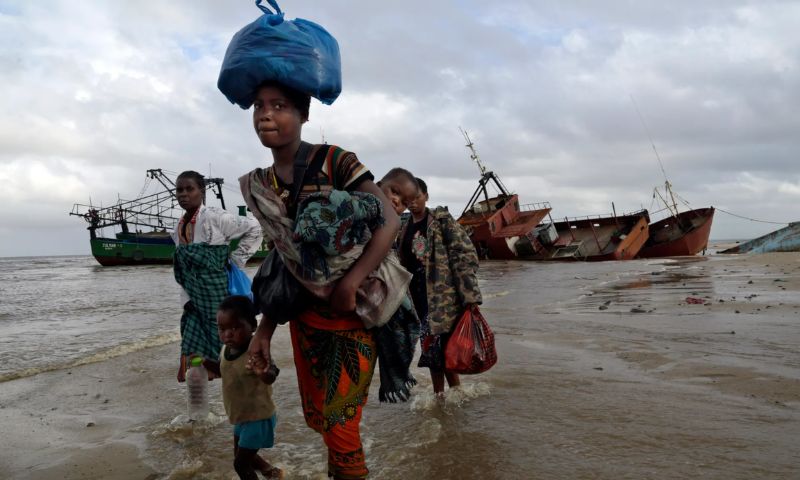
The scale of displacement linked to climate hazards is already vast. A UNHCR report published in November said weather-related disasters triggered around 250 million internal displacements over the past decade, roughly 70,000 a day, underlining how floods, storms, drought and heat are repeatedly uprooting communities.
Separately, UNHCR’s Global Trends report shows that in 2024 there were 65.8 million new displacements worldwide, including 45.8 million linked to disasters.
Most people who move because of climate impacts do so within their own countries, at least initially. The World Bank’s Groundswell analysis estimated that up to 216 million people could be forced to migrate internally by 2050 across six regions unless emissions are cut and development and adaptation accelerate.
The report argues that better jobs, services and planned adaptation can sharply reduce the pressure to move.
Climate migration
Climate migration is not driven by weather alone. The Intergovernmental Panel on Climate Change (IPCC) has found that human-caused climate change is already affecting many weather and climate extremes, and that vulnerability is shaped by poverty, governance, inequality and access to basic services.
In practice, this means the same hazard can have very different outcomes depending on whether communities have resilient housing, functioning early-warning systems, and the ability to recover.
Internal displacement is also rising to record levels, adding to pressure on cities and host regions. The Internal Displacement Monitoring Centre (IDMC) said 75.9 million people were living in internal displacement at the end of 2023, driven by both conflict and disasters.
The International Organization for Migration (IOM), citing IDMC data, said the number climbed to 83.4 million by the end of 2024.
Experts say the policy challenge is widening because climate hazards are becoming more frequent and intense, while legal protections have not kept pace. People fleeing disasters generally do not qualify as “refugees” under the 1951 Refugee Convention unless they also face persecution, leaving many dependent on temporary visas, ad hoc humanitarian pathways, or internal relocation support.
Aid agencies and economists argue that the most effective way to reduce forced movement is to invest earlier: climate-resilient infrastructure, drought-tolerant agriculture, heat and flood planning, and disaster risk financing. But they also warn that some movement is now unavoidable, making “planned relocation” and safe migration pathways increasingly central to national security, development, and humanitarian planning.