


UNITED NATIONS: Pakistan emerged at the center of global alarm this week as the United Nations and China warned that escalating militant spillover from Afghanistan is fueling a surge in terrorist violence across the country.
Speaking at a high-level briefing on the Counter-Terrorism Early Warning Network for Central Asia on Friday, China’s Ambassador to the UN, Sun Lei, said that while Central Asia remained largely stable, it continued to face serious risks from cross-border terrorism.
“Currently, the Central Asia region remains generally stable, yet is still deeply affected by the spillover effect of terrorist threats,” Ambassador Sun said. He pointed to recent terrorist attacks in Syria, Afghanistan, and Pakistan as developments that “deserve our high vigilance.”
Highlighting Pakistan’s long-standing concerns over militancy, the Chinese envoy stressed the need for deeper engagement with Afghanistan.
“We need to strengthen engagement and cooperation with Afghanistan to prevent it from once again becoming a safe haven for terrorist organisations, and to jointly prevent and address the return of foreign terrorist fighters,” he said.
Ambassador Sun also underscored the role of economic and social development in addressing extremism, calling for faster implementation of the UN’s development goals. “At the same time, it is imperative to accelerate the implementation of the UN 2030 Agenda for Sustainable Development to eliminate the root causes of terrorism,” he added.
A day earlier in New York, UN Secretary-General António Guterres echoed similar concerns during a separate briefing, expressing frustration over the Taliban’s failure to meet international expectations since returning to power in Afghanistan, according to Dawn.
Guterres said the United Nations remained committed to four core objectives in Afghanistan but lamented the lack of progress on inclusivity, human rights, and regional security.
“We need to make sure that Afghan institutions are truly inclusive, that all ethnic groups are represented and that all sectors of society are represented,” he said, describing inclusivity as “a basic condition for the consolidation of peace.”
On the issue of women’s rights, the UN chief voiced strong concern over restrictions imposed by the Taliban, particularly those limiting women’s ability to work.
He noted that Undersecretary-General Rosemary DiCarlo had managed to secure permission for female UN staff to work in the field, but not at UN headquarters in Afghanistan. “We are very frustrated by that,” he said, calling the Taliban’s failure to meet the expectations of the international community “unacceptable.”
Addressing regional security, Guterres highlighted the danger posed by militant groups operating from Afghan territory. “Another aspect is the need to make sure that no terrorist organisations can operate from Afghanistan into other countries,” he said.
“We are particularly concerned about what has happened with the Pakistani Taliban [Tehreek-e-Taliban Pakistan] and the support they might receive.”
While acknowledging progress in curbing drug trafficking since the Taliban’s return to power, Guterres said advances in other areas remained absent. “In relation to the three other aspects, we have frustration, because we do not see our legitimate concerns making the progress that is essential,” he said.
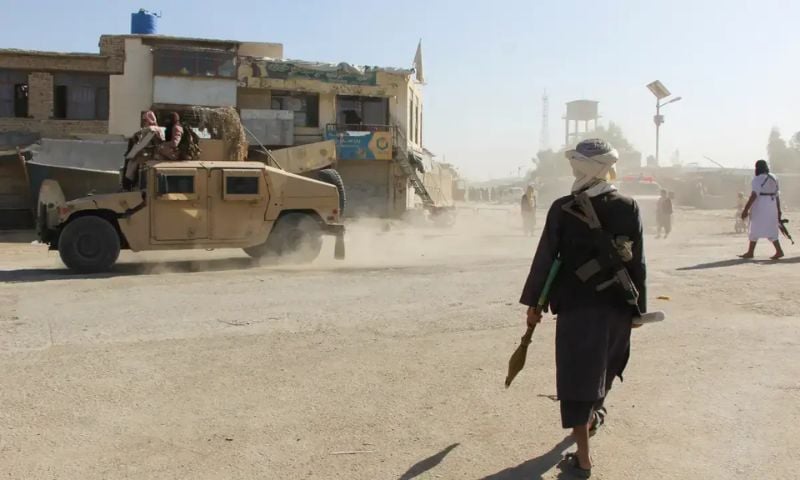
Pakistan has seen a sharp rise in terrorist incidents in recent years, especially in Khyber Pakhtunkhwa and Balochistan. Pakistani officials attribute much of the violence to cross-border infiltration from Afghanistan following the Taliban’s takeover in August 2021.
Security analysts say the resurgent TTP and allied militant groups have intensified attacks inside Pakistan while allegedly operating from safe havens across the Afghan border.
Islamabad has consistently called on the international community to pressure Kabul to deny militants sanctuary on Afghan soil, stressing that enduring stability in Afghanistan is vital to regional and global security.