


BEIJING: China plans to introduce a new law this year aimed at combating corruption that extends beyond its borders, according to a work report released Monday by the country’s top legislative body.
The report from the Standing Committee of the National People’s Congress (NPC) said the upcoming legislation will focus on tackling cross-border corruption as part of broader efforts to strengthen China’s legal framework for anti-corruption enforcement.
While the report did not specify the exact provisions of the proposed law, officials indicated it would expand the tools available to authorities pursuing corruption cases linked to overseas activities.
According to Reuters, the initiative reflects Beijing’s continued push to intensify its anti-graft drive, a campaign that has been a major focus of President Xi Jinping since he assumed office in 2012. Over the years, the sweeping crackdown has targeted officials across government institutions, state-owned enterprises, and the military.
Last week, President Xi reiterated the need for strict discipline within the armed forces, calling on the military to remain loyal to the ruling Communist Party and to eliminate corruption within its ranks.
Judicial data released alongside the legislative report shows that China’s courts handled significantly more corruption cases in the past year. According to the Supreme People’s Court, courts concluded 22.4 percent more corruption-related cases in 2025 compared to the previous year, involving approximately 40,000 individuals.
Among those punished were 57 former senior officials under central government management. These included former Agriculture Minister Tang Renjian and Luo Baoming, the former Communist Party secretary of Hainan province.
Authorities have also intensified efforts to track down officials who fled overseas with illicit funds. Chinese courts reported recovering about 18.14 billion yuan (around $2.6 billion) through the repatriation of fugitives and the recovery of illegal assets.
The judiciary has additionally begun addressing emerging forms of corruption. These include secret arrangements promising future financial returns, hidden shareholding agreements, and so-called “revolving door” practices in which officials move between government positions and private businesses.
Alongside the anti-corruption legislation, China’s top legislature plans to advance several other legal initiatives this year. These include a law aimed at protecting the rights and interests of Chinese citizens living abroad, revisions to legislation governing the central bank and financial regulation, and further research into potential legal frameworks for artificial intelligence.
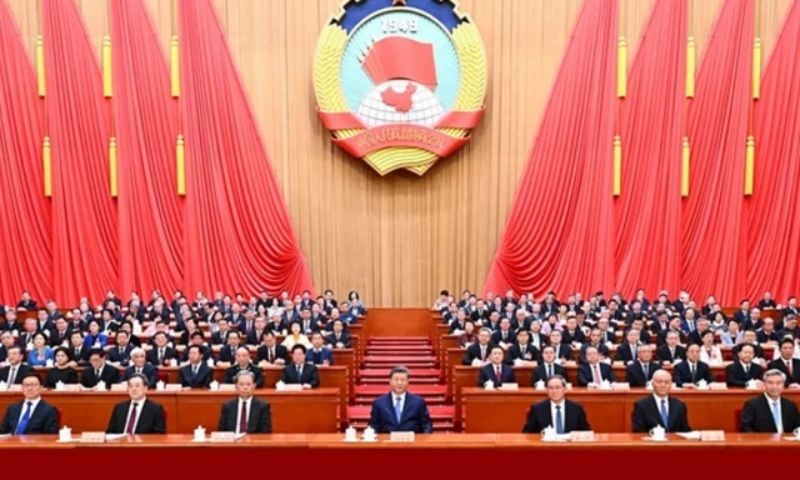
The legislative and judicial work reports were presented during the second plenary session of China’s annual parliamentary meetings and have been submitted to lawmakers for deliberation.