


Key Points:
- China calls for immediate ceasefire and political dialogue to de-escalate the Iran crisis.
- Five-point framework emphasises sovereignty, non-interference, rejection of force, dialogue, and constructive global involvement.
- China pledges to work with Middle Eastern nations and major powers to restore peace and stability.
BEIJING: China has outlined a comprehensive five-point approach to address the escalating conflict involving Iran, urging an immediate ceasefire and a return to political dialogue.
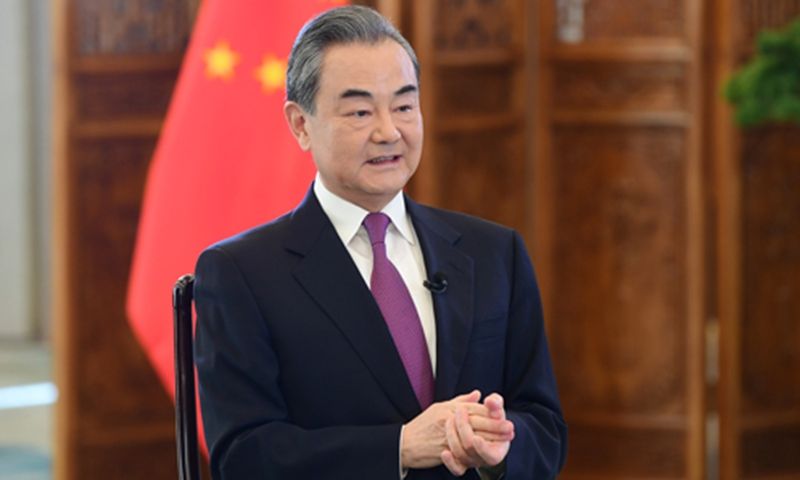
Speaking at the Fourth Session of the 14th National People’s Congress, Foreign Minister Wang Yi emphasised the need to respect sovereignty, avoid military escalation, and involve major powers constructively to prevent further regional instability.
Wang described the Middle East as “engulfed in flames,” warning that continued military action would exacerbate divisions and prolong the crisis.
He stressed that China’s stance is objective and impartial, prioritising the cessation of hostilities and the protection of civilians while calling on all sides to seek political solutions rather than rely on force.
The five-point plan outlined by Wang Yi calls for all countries to respect the national sovereignty, security, and territorial integrity of Iran and other Gulf nations.
He stressed that the use of force must be avoided and civilians should not become victims of armed conflict.
The plan also emphasised the principle of non-interference, allowing regional countries to determine their own future without external intervention.
Wang urged all parties to pursue political solutions through dialogue and negotiation instead of military confrontation.
Finally, he called on major global powers to play a constructive role in stabilising the region rather than intensifying tensions.
Wang reaffirmed China’s commitment to implementing the Global Security Initiative, proposed by President Xi Jinping, to resolve international conflicts through dialogue, cooperation, and collective security.
He described China as a “sincere friend and strategic partner” willing to work with Middle Eastern countries to restore order, ensure peace, and contribute to global stability.
“China’s modernisation is not only a development path for its own people but also an opportunity for the world,” Wang said.
“Our country remains committed to openness, cooperation and mutually beneficial partnerships.”
Beyond Iran, Wang outlined China’s broader diplomatic priorities, stressing multilateral cooperation, opposition to unilateralism, and promotion of a “community with a shared future for humanity.”
He highlighted China’s commitment to strengthening ties with the United States, Russia, and regional Asian partners, while advancing initiatives such as the Belt and Road Initiative to enhance connectivity and development across multiple nations.
“China and the United States share broad common interests and responsibilities,” he said.
“If the two countries choose cooperation, both sides and the world will benefit. If they choose confrontation, it will harm not only the two nations but also global peace and prosperity.”
Wang concluded by urging countries to prioritise dialogue, mutual respect, and cooperation to build a more peaceful and prosperous global order, stating: “The future of humanity depends on cooperation rather than confrontation.”