


BERLIN, Germany: China has overtaken the US as Germany’s top trading partner, according to official figures, as Chancellor Friedrich Merz prepares for his first visit to Beijing since taking office.
Merz will travel to China on Tuesday and will be welcomed with military honours on Wednesday in Beijing by the Prime Minister, Li Qiang, before later meeting President Xi Jinping for dinner discussions, his spokesperson Sebastian Hille said.
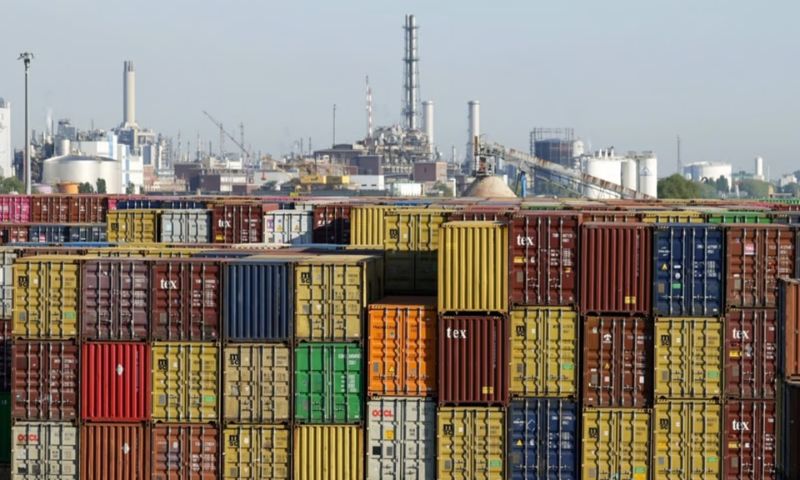
Germany’s Federal Statistical Office released figures on Friday showing that China is once again Germany’s most important market, with €251bn (£219bn) in trade in 2025, a 2.2% increase from 2024, when the US had been the country’s leading export destination.
According to The Guardian, Germany imported goods worth approximately €170.6bn from China in 2025, more than double the €81.3bn exported from Germany to China.
Trade with the US stood at €240bn, with President Donald Trump’s tariffs potentially contributing to a 5% drop in US-Germany trade.
During the two-day trip, Merz is scheduled to visit the Forbidden City, the Chinese robotics firm Unitree Robotics, the German car manufacturer Mercedes-Benz, and turbine maker Siemens Energy.
He will also travel to Hangzhou in eastern China. Merz is expected to discuss several topics during his visit, including the war in Ukraine, human rights issues, and trade relations.
The EU continues to grapple with China’s overheated manufacturing sector. Tariffs on electric vehicles imported to the EU, introduced in 2024, have had minimal impact on sales, while further tariffs on steel are expected later this year.
Germany’s trade relationship with China is multifaceted, particularly in the automotive sector, where companies have significant manufacturing operations.
Volkswagen refers to China as a “second home market,” and BMW and Mercedes-Benz also heavily rely on sales in the country.
BMW Chief Executive Oliver Zipse, one of 30 business leaders accompanying Merz, said, “Complex global challenges can only be solved by working together. With his trip to China, the chancellor is sending a strong signal for dialogue and cooperation.”
The EU is pursuing efforts to derisk its reliance on China, which dominates supplies of rare earths, processed rare earths, critical minerals, and refined critical minerals, including lithium for EV batteries and permanent magnets used in vehicles, appliances, and military equipment.
Germany’s commitment to supporting its car industry, one of the nation’s largest employers, has influenced its stance on trade barriers.
It voted against EU tariffs on Chinese EVs in 2024 and was recently exempted from EU tariffs on the Chinese-built Volkswagen Cupra Tavascan SUV in exchange for agreements on the vehicle’s minimum price.