Key Points
- Announcement made during Foreign Ministry briefing on May 11
- Visit follows formal invitation from President Xi Jinping
- The trip was earlier rescheduled due to Trump’s focus on the Iran war
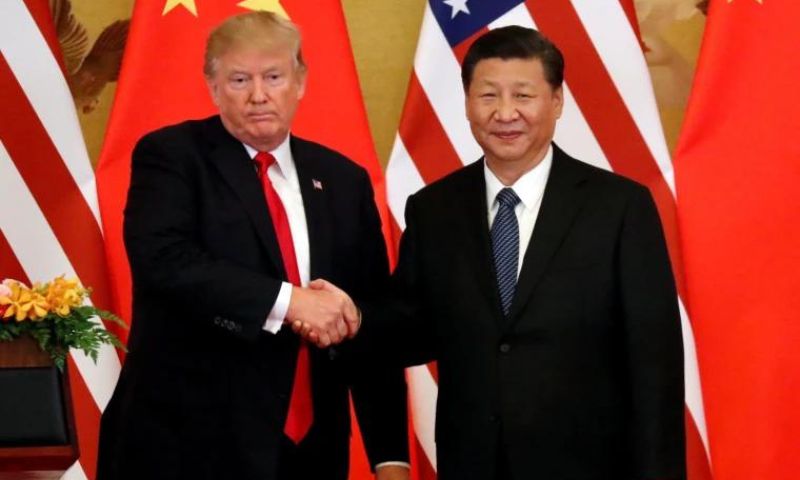
ISLAMABAD: China on Monday confirmed that United States President Donald Trump will undertake a state visit to China from May 13 to 15. The official announcement came during the Chinese Foreign Ministry’s regular press briefing in Beijing.
Foreign Ministry spokesperson Lin Jian said the visit would take place at the invitation of President Xi Jinping, formally confirming the schedule during the May 11 briefing session.
The statement marked Beijing’s first public confirmation of the visit.
The trip was originally scheduled earlier, but was postponed after the White House shifted attention to the Iran conflict. In March, the Iran war escalated into a major international security concern, requiring sustained engagement from President Trump’s administration.
The visit was later rescheduled for mid-May.
The confirmation comes at a sensitive moment in US-China relations, with both sides managing multiple layers of strategic, economic, and security-related friction that are expected to dominate summit-level discussions.
Analysts believe that Pakistan’s China-backed peace mediation efforts are likely to overshadow Trump’s visit even ahead of Sino-US bilateral issues.
Key issues likely to be on the agenda include long-running trade disputes and tariff regimes, export of advanced technologies, such as semiconductors, critical minerals, and rare-earth supplies.
The two countries are also expected to discuss growing competition in artificial intelligence and emerging technologies, as well as financial and investment issues.
Global security issues, including the war in Ukraine, Middle East instability, and energy security in key maritime routes, are also likely to feature in talks.
The upcoming visit and the direct engagement between President Trump and President Xi Jinping will manage tensions and stabilise ties, even as structural differences between the world’s two largest economies remain deeply entrenched.