



Key Points
• China has approved purchases of Nvidia’s H200 AI chips by major tech firms
• ByteDance, Alibaba and Tencent seek to secure advanced computing capacity
• Nvidia chips remain critical for training large-scale AI models
• Domestic Chinese alternatives still lag global leaders in performance
ISLAMABAD: China has cleared leading technology firms, including ByteDance, Alibaba and Tencent, to purchase Nvidia’s advanced H200 artificial intelligence chips, a move aimed at easing pressure on the country’s fast-growing AI sector amid ongoing US technology restrictions.
According to international media reports, the approvals, which are yet to be announced, allow China’s largest technology companies to access high-end AI processors.
These chips are central to the development of generative AI models, cloud computing platforms and data-intensive services.
The decision reflects Beijing’s effort to balance strategic self-reliance with the immediate needs of its technology champions as competition in artificial intelligence intensifies worldwide.
Nvidia, a US-based semiconductor designer, is the world’s dominant supplier of graphics processing units, or GPUs, which have evolved from graphics rendering tools into the core hardware powering modern artificial intelligence.
Its chips are widely used to train large language models, recommendation algorithms, image and video generation systems, and complex data-centre workloads.
The company’s near-monopoly in advanced AI accelerators has made it a pivotal player in the global technology supply chain.
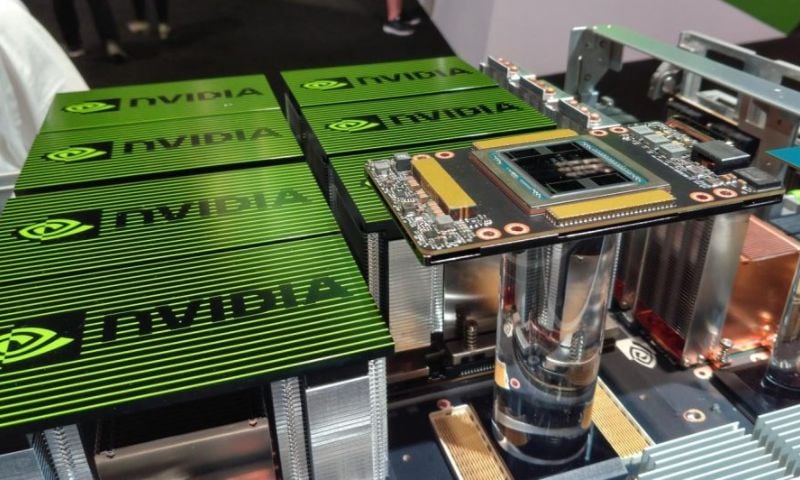
The H200 chips approved for purchase are among Nvidia’s most powerful offerings, designed to handle massive data volumes at high speed.
For Chinese firms such as ByteDance, Alibaba and Tencent, access to these chips is crucial for maintaining competitiveness in areas including search, advertising, e-commerce, cloud services and consumer AI applications.
Without such hardware, the development and scaling of advanced AI systems would face significant delays and higher costs.
The approvals also carry broader implications for China’s technology landscape.
By allowing limited access to Nvidia’s advanced chips, authorities appear intent on preventing a slowdown in domestic AI innovation at a time when computing power has become a key determinant of economic and technological strength.
The move may reassure investors concerned that prolonged restrictions could weaken China’s major platforms relative to US and global peers.
China has been accelerating efforts to develop home-grown alternatives, with Huawei’s Ascend series emerging as the most prominent domestic AI processors.
Other companies, including Biren Technology, Cambricon and Moore Threads, are also working on AI accelerators.
However, industry analysts note that these chips still trail Nvidia in raw performance, software compatibility, and large-scale deployment efficiency, leaving Chinese firms reliant on foreign technology for cutting-edge applications.
In the wake of cut-through competition in artificial intelligence, the latest approvals indicate a complex trade-off facing Beijing.
China is striving to reduce dependence on US technology in the long term without disrupting innovation in the short term.