Where Integrity is Everything

  • Home
  • Latest
  • T20 World Cup 2026
  • Programs
    • Insight
    • Perspectives
    • 60 Seconds With WE News English
    • Archived
      • The Weekend
  • Opinion
  • World
  • Pakistan
  • Sports
  • Economy
  • Entertainment
  • Videos
  • X Channels
    • English
    • Urdu
    • Arabic
    • Bangla
    • Pashto
    • Persian
    • WE Sports
  • اردو
  • Home
  • Latest
  • T20 World Cup 2026
  • Programs
    • Insight
    • Perspectives
    • 60 Seconds With WE News English
    • Archived
      • The Weekend
  • Opinion
  • World
  • Pakistan
  • Sports
  • Economy
  • Entertainment
  • Videos
  • X Channels
    • English
    • Urdu
    • Arabic
    • Bangla
    • Pashto
    • Persian
    • WE Sports
  • اردو

Op-Ed and Analysis

Pakistan Parliament

Parliament’s Reckless Amendments

PCB, Pakistan, Cricket, Champions Cup, Pakistan Cricket Board,

Champions Cup Must Produce Results, Pakistan Cricket Seeks Improvement

Hindutva, Saudi Arabia, Muslims, India, The Goat Life, BJP, Kingdom,

Islamophobia on Screen

Prince

Machiavellian Prince

Manipur

Manipur’s Despair: Modi’s Achilles Heel

Serious Head

A Serious Head on Shoulders

World Literacy Day, UNESCO, Pakistan, Ministry of Education,

World Literacy Day 2024: Addressing Literacy Challenges in Pakistan

Indian, Film, Goat Life, Gulf States, Bharatiya Janata Party, Hindu, Hindutva, Bollywood,

Indian Film “Goat Life” Sparks Controversy and Backlash in Gulf States

Balochistan

Rampant Terrorism in Balochistan and Punjab

Afghanistan continues to pose multiple security threats to neighborly countries. Afghan interim government commonly known as the Taliban regime recently celebrated the third anniversary of their takeover of Kabul. Taliban’s speedy takeover and the quick meltdown of the Ashraf Ghani regime both are remembered as meaningful surprising events in the checkered history of Afghanistan. The subsequent withdrawal of US troops from Afghanistan triggered numerous intriguing questions. The apparent hasty withdrawal of American forces though celebrated as a victory by the Taliban however it could not bring any stability to Afghanistan. Though withdrawal took place under Joe Biden’s watch, however, the grounds were prepared by the Trump administration prior to leaving the white house consequent to election defeat. The arrival of the Taliban in Kabul as an uncontested force on 15th Aug 2021 made the whole American campaign a shadowy affair stretched over almost two decades. Critiques are justified in questioning the outcome of such a lengthy military and political campaign orchestrated by the USA in Afghanistan. No satisfactory response has ever surfaced from the State Department and Pentagon sides about the quick meltdown of the Afghan National Army. It is obvious that the surprisingly expeditious winding up of the Ashraf Ghani regime further exposed the weaknesses of the whole American prescription applied to heal Afghanistan. The multiple damaging effects of the ill-conceived strategy on the war-torn society of Afghanistan are not too difficult to understand. Present-day Afghanistan is more polarized and unsettled under the Taliban’s unelected regime. The demolition of the political façade in August 2021 was not a sudden development but rather a much-expected outcome of the dubious Doha agreement. Analysts having fair insight into the Afghan dynamics were apprehensive about the American deal with the Taliban while Ashraf Ghani was very much present in the office of President. Simply put, the American direct agreement with the Taliban in Doha was actually the beginning of the end of Ashraf Ghani's regime. Bitterness in bilateral ties between Pakistan and Afghanistan has been constantly growing over the issue of cross-border terrorism. Against all the positive expectations of Islamabad, the interim Afghan government has not responded against the Khawarij which comprises the banned TTP and its numerous splinter groups. Ironically, the Taliban regime is providing all sorts of support to those Khawarij terrorists who are involved in attacks on Pakistani security forces, unarmed civilians and military installations. Facts and figures clearly reflect the alarming rise in cross-border terrorist attacks inside Pakistan after the arrival of the Taliban on Kabul’s throne. Pakistan has rightly questioned the liberty of action granted to the Khawarij terrorists on Afghan soil by the interim Taliban setup. These genuine security concerns have been conveyed to the Taliban regime through all available channels. Repeated engagements from the Pakistan side via diplomatic, political, religious and media channels, nothing positive could not gain any breakthrough in finishing the bloody cycle of terrorism. Growing security concerns gradually taking the shape of anger in Pakistan because huge losses to men and materials are crossing the limits of patience. Unwise rulers of Kabul are acting against the interests of a neighbor like Pakistan who always stood alongside Afghan brethren in hours of need. It seems that sympathizers of Khawarij (banned TTP) are now dominating the interim Afghan government and saner elements have lost their say in the decision-making process. Multiple reports released by the UN, EU and international watchdogs have revealed undeniable information about the active presence of global terrorist groups in Afghanistan. The Taliban regime is in denial mode and seems in a mood to continue with the present harmful policies. The loud arrogance of Taliban officials on the highly objectionable stance about cross-border terrorism is endangering regional peace. In a recent statement, the military chief of the interim Afghan government Qari Fasihuddin Fitrat has denied any presence of banned TTP elements in Afghanistan. This absurd denial is credible evidence of the Taliban’s contradicting stance about the presence of Khawarij (Banned TTP) on Afghan soil. How Qari Fasihullah Fitrat can ask for evidence of Khawarij’s existence while Taliban supreme leader Hibatullah Akhundzadah urged Afghans through a fatwa to refrain from joining the terrorism spree of banned TTP against Pakistan last year. This unambiguous religious decree released by none other than the supreme Taliban leader is itself strong evidence of Khawarij’s anti-Pakistan designs. It is also evident that the top leadership of the Taliban especially supreme leader Habibullah Akhudzada comprehends the undesired complications linked to the cross-border terrorism from Afghan soil. Bleak consequences of flawed terrorism-specific policies are widely hurting Afghanistan’s repute and relations with neighborly countries. Hollowness of Taliban’s denial can be measured from the multiple killings of Khawarij (TTP) wanted commanders on Afghanistan’s soil. A recent report released by a sub-committee of the UN Security Council has openly mentioned the banned TTP as the biggest terrorist group operating with impunity from Afghanistan. Being an unelected force, the Taliban’s rule in Afghanistan lacks legitimacy. The commitment of such an illegitimate regime with the banned terrorist groups of various brands merits a regional response as already proposed by PM Shahbaz Sharif during a recent past event at the SCO forum.

Terrorists on Afghan Soil

Kashmir, Democratic, Facade, Vote, Siege

Democratic Facade: Kashmir’s Vote Under Siege

Pakistan

Decoding Pakistan-KSA Defense Cooperation and Emerging Threats

PCB

Pakistan cricket in a SPIN

Militarization of IIOJK 1

Militarization of IIOJK

Gigital

Digital Terrorism: A Serious Challenge to National Security

Understanding Discontentment, Unhappy,

Understanding Discontentment: Why Do We Feel Unhappy?

Balochistan

Balochistan-Narratives at Play

IPPS 1

Overcapacity Dilemma: Mismanagement or Misjudgment?

Security Wall

Security Wall on Iran-Afghanistan Border 

Pakistan

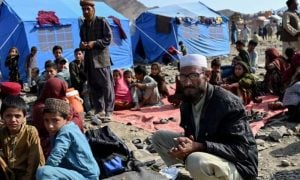
Pakistan’s Afghan Refugee Policy Needs Acknowledgement by International Community

Sindh

Katcha’s Costly Casualties

Pindi Pitch Planning Poor Play Pessimism Pakistan Cricket

Pindi Pitch, Planning, Poor Play, Pessimism: Pakistan Cricket

india

False Narratives and Real Persecution: The Modi Playbook

education

Protecting Children in an Increasingly Digital World

Bangladesh President Dissolves Parliament Following Sheikh Hasina Flees to India

Mass Murder Trials in Bangladesh

talban 1 1

Three Years Rule; The Taliban Has a Long Way To Go

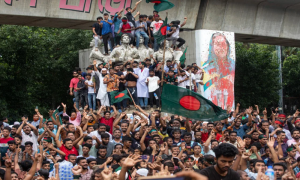
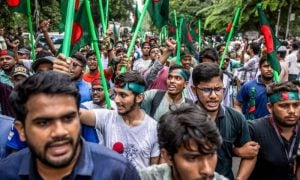
Bangladesh, Ripples in Bangladesh are very strong. It is not easy to predict the future unfolding at this stage. For many, the rapid spread of student protests is quite meaningful. It was not expected that protest against reinstatement of controversial job quota would eventually lead to ouster of Sheikh Hasina Wajid. The swift culmination of 15 years long rule in the form of an unceremonious resignation is being viewed through different lenses. As expected, India was the first destination of Sheikh Hasina Wajid after fleeing from Bangladesh. She is still there and reportedly striving to find a decent shelter in exile to properly dress up her political wounds. Her escape-style departure to Agartala makes perfect sense due to the strong Indian influence on the politics of the Awami League. Loud victory jubilation in the camp of protesting students is also understandable, however, the degree of violence observed in their campaign disclosed a disturbing side of the whole episode. Surprisingly students started dictating some important action after successfully dismantling the Hasina Wajid led government of the Awami League. First students demanded immediate dissolution of parliament and a lead role for Dr Younus in interim or caretaker setup. Both these demands were swiftly accepted. Thereafter, protesting students demanded resignation from the Chief Justice. This demand was also fulfilled. These huge successes reflect the dominance of the student movement in the new ruling regime in Bangladesh. The release of former PM Khalida Zia along with numerous imprisoned leaders of BNP and JI immediately after the departure of Hasina Wajid further supplemented the optics of the anti-Awami League buildup. It seems that prolonged suppression and a suffocated political environment brought the public onto the roads and streets against Hasina’s tyrant rule. Having no disregard for this obvious factor, it is also pertinent to carefully analyze the continuation of violence after the resignation of Hasina, the swift formulation of interim setup under Dr Younus and the appointment of a new chief justice. Awami League is complaining about violent attacks on party leaders, supporters and various premises. The demolition of the statues of Bangla Bandhu Shaikh Mujib Ur Rehman and the destruction of the liberation war museum have been reported in international media. Hatred with Awami League’s dictatorial rule has taken the legacy of Shaikh Mujib into the fold for many understandable reasons. Being a political heir of Shaikh Mujib, talented daughter Hasina adopted the same venomous course which led to the assassination of Bangla Bandhu with almost the entire family in the hands of rebellion group of army officers. Almost 24 years after the partition of sub-continent, Mujib’s Awami League parted ways from two nation theory and opted to exist as Bangladesh in 1971. This transformation took place with close support and invasion of Indian army. Awami League’s government could only survive hardly for four years due to the parallel mafia-style rule of Mukti Bahini. After the assassination of Mujib, Bangladesh went under military rule and witnessed many phases of political turbulence. However, Hasina managed to revive the legacy of Mujib in 2009 which concluded unceremoniously with protestors demolishing the liberation memorial monuments in 2024. The President of Bangladesh cancelled the holiday on the assassination anniversary of founding father Shaikh Mujib earlier scheduled as a national event on 15th August. It is apparent that after taking refuge from two nation theory in 1971, now Bangladesh is getting rid of the hateful legacy of the Awami League as well which revolved around over exaggerated stories of pre-71 exploitation, bulldozing of political dissent with violence and pro-Indian policies. This deviation from the traditional anti-Pakistan narrative is pinching India where Awami League under Hasina Wajid has always been considered an asset in the region. Though some optimistic quarters interpret growing anti-Awami League sentiments as sign of reviving positivity towards Pakistan, however, geographical hurdles and strong Bengali nationalism indicates a different unfolding. Saner quarters in Bangladesh have understood how India exploited Bengali nationalism to settle the score of the 1947 partition. Indian official stance on dismantling Hasina Wajid’s regime is cautiously calculated. However, numerous Indian social media platforms have started threatening Bangladesh on the pretext of attacks on Hindus during anti-Awami League protests. These Indian accounts are meaningfully warning Bangladesh of serious consequences including balkanization. Why Bengali nationalism is irking India now once the same very spirit was pitched through Mujib led Awami League to dent the two-nation theory in East Pakistan. Interestingly, a dubious Indian news platform released the statement of Hasina Wajid in which she blamed the USA for her ouster amid refusal to establish a base on an island. Later, Hasina Wajid’s son stationed in the USA declared this statement fake. Some pieces of this sinister mosaic are still missing. However, it is obvious that strong Bengali nationalism is posing a threat to Hindu nationalism which it once posed to two nation theory. How India would respond to any call for the unification of Bengal on the basis of common language, culture, traditions and arts? Surely, this version of Bengali nationalism would be a nightmare for India. Anxiety in New Delhi on the ouster of Hasina and the demolition of liberation war monuments in Bangladesh is quite understandable.

How Bengali Nationalism is Irking India!

A Travelers Paradise Surveying the Ethiopian Tourism

A Traveler’s Paradise: Surveying the Ethiopian Tourism

Nuclear Proliferation, BJP’s Regime, IAEA, Modi government,

Nuclear Proliferation Under BJP’s Regime

Separating Fact from Fiction Balochistans Reality 1

Separating Fact from Fiction: Balochistan’s Reality

Posts pagination

< 1 … 5 6 7 8 9 10 11 12 13 14 15 … 29 >

Editor’s Picks

Inside Pakistan's Crackdown on Organised Begging Networks

Inside Pakistan’s Crackdown on Organised Begging Networks

Khyber Pakhtunkhwa, Peshawar, Stray Dog, Surgeries, Vaccines, Wildlife,

From Poison to Sterilisation: How a Pakistani Province Is Tackling Its Stray Dog Crisis?
Afghanistan

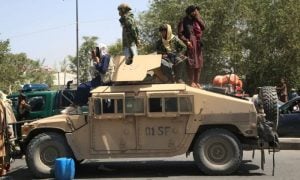
Afghanistan: The Epicentre of a Shifting Terror Landscape

Aena Wazir, North Waziristan, Peshawar Zalmi, Javed Afridi, Women's Cricket

From Kabul to Waziristan: How Taliban Ideology Silences Girls’ Dreams

Ramadan

How Muslims Observe the Holy Month of Ramadan Across the World
Gwadar

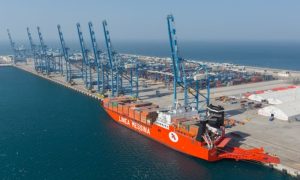
Beyond Economics: Understanding Balochistan’s Challenges
Pakistan

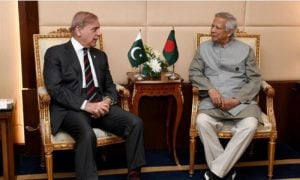
Pakistan–Bangladesh Relations Enter Strategic Reset after 2024 Transition
Basant 07

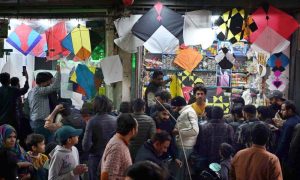
Basant Returns to Lahore Sky after 25 years
Khyber Pakhtunkhwa, Governance, Pakistan, Security, Swabi, Lakki Marwat, Bannu, Peshawar, Government,

Pakistan’s Land Enforcement Gap: How Policies Fail Citizens in Khyber Pakhtunkhwa
Pakistan, Climate War, Khyber Pakhtunkhwa, Climate Change, World Bank, Budget,

Fighting Fire with Eyedropper: Why Pakistan’s KP Province Losing Climate War
Privacy Policy

Terms and Conditions

About Us

Contact Us

© 2026 WE News English. All Rights Reserved