


PESHAWAR, Pakistan: At just six months old, a Japanese macaque named Punch was cast out by his mother and subsequently struggled to integrate with other macaques after relocation.
Rejection, it seems, defies the boundaries of species, geography, and circumstance. Though Punch’s story unfolded thousands of miles away at a zoo in Japan, the emotions it evokes are universal: the longing for connection, the pain of isolation, and the quiet resilience required to survive in a world that feels suddenly indifferent.
For Punch, the world became a lonely place almost from the start. In the wild, infant macaques rely instinctively on their mothers — not just for nourishment, but also for protection, learning, and social bonding. A rupture in this early bond can significantly alter a primate’s emotional development.
Young primates acquire the nuances of communication, social hierarchy, and survival skills through the behavioural mirroring of their mothers and the troop. When that fundamental bond is disrupted, adapting to group life becomes a gruelling uphill battle — a challenge that Punch visibly grappled with during his faltering attempts to interact within the social order.
Comfort after rejection
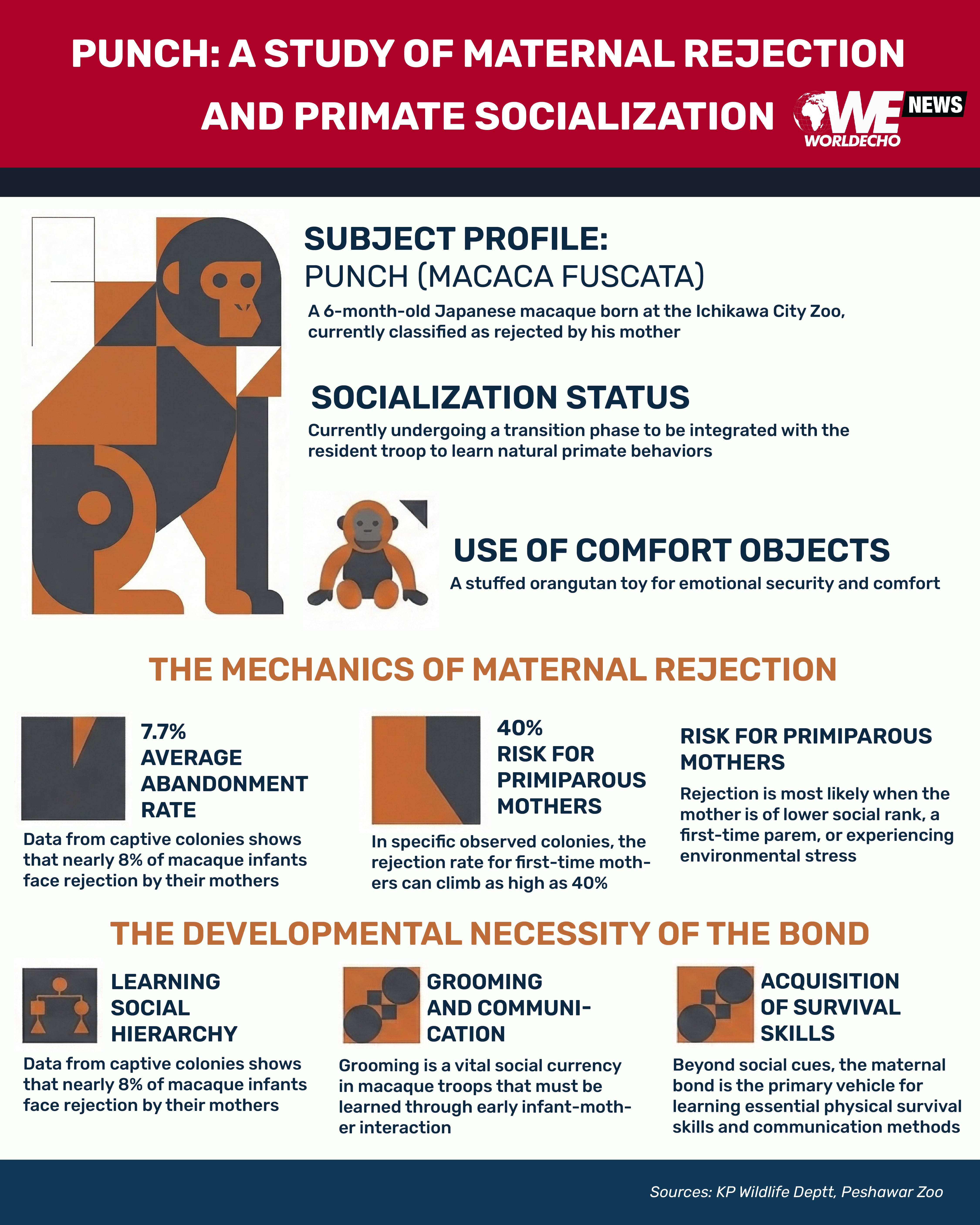
According to the breeding staff at Ichikawa City Zoo and Botanical Gardens in Japan, Punch was born at the facility, but was rejected by his first-time mother shortly after birth. Maternal rejection among Japanese macaques is considered uncommon but not unprecedented; studies of captive colonies suggest that a small percentage of infants — roughly seven to eight per cent — may be abandoned at birth, often due to maternal inexperience or environmental stress.
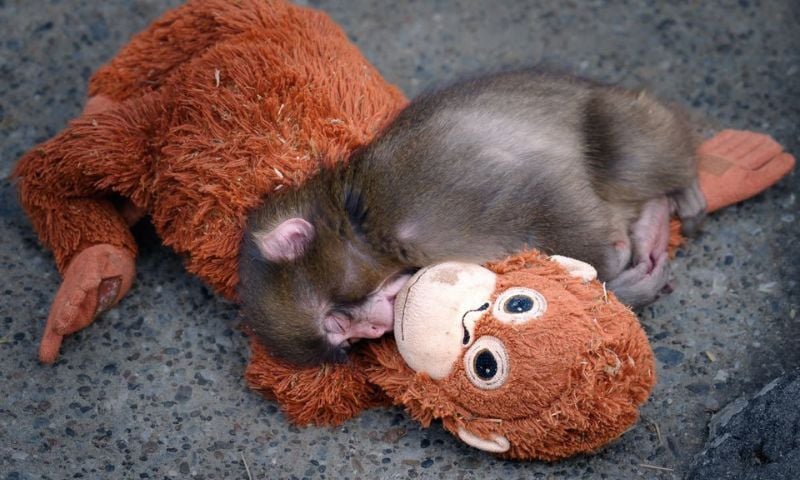
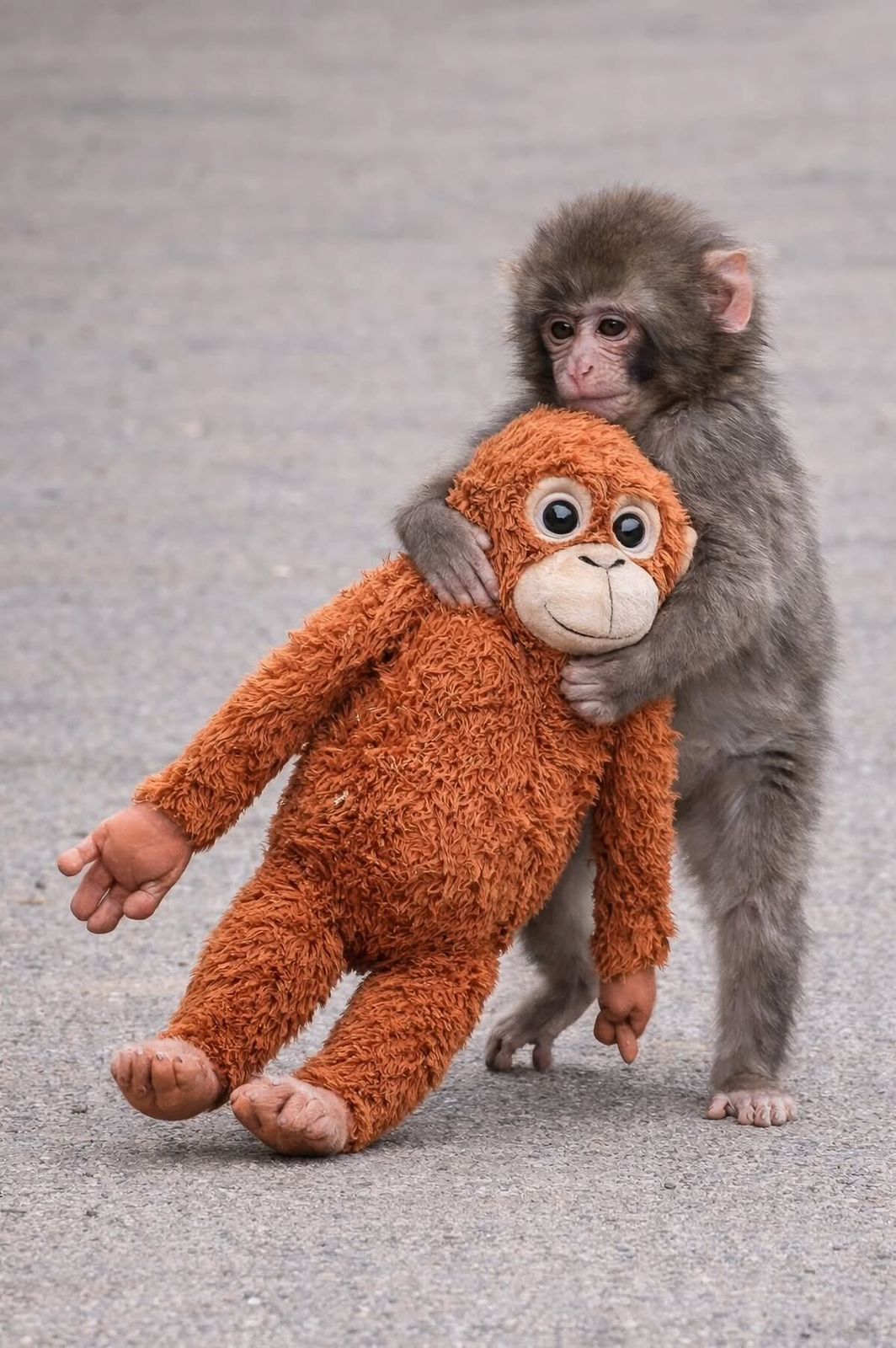
In an effort to help Punch cope, caretakers provided him with a stuffed orangutan toy as a surrogate source of comfort. Videos circulating online showed the young macaque clinging tightly to the plush figure after being scolded and dragged away by an adult monkey while attempting to interact with others in the troop — a moment that struck a chord with viewers globally.
Zoo staff say Punch is gradually learning social communication through these interactions. While disciplinary behaviour from adult monkeys may appear harsh, experts note such responses are part of natural troop dynamics rather than deliberate harm — simply the way social hierarchies are maintained in the animal world.
After moments of distress, Punch would seek comfort from the stuffed toy before eventually returning to interact with the group again — a small but powerful reminder of how deeply social animals depend on reassurance and emotional security when push comes to shove.
This behaviour highlights a fundamental truth: comfort and emotional security are critical, not just for humans, but for social animals as well. The plushie became more than a toy — it was a source of solace, a symbol of the maternal bond he had been denied. For Punch, it was proof that even in the absence of a real mother, the need for affection and reassurance remains deeply biologically hardwired.
Science of attachment
Punch’s behaviour echoes one of the most well-known studies in animal psychology conducted by American psychologist Harry Harlow in the 1950s.
Harlow’s experiments involved infant rhesus monkeys presented with two surrogate mothers — one made of wire that provided milk, and another covered in soft cloth that offered comfort but no food — a finding that challenged prevailing scientific assumptions.
The study fundamentally changed the scientific understanding of attachment, proving that comfort, touch, and emotional bonding are just as essential as nourishment itself.
Much like those monkeys, decades earlier, Punch gravitated towards softness rather than survival alone — demonstrating that the need to belong is deeply ingrained across species.
Local Relevance: KP and Wildlife Rehabilitation
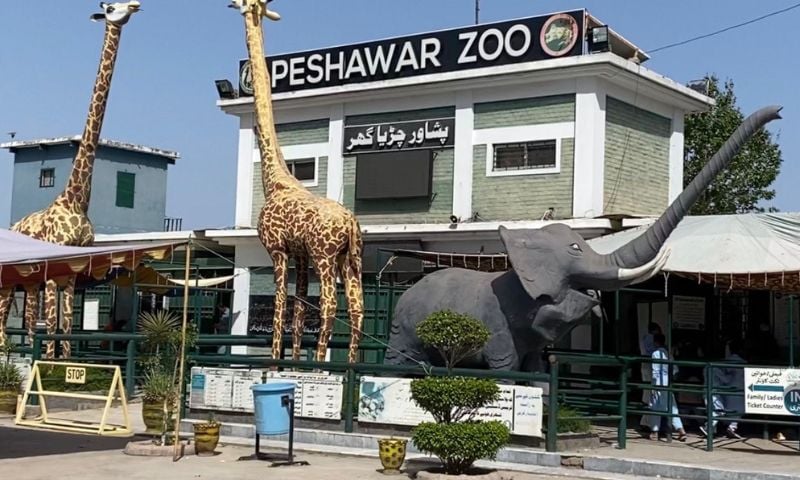
While Punch’s story unfolded in Japan, wildlife officials say similar behavioural challenges are recognised within animal management practices in Khyber Pakhtunkhwa as well. Zoo management and wildlife facilities in the province operate under the Khyber Pakhtunkhwa Wildlife and Biodiversity Act 2015, which provides the legal framework for wildlife protection, and sets standards for zoo management and animal welfare.
Zoological facilities are overseen by the Khyber Pakhtunkhwa Wildlife Department, which conducts inspections and monitoring through internal departmental mechanisms and a Zoo Management Committee. In some cases, external experts from institutions like Lahore Zoo or zoological authorities in Islamabad are also invited to provide technical advice to ensure best practices are followed.
Operational reviews and welfare oversight are carried out through regular inspections and committee meetings, where enclosure conditions, animal health, feeding, and veterinary care are meticulously documented.
Shahid Mehmood, Wildlife Photographer and Education Assistant at Peshawar Zoo, shares that maternal rejection has occasionally been observed among animals housed at the facility.
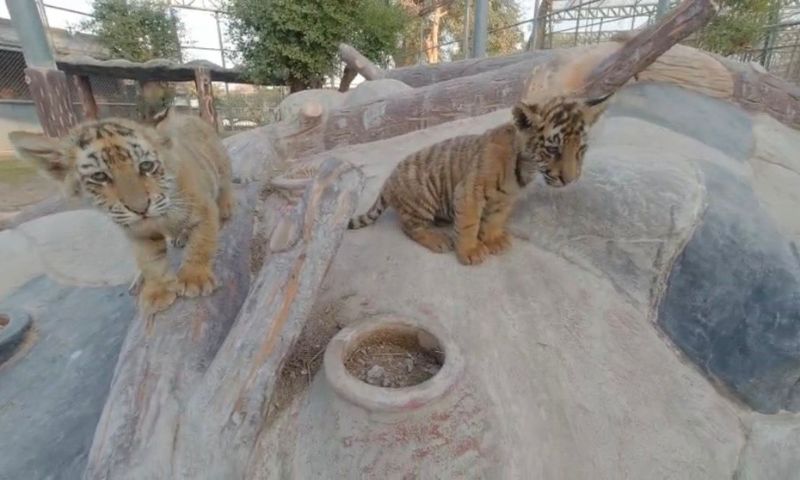
He recalls a recent case involving two Bengal tiger cubs that were rejected by their mother in November 2025 and had to be hand-raised under intensive care for nearly two months — a delicate process requiring constant supervision.
During hand-rearing, young animals often develop a strong attachment with their caregivers,” he says, adding that the tiger cubs also became closely bonded with their keepers during this period.
Mehmood notes that maternal rejection can occur for several reasons, including milk production issues, weakness in newborns, or stress experienced by the mother due to environmental disturbance or human activity nearby — factors that can sometimes disrupt normal maternal behaviour.
Beyond basic rehabilitation
Veterinary Officer at Peshawar Zoo, Dr. Abdul Qadir Khan, notes that the process of caring for separated or orphaned animals involves both physical management and behavioural adjustment — a balancing act that requires patience and expertise. He emphasises that the primary concern during this stage is preventing aggression or injury between animals as they adjust to one another.
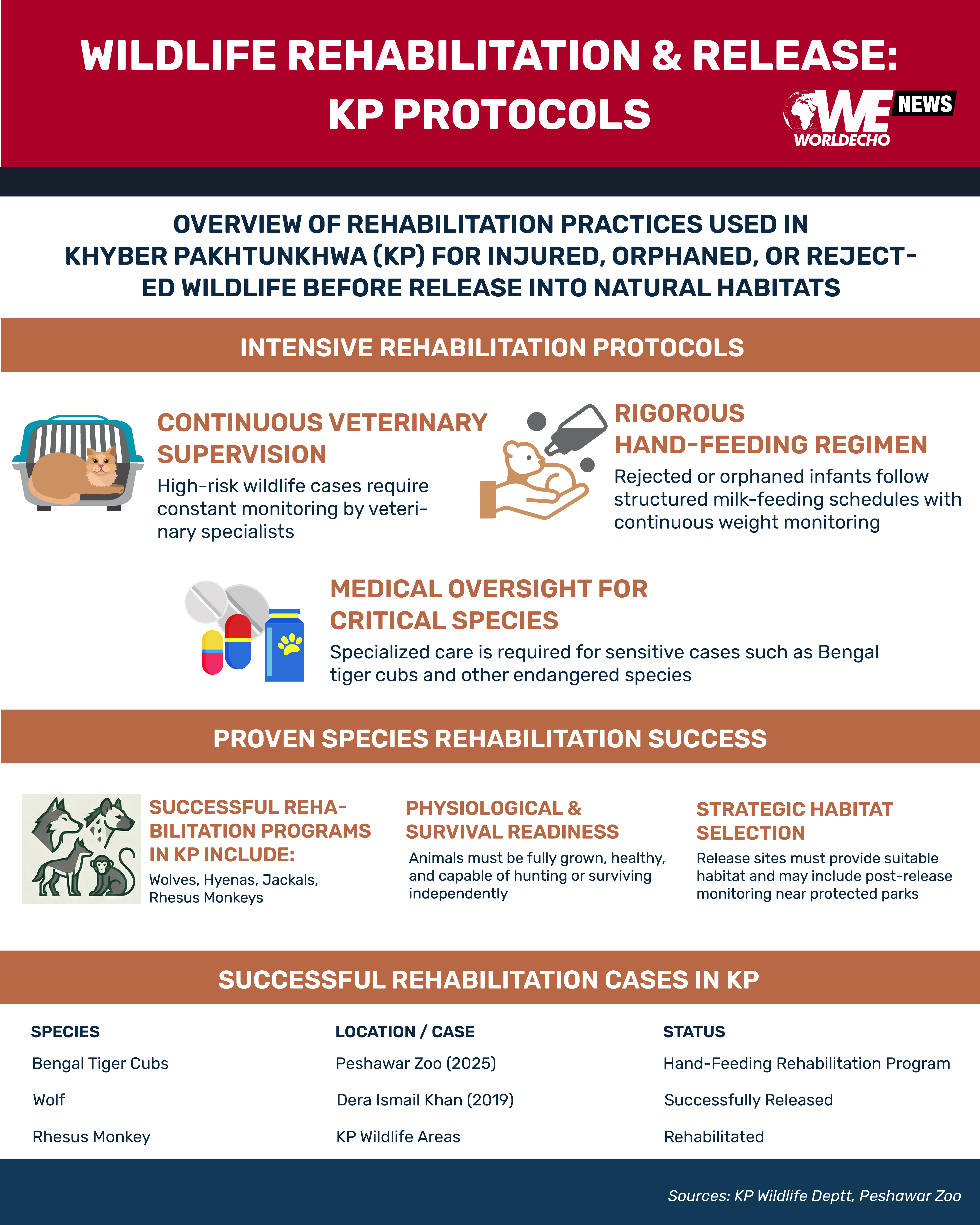
Highlighting the zoo’s success in rewilding, Dr. Qadir Khan also recalls a rescued wolf that was rehabilitated and released in Dera Ismail Khan in 2019 after it fully recovered and was able to survive independently in the wild again.
Beyond this single case, several rescued animals — including hyenas, wolves, jackals and rhesus monkeys — have been rehabilitated and released throughout the province. Animals considered for release must be fully grown, healthy and proven capable of hunting or surviving independently before being returned to a suitable natural habitat where they can fend for themselves.
In cases where releases occur near wildlife parks, post-release monitoring is conducted to ensure their long-term survival.
Wildlife officials say such incidents are relatively rare in local facilities. When they occur, veterinary teams follow structured hand-rearing protocols that include detailed feeding charts, scheduled milk quantities, nutritional supplements, weight monitoring, growth tracking, routine health checks, as well as deworming and vaccination schedules to ensure the animals remain healthy and developing normally.
The tiger cubs rejected in November 2025 were separated when they were just one day old and placed on a controlled hand-feeding programme. They remain in separate captivity under zoo management, as carnivores and valuable species raised in captivity are generally not released into the wild for safety and conservation reasons.
To reduce the risk of human dependency, keepers gradually limit direct interaction once animals reach around six months of age, shifting them to enclosures where human contact is minimised.
“We have temperature-controlled environments, structured feeding schedules, and trained keepers who monitor newborn animals,” Dr Khan says. To reduce stress, animals are provided enrichment activities designed to keep them mentally active and prevent boredom.
“Enrichment means keeping animals engaged so their mental health remains stable. When animals need to be reintroduced into a group, they are first placed in separate enclosures where they can observe one another from a safe distance before full integration.”
Prioritising animal wellbeing
Peshawar Zoo Director Sajjad Ali emphasises that animal welfare in Pakistan’s zoos must extend beyond basic feeding and medical treatment.
Zoos should not limit care to food and veterinary attention alone. Greater focus needs to be placed on the mental wellbeing of animals,” he says, stressing that welfare goes beyond the bare minimum.
According to him, animals should be housed in enclosures that closely resemble their natural habitats, providing continuous access to water, shaded areas, trees, and vegetation.
“We try to create environments where animals feel comfortable and protected from extreme heat and cold so that stress levels remain low,” he explains. “Providing habitat-like conditions allows animals to rest properly and remain psychologically calm.”
Why rejection is rare
Ejazul Haq, Administrative Officer at Peshawar Zoo, notes that extreme summer temperatures in Khyber Pakhtunkhwa can influence the comfort of species originating from cooler climates, although many tropical and subtropical animals naturally tolerate warm conditions similar to those found in the region without major difficulty.
Peshawar Zoo currently operates as part of the government development project “Zoo for Peshawar Division,” scheduled for completion in June 2026, with funding allocated under the approved project plan as part of the province’s broader wildlife initiatives.
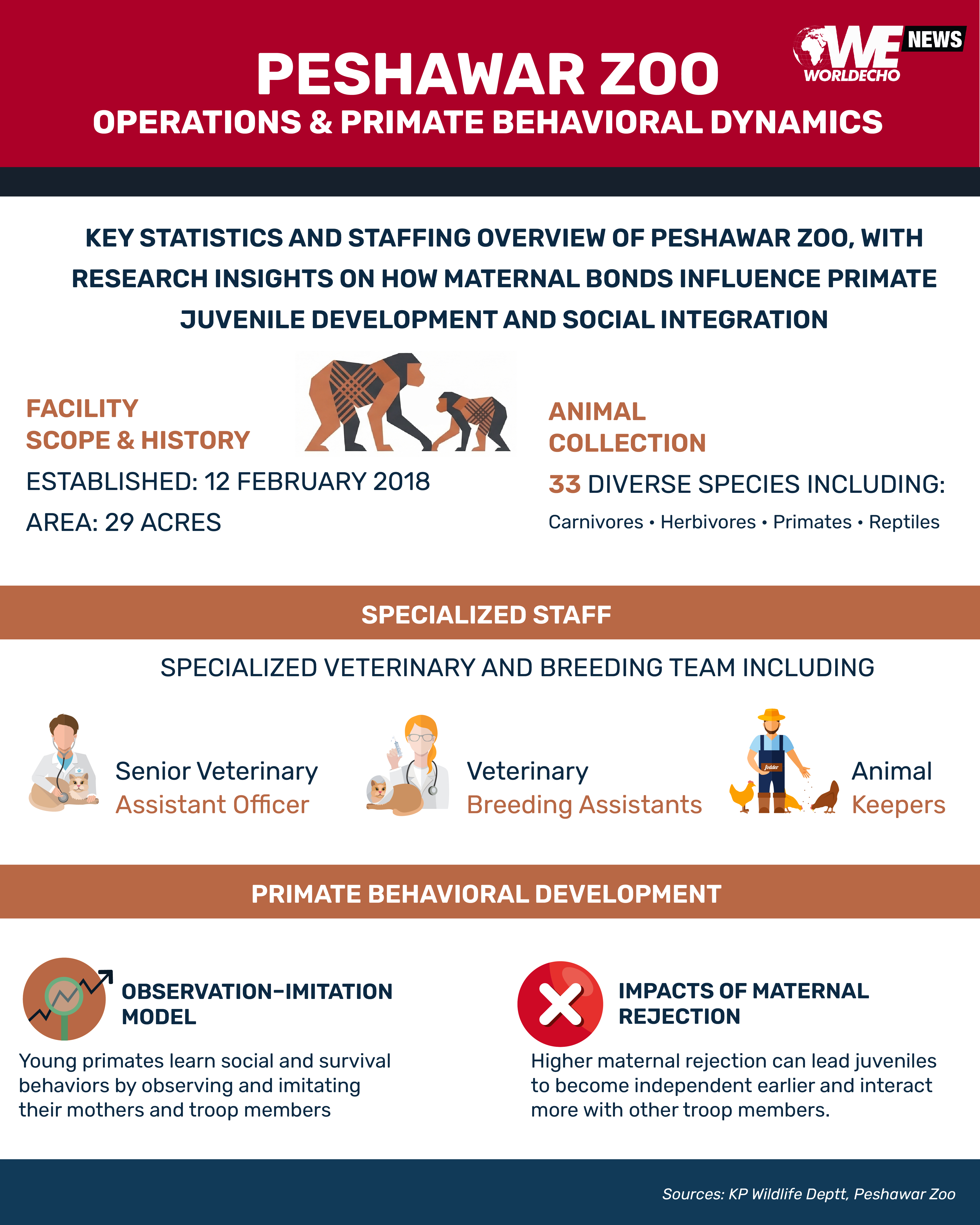
The zoo maintains a veterinary team consisting of a senior veterinary officer supported by two veterinary assistants and a breeding assistant, along with trained animal keepers responsible for daily animal care and enclosure management across different sections of the facility.
Animal keepers receive practical training in safe handling, feeding protocols, enclosure maintenance and behavioural observation, including training sessions conducted at Lahore Zoo and ongoing guidance from veterinary staff to keep their skills up to date.
Staffing levels are adjusted depending on species and management needs. Enclosures housing large carnivores are typically assigned three trained keepers, while herbivores, primates and aviary sections generally have two keepers per enclosure to ensure constant supervision.
“We have a veterinary doctor supported by assistants, along with attendants assigned to enclosures who monitor and care for the animals regularly,” Sajjad Ali says.
Ejazul Haq notes that situations like Punch’s are more commonly observed in animals that live within strong social groups where hierarchy and social acceptance play a crucial role.
Many animals at Peshawar Zoo, particularly carnivores, are maintained in pairs rather than large social colonies,” he says. “Because of this, cases of maternal rejection are relatively rare here.”
Peshawar Zoo, which opened to the public on 12 February 2018, covers approximately 29 acres and currently houses around 33 species of animals, including carnivores, herbivores, primates and reptiles from different regions of the world.
Comprehensive national statistics on orphaned or rejected animals in Pakistani zoos are not currently available at the moment.
More than survival
Punch’s journey is still unfolding. Zoo officials in Japan say the young macaque continues learning how to communicate and coexist within the troop, gradually adapting despite repeated setbacks and learning the ropes of troop life.
His story, however, travels far beyond a single enclosure and resonates across continents.
From Japan to Peshawar, wildlife caretakers acknowledge a growing understanding that animals, much like humans, depend not only on survival but also on connection, familiarity, and emotional security. Rehabilitation today is no longer viewed solely as keeping an animal alive, but helping it find its place again — within a group, a habitat, or the wild itself.
From a stuffed toy clutched in distress to careful rehabilitation practices in zoos thousands of miles apart, one truth becomes clear: survival in the animal world is not driven by strength alone — sometimes the smallest comforts make the biggest difference.
Sometimes, it begins with something far simpler — the need to belong.