


Key points
- Human judgement still highly valued
- Writers, designers roles rapidly evolving
- Music industry shifts towards AI licensing
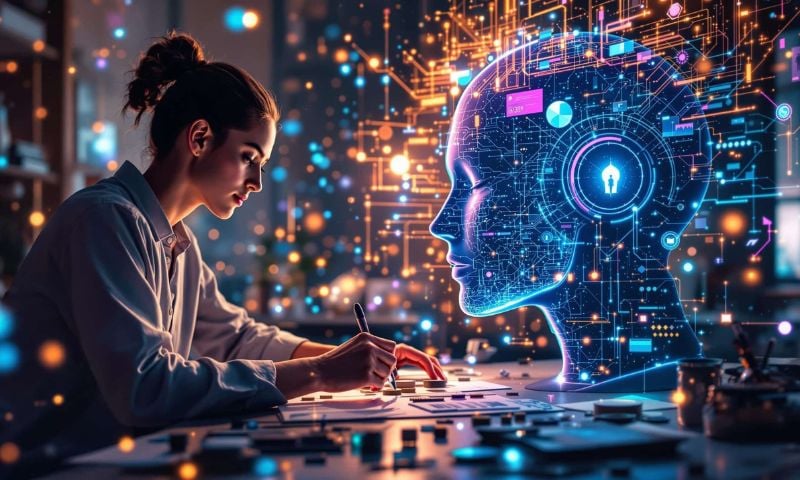
ISLAMABAD: Generative AI has moved from experiment to everyday tool in creative industries — and with that shift comes a sharper question: is AI replacing creative professionals, or simply reshaping what “creative work” means?
The short answer in 2026 is that AI is already replacing some tasks, especially at the junior and “production” end of creative work, but full replacement of creative professionals remains unlikely in most mainstream settings — largely because of quality control, brand risk, legal uncertainty and the continuing premium on human judgement.
Writers: the work is changing, and so are the rules
In screenwriting, the Writers Guild of America (WGA) has spent recent years pushing for guardrails around AI use, reflecting a central fear: studios using AI-generated scripts to undercut pay and credit. The WGA’s own guidance and policy work shows how firmly organised labour is treating AI as a structural threat rather than a passing trend.
Beyond Hollywood, publishers and digital outlets face similar pressure points: AI can generate drafts quickly, but editors still need to verify facts, protect tone and ensure originality. That means writers are increasingly expected to operate as idea generators, interviewers, and editors of AI-assisted drafts, rather than pure “first-draft” producers.
Designers: speed is up, but sameness is the risk
For graphic designers, AI is strongest at accelerating repetitive workflows: generating background options, adapting formats for multiple platforms, producing quick variations, and helping non-designers create “good enough” assets. International organisations have warned that generative AI is moving rapidly into sectors such as art and design, raising questions about displacement and bargaining power for human creators.
At the same time, major creative platforms are trying to keep AI use transparent. Adobe’s “Content Credentials” framework, for example, uses tamper-evident metadata to add context about how a file was created or edited, including the use of generative AI tools. This kind of provenance tooling is partly about trust: brands and newsrooms want speed, but they also want to avoid accusations of deception, plagiarism, or synthetic manipulation.
Musicians: AI songs are here — and so are licensing deals
Music may be the most visible battleground because AI can now produce “convincing enough” tracks in seconds — raising fears of a flood of synthetic content competing with human work. That has collided with copyright law, triggering major industry disputes and then, increasingly, deals.
Recent reporting shows the industry shifting from courtroom warfare towards licensed partnerships. Warner Music Group, for example, reached a licensing agreement with AI song generator Suno, framing it as a move toward a licensed model with opt-in participation and compensation mechanics. Universal Music Group has also reached an agreement with AI startup Udio after prior litigation, positioning the deal as a precedent-setting licensing arrangement.
These deals don’t settle the “replacement” question — but they do show where the market is going: AI music is not disappearing; it is being absorbed into commercial systems, with rights, payments and controls becoming the key battleground.
So… replace, or re-price creativity?
The strongest evidence points to a middle outcome: AI doesn’t replace “creativity” so much as it compresses the value of certain creative tasks. Entry-level work (basic copy, social media variations, template-based design, mood music) is easiest to automate. Higher-value work — original concepts, cultural insight, investigative reporting, signature visual identity, live performance, distinctive voice — remains harder to replicate reliably.
Economists tracking creative industries increasingly describe a reshuffling of where human value sits: less in routine execution, more in judgement, taste, client trust, and accountability.
In 2026, the more realistic headline isn’t “AI replaces creatives”. It’s: AI is changing the price and shape of creative labour — and the winners will be those who control the tools, the distribution, and the trust.