


The unveiling of President Donald Trump’s “Board of Peace” (BoP) has ignited a global debate, with its grand title masking a deeply troubling architecture that appears less concerned with genuine peace and more with the consolidation of power and wealth.
Far from a benevolent initiative, this new body was ostensibly born from a plan for Gaza’s reconstruction. It increasingly resembles a thinly veiled mechanism for furthering geopolitical interests at the expense of established international norms and, critically, the fundamental rights of the Palestinian people.
At its core, the BoP fundamentally neglects Palestinian concerns, rendering their voices virtually nonexistent in a plan directly impacting their future. The proposed four-tier governance structure for Gaza, as highlighted by former ambassador Maleeha Lodhi in her article, relegates Palestinians to a mere “technocratic committee” for municipal affairs, while the crucial top three tiers are dominated by pro-Israel American figures, including Trump himself, his son-in-law Jared Kushner, the infamous Tony Blair, and other powerful individuals.
This complete exclusion from meaningful decision-making regarding their own land and lives is not merely an oversight; it’s a deliberate erasure, ensuring that any “peace” brokered will be one imposed upon them, rather than co-created with them. Hamas’ unwavering opposition to disarmament under an American-led stabilization force underscores the inherent flaw: without Palestinian buy-in, any framework is destined to fail, exacerbating conflict rather than resolving it.
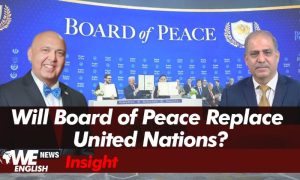
Beyond the immediate crisis in Gaza, the worrying erosion of established peace mechanisms and a rise in a new form of global imperialism add further insult to the injury. It is explicitly evident from the Trump administration’s statements that the BoP aims to replace or sideline the United Nations, effectively creating a US-controlled global body.
Trump’s designation as “Chairman for Life” with absolute veto power, coupled with a “pay-to-play” membership model demanding a $1 billion entry fee, transforms international diplomacy into a transactional arena where influence is bought, not earned through legitimate global consensus.
This system empowers wealthy nations and individuals while marginalizing the voices of smaller or less affluent states, fundamentally undermining the principles of sovereign equality and collective security that the UN was founded upon.
The composition of the BoP’s executive board—comprising real estate billionaires and financial tycoons—further fuels suspicions of ulterior motives. It seems that Gaza is being viewed less as a humanitarian crisis and more as “valuable property” ripe for redevelopment.
This cynical perspective exposes a concerning blend of economic opportunism and political leverage, where the pursuit of peace becomes entangled with speculative ventures and the exploitation of a desperate situation.
The sheer irony of Israeli Prime Minister Benjamin Netanyahu, who faces an ICC arrest warrant for alleged war crimes in Gaza, being a part of this “Board of Peace” epitomizes the moral and ethical contradictions inherent in the initiative.
In essence, the “Board of Peace” appears to be neither a board for peace nor a legitimate international body. Instead, it represents a dangerous precedent for unilateralism, a disregard for international law, and a stark display of power politics dressed in humanitarian rhetoric.
It is a proposition that, rather than fostering peace, threatens to further destabilize an already volatile world, deepening resentments, consolidating imperialistic ambitions, and leaving the most vulnerable, particularly the Palestinians, further neglected and dispossessed. The question “Board of Peace or Board of No Peace?” ultimately answers itself, pointing towards a future where peace is dictated, not built.