


NEW DELHI: Bangladesh’s national elections scheduled for February 12 are emerging as a pivotal moment for South Asia’s strategic landscape, with the country recalibrating its foreign policy priorities amid changing regional dynamics.
Analysts say Dhaka is expanding its engagement with China while managing a period of strain — but not rupture — in its traditionally close ties with India.
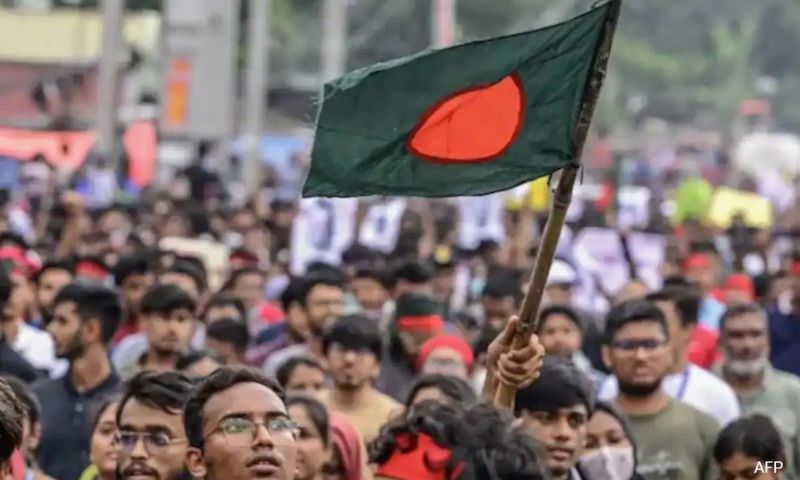
The vote will be Bangladesh’s first since a student-led uprising in August 2024 ended the long rule of former prime minister Sheikh Hasina.
India’s decision to provide shelter to Hasina, despite extradition requests from Dhaka, has created friction with the interim government led by Nobel Peace Prize laureate Muhammad Yunus.
In response, the new leadership has pursued broader diplomatic outreach, notably strengthening links with China and renewing engagement with Pakistan.
Bangladesh, a Muslim-majority nation of around 170 million people, maintained robust trade and defence relations with Beijing even under Hasina.
However, India long remained its most influential regional partner — a balance that observers now say is evolving rather than disappearing.
Beijing’s growing role
Analysts note that China has become central to Bangladesh’s strategic thinking, particularly in the Bay of Bengal region. Joshua Kurlantzick, senior fellow at the US-based Council on Foreign Relations, said both the interim administration and any future elected government appear committed to expanding cooperation with Beijing.
“Bangladesh has become increasingly important to China’s regional strategy,” Kurlantzick said, adding that Beijing now sees Dhaka as a key partner in its Bay of Bengal ambitions.
Yunus’s first official state visit to China underlined this shift. In January, the two countries signed a significant defence agreement to establish a drone manufacturing facility at a proposed northern airbase close to the Indian border.
Delwar Hussain of the University of Dhaka said the direction of travel is clear. “Regardless of the election outcome, there is a strong possibility – perhaps irreversible — of further deepening Bangladesh-China relations,” he noted.
Managing tensions with India
At the same time, relations between Dhaka and New Delhi have faced challenges since Hasina’s departure. India’s foreign ministry has raised concerns over what it described as “unremitting hostility against minorities” in Bangladesh, citing alleged attacks on Hindu communities.
According to AFP, Bangladeshi police report that around 70 members of minority groups were killed in sectarian violence in 2025. Dhaka has disputed India’s characterisation of the scale of the violence, though both sides have continued diplomatic engagement.
In January, Indian Foreign Minister Subrahmanyam Jaishankar travelled to Dhaka to attend the funeral of former prime minister Khaleda Zia.
Prime Minister Narendra Modi also sent condolences to her son, Tarique Rahman, a senior figure in the Bangladesh Nationalist Party (BNP), widely seen as a leading contender in the upcoming polls.
However, relations were tested again when a Bangladeshi cricketer was dropped from the Indian Premier League following protests by Hindu right-wing groups in India. The incident prompted Bangladesh to withdraw from the T20 World Cup scheduled to be hosted in India.
Pragmatism over polarization
Despite these flashpoints, analysts believe both countries recognise the importance of stability. Praveen Donthi of the International Crisis Group said New Delhi and Dhaka are aware of the costs of prolonged diplomatic strain.
“Neither side benefits from letting relations deteriorate further,” Donthi said, adding that pragmatic cooperation is likely to prevail.
Bangladesh has also cautiously rebuilt ties with Pakistan, resuming direct flights in January after more than a decade.
Experts say this move is unlikely to come at India’s expense and reflects Dhaka’s broader effort to diversify its foreign relationships.
Donthi noted that any incoming government is expected to prioritise continuity. “The emphasis will be on stability rather than disruption,” he said.
Former diplomat Hyumayun Kabir echoed this view, suggesting that relations with India could stabilise further under an elected government, particularly if the BNP forms the next administration.
Even Jamaat-e-Islami, once sharply opposed to New Delhi, has adopted what Kabir described as a more pragmatic tone during the campaign.
An enduring partnership
On the ground, the fundamentals of the India-Bangladesh relationship remain largely intact. Trade flows have stayed steady, and only one bilateral agreement from the Hasina era — involving Indian tugboats — has been cancelled.
Former Indian diplomat Dilip Sinha pointed out that while China excels at delivering large-scale infrastructure projects, India continues to provide resources critical to Bangladesh’s economy, including electricity and yarn for its vital garment industry.
Analysts widely agree that Bangladesh’s growing engagement with China does not automatically translate into hostility toward India.
“This is not an either-or situation,” Kabir said. “Bangladesh can maintain strong relations with both. There is room for both partnerships to thrive.”